Emergency large animal vet added to Virginia Tech’s Vet-Med team

Horse owners in Southwest Virginia and adjacent states have faced the same nightmare: Their animal colicking at midnight with nowhere to turn or calling their regular vet only to learn they’re already handling another emergency two counties away.

Without dedicated emergency coverage, faculty veterinarians have been pulling double duty — handling scheduled appointments during the day and then working through the night when emergencies arise. By morning, they’re exhausted and still have a full day of teaching and regular cases ahead.

“It’s been difficult for the faculty to absorb that need while maintaining the daytime services, the teaching services, and the research enterprise,” said Byron.

The human cost is real, but so is the suffering of animals. Every delay means more pain for horses with colic, more risk for mares having difficult births, and more anxiety for owners watching their animals in distress.

Carla Enriquez has become the cornerstone of a new dedicated emergency service to fill a gap for Southwest Virginia’s large animal community.

She earned her veterinary degree from Universidad San Francisco de Quito in Ecudor, where she grew up, in 2019. Enriquez then headed to the U.S. for advanced training — first an internship at the University of Tennessee, then a large animal internal medicine residency at New Bolton Center, University of Pennsylvania.

After finishing her residency, Enriquez was looking for more. ‘As a resident, I always wanted to be a fellow and gain that extra knowledge,’ she said.

She pursued an emergency and critical care fellowship — two additional years of specialized training that’s still uncommon in veterinary medicine. Most veterinarians stop after pursuing one specialty due to the time, physical, and financial demands involved. Think of it as becoming a specialist within a specialty.

“The fellowship was basically like an emergency surgery residency for me,” she explained. “Coming from an internal medicine background, my goal was training in soft tissue emergency surgery and critical care by a team  of double boarded specialists in a busy emergency service .”

The result? She can handle the complex medical puzzles, infectious diseases, neonate care, ophthalmic emergencies and the surgical emergencies that walk through the door at 2 a.m. Whether it’s colic surgery, a C-section, or severe laceration, she brings both the internal medicine knowledge and surgical skills that emergencies demand.

In 2024, she became board-certified in large animal internal medicine. This August, she’ll sit for her emergency and critical care boards. Success would make her one of the few veterinarians nationwide with expertise in both areas — the perfect match for round-the-clock emergency work that demands both diagnostic depth and surgical speed.

According to available data from veterinary specialty boards, there are over 1,000 diplomates of the American College of Veterinary Emergency and Critical Care (ACVECC) in the United States, and several hundred board-certified large animal internal medicine specialists in North America. Holding board certification in both of these specialties is extremely uncommon, and it is widely considered to be rare, with only a small number of veterinarians likely to hold both credentials, and very few specializing in large animal species.

Enriquez isn’t starting from scratch. A veterinary college hospital in Northern Virginia has already demonstrated that this model is effective.

In 2023, the Marion duPont Scott Equine Medical Center in Leesburg introduced a dedicated emergency and critical care team that’s changing lives for Northern Virginia horse owners. Colic cases that once might have been lost to time delays now get immediate surgical intervention. Foaling emergencies get expert attention within the critical first hour.

The model is simple yet revolutionary: dedicated emergency veterinarians who have chosen this specialty are available when a crisis strikes — no more interrupting scheduled appointments. No more asking daytime clinicians to work all night, then show up the next morning.

Now, that same life-saving approach is coming to Blacksburg.

Enriquez will begin providing emergency services this fall as part of the college’s new program, starting with nights, weekends, and holidays — the times when emergencies can’t wait until morning. A second emergency clinician will also be joining the team this fall, allowing the service to launch fully staffed. “My goal is to help establish the emergency service here, which is down the line, going to act like a 24-hour service,” she said. “So, if you as a client or referring veterinarian have an emergency, you call the front desk, and they will direct you to one of the emergency clinicians.”

The plan mirrors what’s working in Leesburg. Eventually, students and residents will rotate through the emergency service, learning from veterinarians who chose this specialty. Details on referral protocols and service access will be announced as the launch date approaches.

Enriquez’s position exists because of a generous donation by animal advocates Karen Waldron and Shawn Ricci.

Their $4 million gift to the Veterinary Teaching Hospital is making two emergency positions possible — one for large animals, one for small animals.

“The ability to begin our emergency service with two dedicated faculty changes everything for large animal care because that allows us to position a dedicated service focused exclusively on emergency and critical care,” Byron explains. “Having dedicated emergency coverage means our other faculty can focus on their scheduled cases, teaching, and research without the constant worry of being called away for emergencies. It’s going to dramatically improve both the quality of our services and our faculty’s work-life balance.”

AQHA-IEA Outstanding Leader Scholarship applications due April 1, Virginia Horse Center to host Zone 3 Finals on March 14-16

Scholarship Opportunity! Interscholastic Equestrian Association youth riders who are also American Quarter Horse Youth Association members can now apply for the 𝗔𝗤𝗛𝗔-𝗜𝗘𝗔 𝗢𝘂𝘁𝘀𝘁𝗮𝗻𝗱𝗶𝗻𝗴 𝗟𝗲𝗮𝗱𝗲𝗿 𝗦𝗰𝗵𝗼𝗹𝗮𝗿𝘀𝗵𝗶𝗽.

The scholarship recognizes riders who have shown outstanding leadership qualities and a committment to participation in one or both organizations. Applications are submitted via this Google Form. Apply today, applications are due 𝗔𝗽𝗿𝗶𝗹 𝟭!

Qualifications/Requirements:

  • Current member of IEA.
  • Current member of AQHYA.
  • 10th-12th grade.
  • Active member of IEA for at least two seasons.
  • Minimum 3.0 GPA or higher.

View PDF of full list of requirements.

IEA is a national organization dedicated to introducing and promoting equestrian athletics. Riders are not required to own their own horse or tack to participate, instead a draw-based team competition format provides greater affordability and access to the sport. There are nearly 15,000 members nationwide in three disciplines — Hunt Seat, Western, and Dressage.

Virginia is in Hunt Seat Zone 3, which will hold its finals March 14-16, 2025 at the Virginia Horse Center in Lexington. The National Finals will be held this year April 24-27, 2025, in Missouri.

Teams hosted near Roanoke include:

  • Breezy Rock Stables in Troutville
  • AP Equestrian in Troutville
  • Virginia Tech in Blacksburg

Click here to see the full list of teams.

Virginia Tech’s hall of fame farrier takes on dual role as veterinary hospital administrator

By Virginia Tech

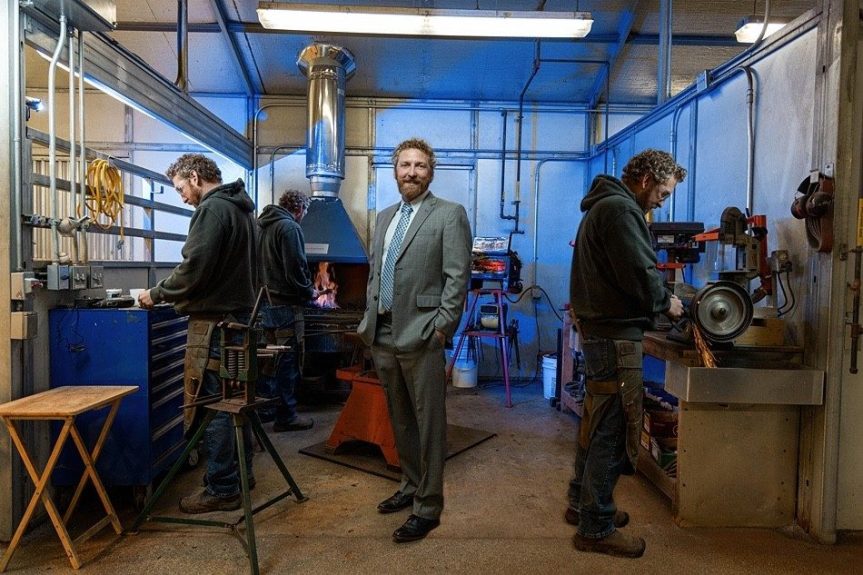
A horseshoe forged by Travis Burns in the farrier shop at the Virginia-Maryland College of Veterinary Medicine will soon be placed at the Kentucky Derby Museum, marking his induction into the International Horseshoeing Hall of Fame.

Yet even as this honor celebrates Burns’ acclaim and skill as a craftsman, he is already forging a new path as the administrator of the college’s Veterinary Teaching Hospital

“I’ve had the opportunity to serve in some leadership capacities within the college, as president of the Faculty Association, serving on the executive committee, and it really opened my eyes that there’s a lot more than my little farrier shop,” Burns said. “There’s a lot more going on here and a lot of things happening, and I really think I can help and participate. It’s another way that I can give back to the to the college.”

“Travis Burns’ reputation for excellence precedes him, both as a farrier and as a leader,” said Tanya LeRoith, director of the Veterinary Teaching Hospital. “We are delighted to welcome him into this new dual role, where his vision, skill, and commitment to both education and equine care will help drive the Veterinary Teaching Hospital toward an exciting future.”

Keeping a foot in farrier work

After a transition period over the next few months, Burns will focus 80 percent of his work duties on his new role aligning the spreadsheets and helping organize the future of a teaching hospital currently in the process of developing plans for a proposed major expansion and renovation. The remaining 20 percent will keep a foot in the farrier shop, handling some particularly difficult cases and mentoring the farriers following him.

Having received his certificate of farriery in 2003 and a bachelor’s degree in animal science from North Carolina State University in 2006, Burns joined the veterinary college in 2010 as college farrier. Later earning a master’s degree in veterinary education from the Royal Veterinary College in London in 2020 and currently pursuing an MBA at Virginia Tech, Burns has been chief of farrier services at Virginia Tech since 2010 and has steadily progressed in the academic ranks to lecturer from 2011-16), assistant professor of practice in 2017, and associate professor of practice in 2018. 

The International Horseshoeing Hall of Fame was not an expected career destination for Burns. 

“It’s not really a goal I ever set out for in in my career, but it’s certainly a very nice achievement,” Burns said. “It’s very humbling to get an award like that. I’ll admit it made me a little uncomfortable to have that much recognition, but it’s a great thing for the college, and for me personally. I think it’s a true testament to the team that I’ve been surrounded by, from the farriers that helped me get started, to the farriers that I’ve been able to work with here, to the veterinarians that I’ve been able to work with in my career.” 

Work ethic, love for learning

Burns credits his mother for instilling the values of hard work and never-ending education into him. Burns’ mother was a high school dropout who obtained a GED, associate’s degree, and bachelor’s degree while rising from a front-desk employee to general manager of a country club and inn in western North Carolina. 

“My work ethic, without a doubt, comes from my mother,” Burns said. “I was raised by a single mother who worked two jobs when I was young and went to school. When I went to kindergarten, she enrolled in night classes to get her GED. And so I would get done with school, I would go to work with her for a couple hours, and then we would go to her school. I sat in the classroom with them.

“We didn’t take holidays off. We didn’t take weekends off. She just worked hard, climbed her way up and was willing to do anything. I see that in my personality, like, here, just now going to help a surgery resident find a place for cadaver limbs to go. I still pick up trash as I walk through the parking lot. I’ll clean up the horse poop in the middle of the barn aisle. There’s no doubt that was just ingrained in me at a young age. “

Family also plays a big role in Burns’ decision to take the administrator role. His wife, Lauren Trager-Burns, is a clinical assistant professor in equine sports medicine and rehabilitation at the veterinary college. They have two young daughters, Maddie and Margot. 
 
“Having kids has changed my perspective on life, and I do want to be physically able to do all the things with them as they grow up,” Burns said. “As much as I love the farrier profession, it takes a toll on your body, but I also saw an opportunity to have a more flexible job to allow me to have more time with the family and kids.”

His farrier skills have long garnered respect and admiration. The American Farriers Journal, which oversees the Hall of Fame nominations, described Burns as among the most influential people in the horseshoeing industry over the last two decades.

A boost from the brand

Burns credits men by the name of Goodness and Pleasant for playing big roles in mentoring him as a farrier and veterinary leader.

Paul Goodness, the official U.S. Equestrian Team farrier between 1992-96, including at the 1996 Summer Olympic Games in Atlanta, developed a highly successful Loudoun County sport horse and corrective shoeing practice. Burns interned and served as an associate farrier with Goodness and Forging Ahead Farrier Associates from 2007-10. 

Goodness is the namesake of the Paul Goodness Podiatry Center at the Marion duPont Scott Equine Medical Center, Virginia Tech’s 24/7 equine emergency center and teaching hospital in Leesburg. Goodness collaborated with the equine medical center for several years, and through that relationship, Burns learned of the veterinary college at Virginia Tech and its opening for a farrier.

Once at Virginia Tech, Burns worked under the leadership of R. Scott Pleasant, professor emeritus of equine surgery and podiatry at Virginia Tech, whose leadership and vision were integral in the success of the equine podiatry program at the teaching hospital. 

Burns said the Virginia Tech connection has bolstered his career through his access to researchers and clinicians at the veterinary college and instructors in various fields across the university, as well as the extra recognition associated with being part of Virginia Tech.

“I may have still been successful, but there’s always more attention that comes with the Virginia Tech brand and the Virginia-Maryland veterinary college,” Burns said. “If I was just me with the same skill set back home in western North Carolina, shoeing horses, helping horses, I may never have got the kind of recognition that it takes to get into the hall of fame. There are many farriers all over the world doing great things for horses that may never get the recognition they deserve.”

Written by Kevin Myatt for Virginia Tech.

Related:

Video: Farrier Quick Takes (Travis Burns): New Shop at Virginia-Maryland College of Veterinary Medicine

Story: Award-winning farrier blends art, science in equine hoof care at veterinary college

Story: Virginia-Maryland Regional College of Veterinary Medicine farrier participates in World Equestrian Games

US Eventing Association to launch youth mentorship program at 2025 intercollegiate championship in May

The USEA Youth Mentorship Program is coming to the 2025 USEA Intercollegiate & Interscholastic Eventing Championships for the first time, May 2-4 at Stable View Equestrian in Aiken, South Carolina.

Why it matters: This program gives collegiate eventers an exclusive, behind-the-scenes look at how championship-level competitions run.

What’s in it for you:

  • Shadow top eventing officials throughout the event.
  • Sit in on briefings and decision-making sessions.
  • Learn scoring, rule enforcement, and competition management.
  • Get one-on-one mentorship from industry leaders.

How to apply:

Only USEA members on an active collegiate team roster are eligible to participate. If your school hasn’t renewed its membership, encourage them to do so ASAP.

  • Eligibility: Must be 18-25 years old and a member of a current Intercollegiate Eventing Program Team or Area Young Rider Program.
  • Contact your Designated Collegiate Representative or Area Young Rider Coordinator to express interest.
  • Complete the Intercollegiate Eventing Championship Mentorship Program Application (link provided by your Collegiate Rep or YR Coordinator).
  • Submit applications to USEA Mentorship Coordinators by Tuesday, April 1.
  • Selections announced by Tuesday, April 15.

The bottom line: It’s an immersive, hands-on experience that’s intense, fun, and could change the way you see the sport.

Virginia Tech field days to include equine pasture management, hunt country tours

Each year, Virginia Tech’s 11 Agricultural Research and Extension Centers invite the public in for an in-depth look at the discoveries and practices propelling the future of agriculture, Virginia’s largest private industry.

An Equine Pasture Management Field Day will be held April 17 at the Middleburg Agricultural Research and Extension Center. This walking tour will showcase pasture management systems, including continuous stocking, rotational grazing, track system, and dry lot with composting set up. Educational stations will include soil pit, small pasture management equipment demonstrations, small scale sprayer calibration, and forage/weed identification. Contact Tait Golightly at tgolight@vt.edu for more information.

Also in Middleburg, a Hunt Country Stable Tour will be held May 24-25, 9 a.m.-5 p.m., when the public is invited to tour the Middleburg AREC and learn about its programs as part of a self-driven tour of horse farms and facilities in Upperville, Middleburg, and The Plains. Visit trinityupperville.org/hunt-country-stable-tour or contact Tait Golightly at tgolight@vt.edu for more information.

Spread throughout the commonwealth, the Agricultural Research and Extension Centers (AREC) bring the expertise of Virginia Tech College of Agriculture and Life Sciences researchers directly into the communities they serve. Researchers partner with farmers, government agencies, and industry leaders to tackle problems in the lab and on the field – and deliver research-based solutions through Virginia Cooperative Extension agents to help Virginia agriculture thrive.

Anyone is welcome to join AREC field days, open houses, and other events planned for 2025. Mark your calendars for the following dates and check the 2025 field days calendar for updates, locations, and registration details as they are added throughout the year.

Students, community help care for Hokie horses

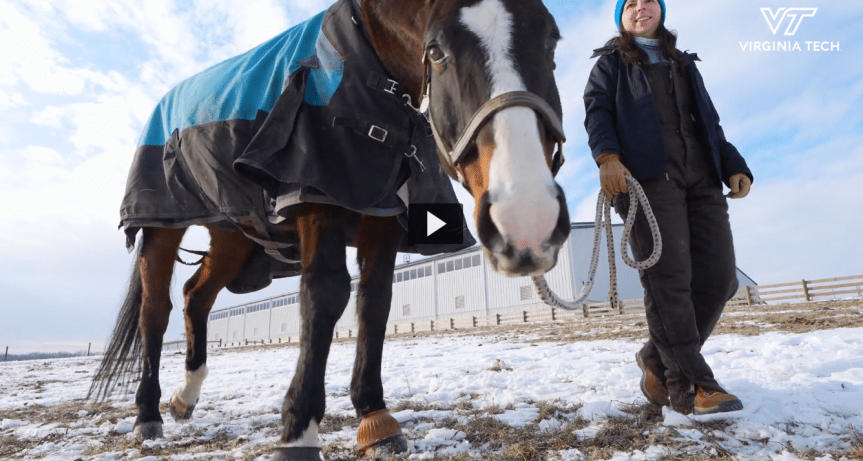
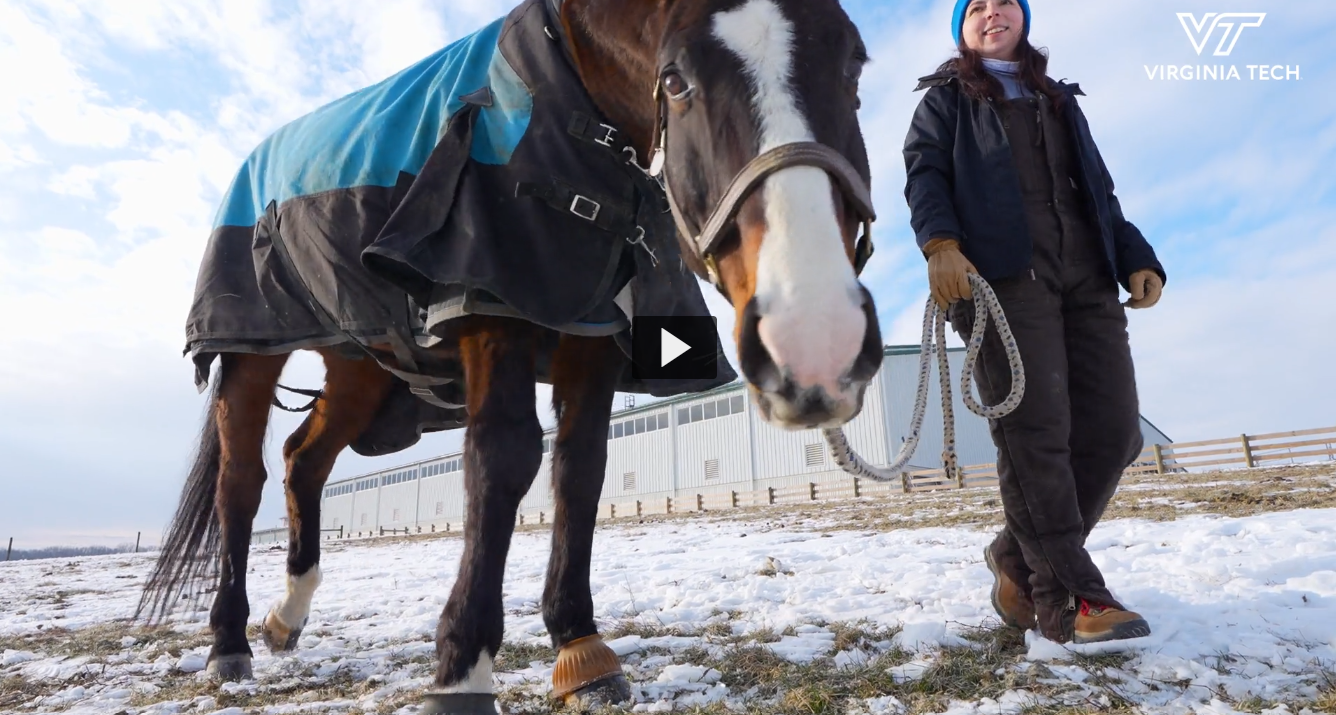
Every day, undergraduate students, staff, and volunteers arrive to feed horses and clean stalls. Through the work, students learn about breeding and foaling, nutrition, exercise physiology, stable management fundamentals, and more.

WATCH VIDEO

A horse being led in a halter and leadrope by a woman reaches down toward the camera. There's snow on the ground and the horse is wearing a blanket.

Participants in the volunteer program gain equine experience through feed shifts to provide daily care to the horses at the Smithfield Equine Unit and the Equitation Barn.  Additional opportunities exist to attend vet and farrier appointments, assist with training and marketing of youngstock, and much more.

All of the horses have been donated or were born at Virginia Tech. Horses are used for breeding, research, equitation lessons and other courses.

For questions about the Equine Volunteer Program, please contact Abbey Collier at aecollier@vt.edu.

APPLY: https://forms.gle/tMXhi5YhSyNxReot8

New table for CT scanner allows examination of horses at Veterinary Teaching Hospital

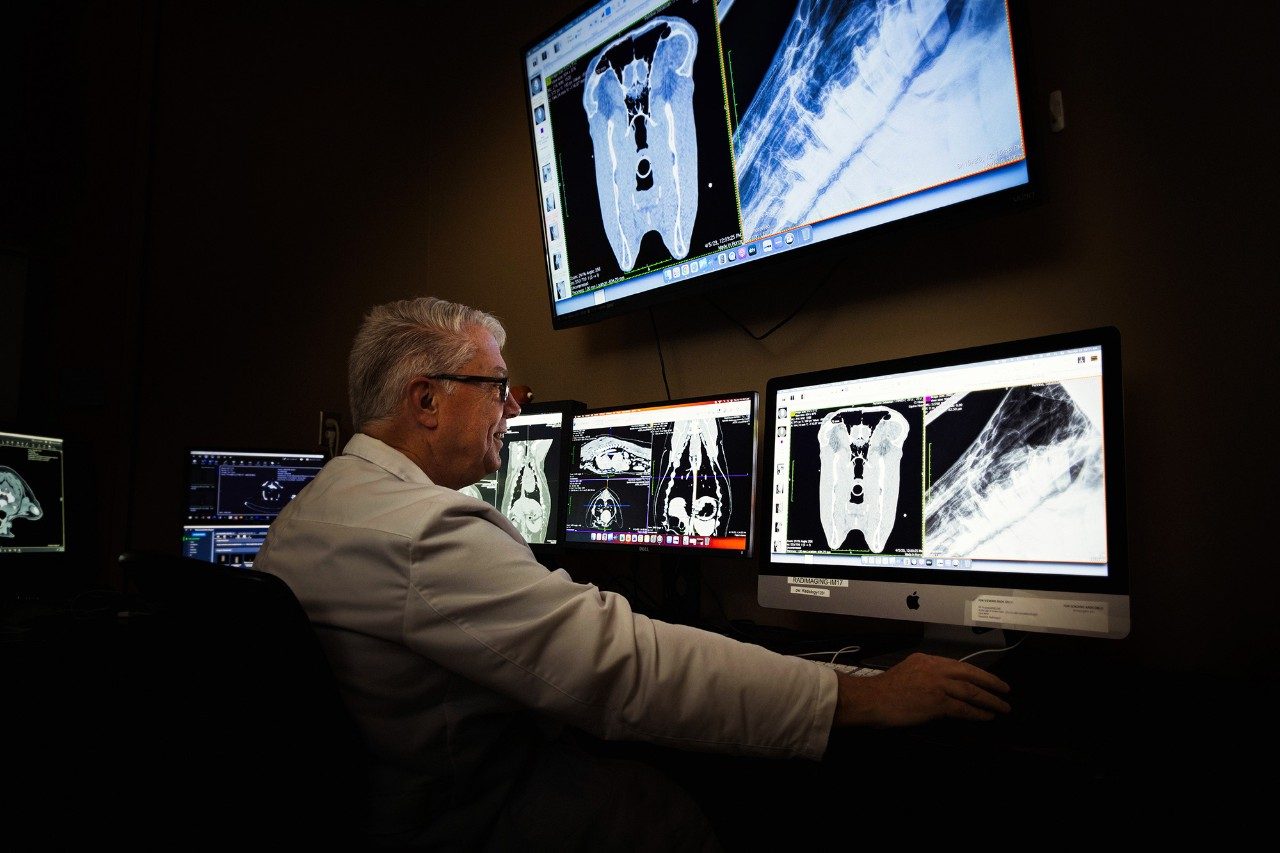
Gregory Daniel, professor of radiology in the Department of Small Animal Clinical Sciences at the Virginia-Maryland College of Veterinary Medicine in Blacksburg. Photo by Andrew Mann for Virginia Tech.
By Virginia Tech

Until recently, clinicians at the Veterinary Teaching Hospital in the Virginia-Maryland College of Veterinary Medicine couldn’t use CT, or computed tomography, for large animals. But the recent purchase of an $85,000 table for large animals that can be wheeled to the CT scanner now allows for that option, particularly useful for studying conditions inside the heads of equine animals.

The Veterinary Teaching Hospital in Blacksburg will be the only veterinary hospital offering the capability to employ CT scans for large animals in a radius extending roughly 240 miles, to as far away as North Carolina State University’s veterinary college in Raleigh and to the Marion duPont Scott Equine Medical Center (EMC) in Leesburg, where there is a CT scanner that allows equine animals to stand during the exam.

“We have referred some of these cases to the EMC because we needed the additional information and that was the best thing for the patient,” said Chris Byron, head of the Department of Large Animal Clinical Sciences. “If they’re coming from southern Virginia or North Carolina to us, it’s a big ask to send them another 3 1/2 to four hours north. So for our region, for Southwest Virginia and into West Virginia, it’s certainly a big, big step up in capabilities.”

“We commonly use the CT scanner for imaging dogs and cats,” said Gregory Daniel, professor of radiology in the Department of Small Animal Clinical Sciences. “The current CT scanner works great for small animals, but most scanners have a 450-pound table limit. For most people and certainly for all small animals, that is sufficient. But if you’ve got a 1,000-pound patient, then a traditional CT scanner cannot accommodate that weight.”

Now, a horse or other large animal can be anesthetized, laid upon the table, and rolled to the CT scanner. The table is electronically synced with the scanner, allowing it to capture slice-by-slice imagery of a large animal’s skull, teeth, and cranial cavities, providing much more detail than X-ray radiographs can reveal.

Byron and Daniel both describe the acquisition of the CT scanner table for large animals as a “game-changer.” Combined with MRI technology that does well with ligaments and cartilage of large animals’ legs and feet, plus existing radiograph and ultrasound abilities, veterinary clinicians can cover much more of a large animal’s body in examinations.

“Radiographs underestimate the extent of the disease,” Daniel said. “But the CT scanner can greatly improve our ability to diagnose diseases of the head and nasal passages.”

Read more.

Virginia Tech’s Marion duPont Scott Equine Medical Center to add dedicated emergency and critical care team

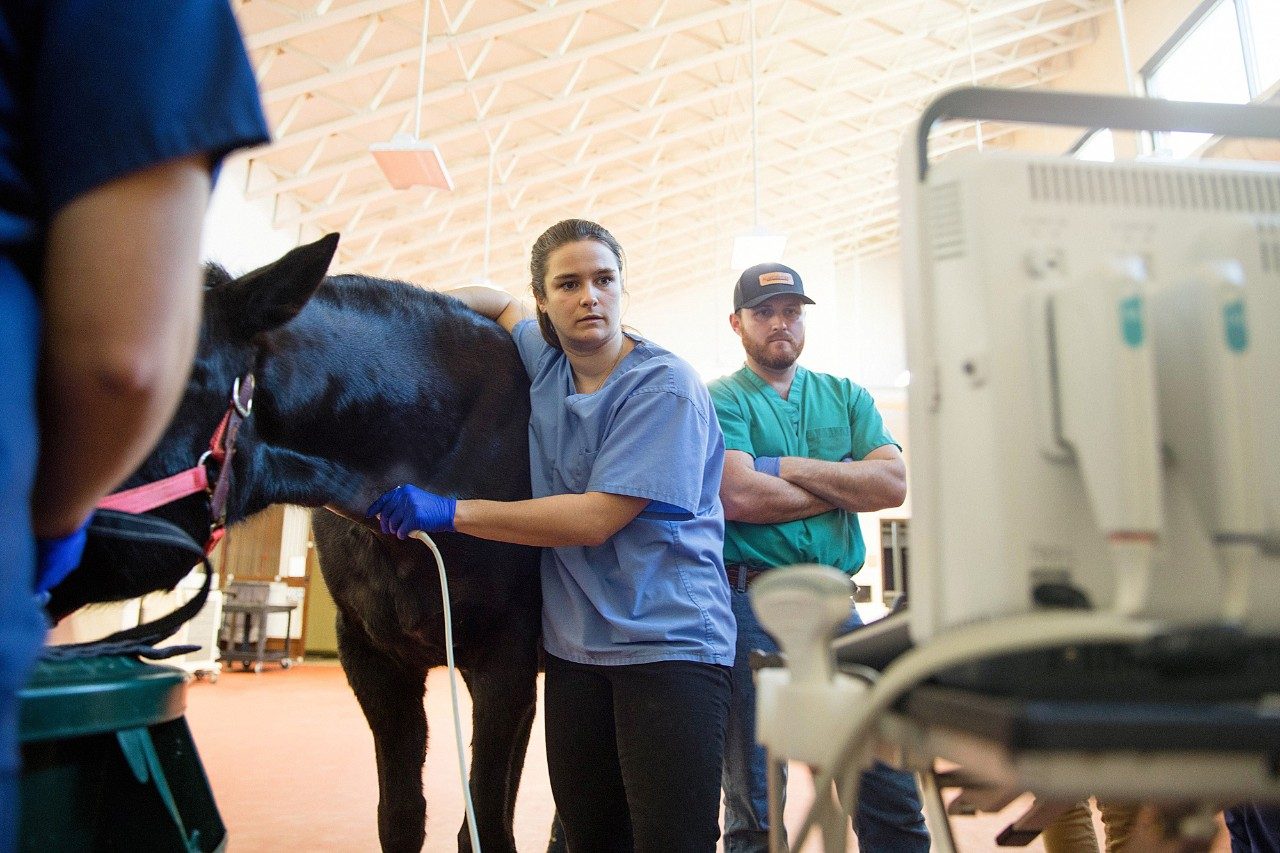
A woman dressed in blue scrubs uses an instrument against a horse's neck as she and a man watch a computer screen.
Sophie Boorman, clinical assistant professor of equine surgery, scans a patient at the Marion duPont Scott Equine Medical Center in Leesburg, Va. Photo by Andrew Mann for Virginia Tech.

It has been widely known in the equine community in recent years that students in veterinary colleges throughout the country are choosing to steer away from equine veterinary medicine. 

In 2021, the American Association of Equine Practitioners highlighted this plight, sharing that only a small percentage of veterinary graduates were entering the equine profession. Even more disturbing is the fact that 50 percent of these graduates will leave the equine profession within five years. 

This issue has caused some serious outside-the-box thinking at the Virginia-Maryland College of Veterinary Medicine as well as other veterinary colleges and private equine practices throughout the country that wish to sustain emergency and elective services that they currently offer to clients.

Michael Erskine ’84, DVM ’88, the Jean Ellen Shehan Professor and director of the Marion duPont Scott Equine Medical Center (EMC), is acting co-chair on a subcommittee of the American Association of Equine Practitioners’ Commission on Equine Veterinary Sustainability, which focuses on the demands of emergency coverage. At the recent 2022 association convention in San Antonio, Texas, Erskine moderated a roundtable and presented a lecture on this topic. 

Since the equine medical center opened its doors in 1984, its clinicians have been expected to offer outpatient and elective treatments and cover 24/7 emergency and critical care services. This expectation causes clinicians and clinical support staff enormous stress and fatigue, affecting not only their work-life balance, but also their ability to cover daytime scheduled appointments in a timely, efficient way. Due to the continuing increase in the emergency and critical care caseload, this is not a sustainable situation.

The equine medical center has seen a substantial increase in emergency and critical care cases in recent years. In fiscal year 2022, emergency cases increased by 21.5 percent over the previous year, amounting to 739 emergency cases treated during the 12 months. There has been much discussion as to how to continue offering the current high level of emergency while being supportive of the expectations levied on clinical staff.

“To sustain emergency services at the EMC, we are planning to create a dedicated emergency and critical care team,” Erskine said. “This team will be focused around specially trained equine clinicians who have completed advanced training in both emergency medicine and surgery.”

Read more….

Palomino quarter horse gelding tops Great American Ranch & Trail Horse Sale at $77K

With nearly 100 horses parading through the sales pen at the 2022 Great American Ranch & Trail Horse Sale, it would be hard to not find something you like. From 12-hand ponies to 17-hand Friesians, ranch-bred and trained quarter horses to loudly colored paints with impressive show records to draft crosses with miles of trails behind them, their resumes varied nearly as much as the medley of colors they came in.

And as much as we all know that color doesn’t make a good horse, we also know that buyers can’t resist a flashy horse. Make it a blue roan or a palomino and that’s the true icing on the cake.

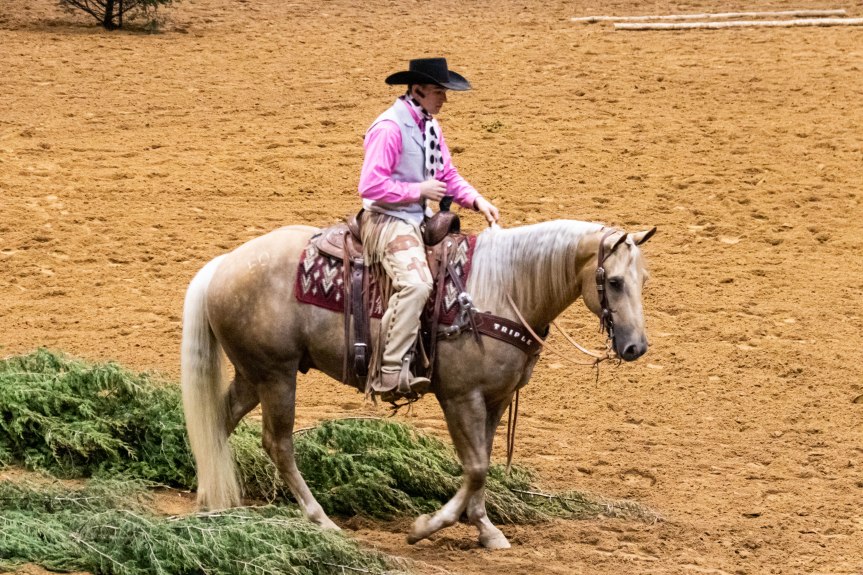
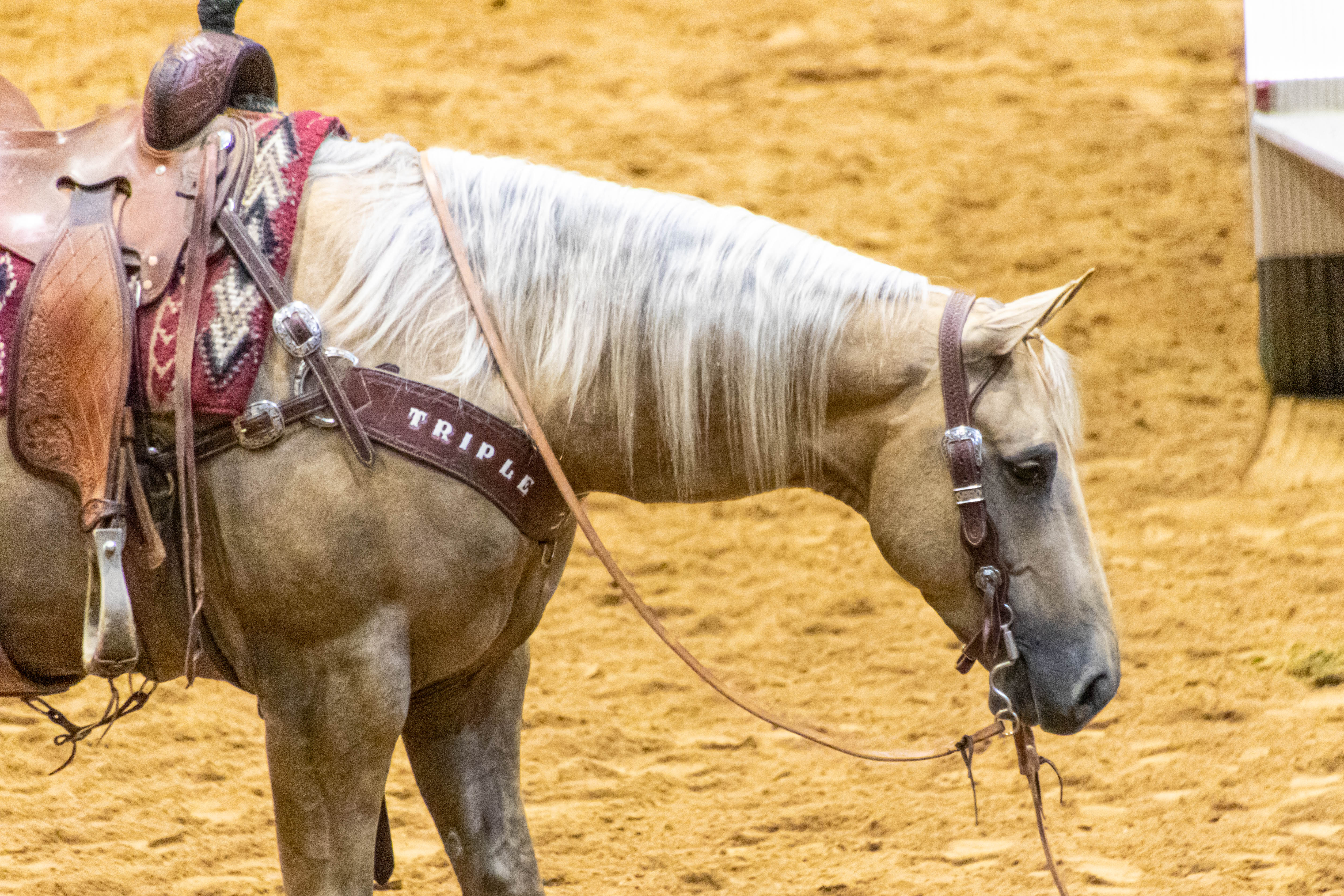
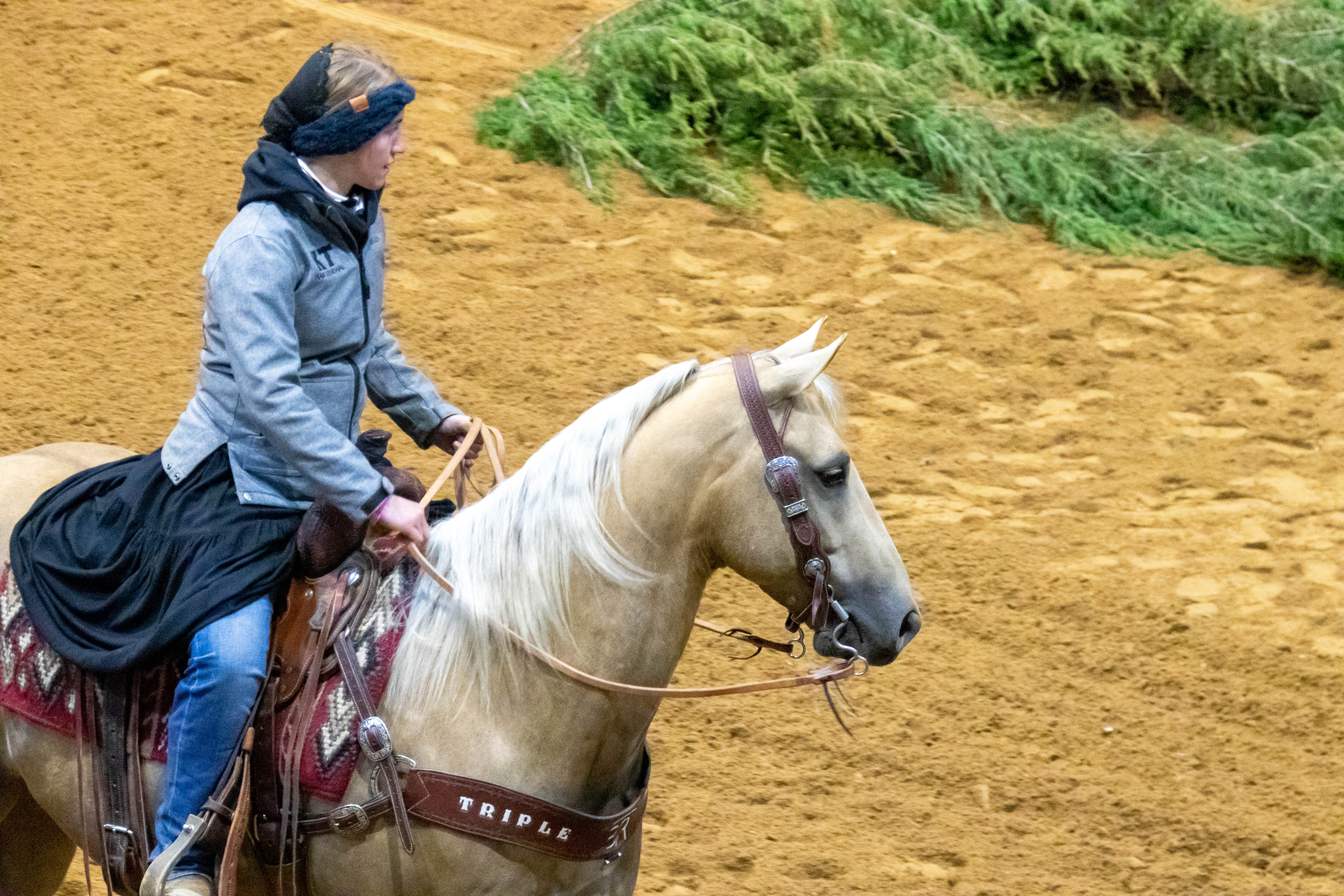
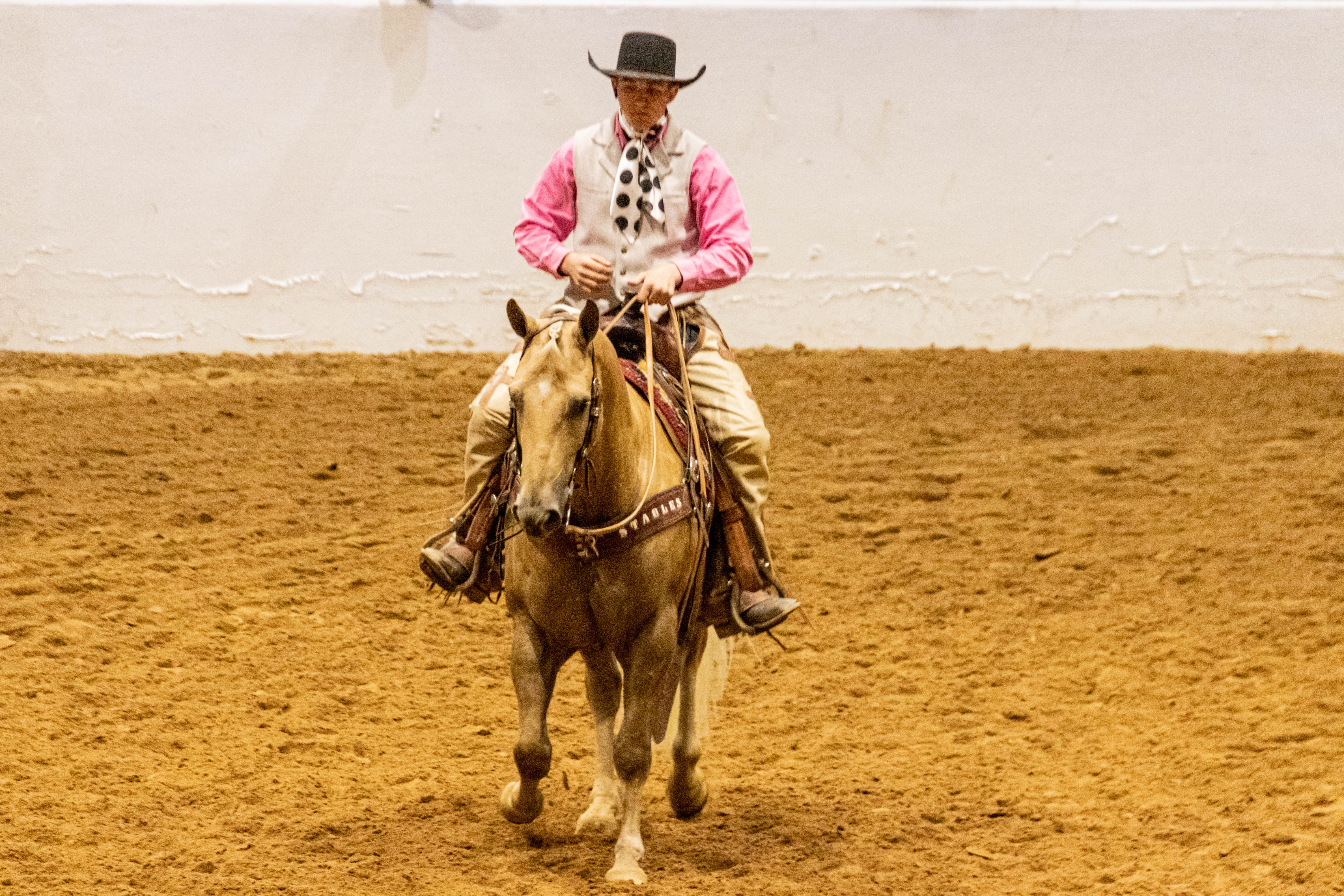
For the past two years, the feathered feet of Gypsy Vanners stole the show. But this year, it was a palomino quarter horse named “Newt” that drew the highest bid. Heza Triple Peponita, a 2017 AQHA gelding consigned by Triple R Stables in Ohio, sold for $77,000. The winning bid came over the Internet, where the sale is live-streamed. Watch a video from the bidding.

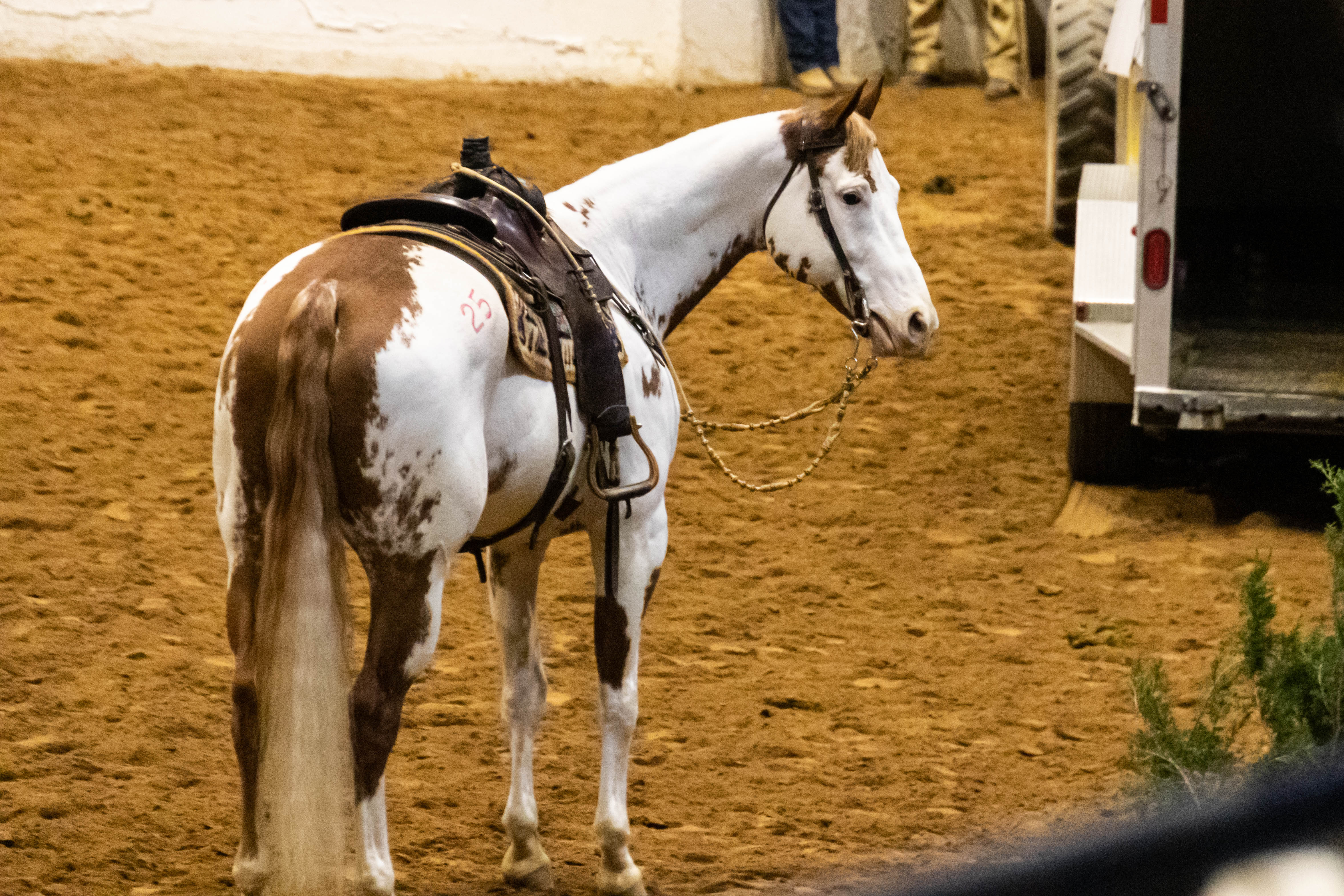
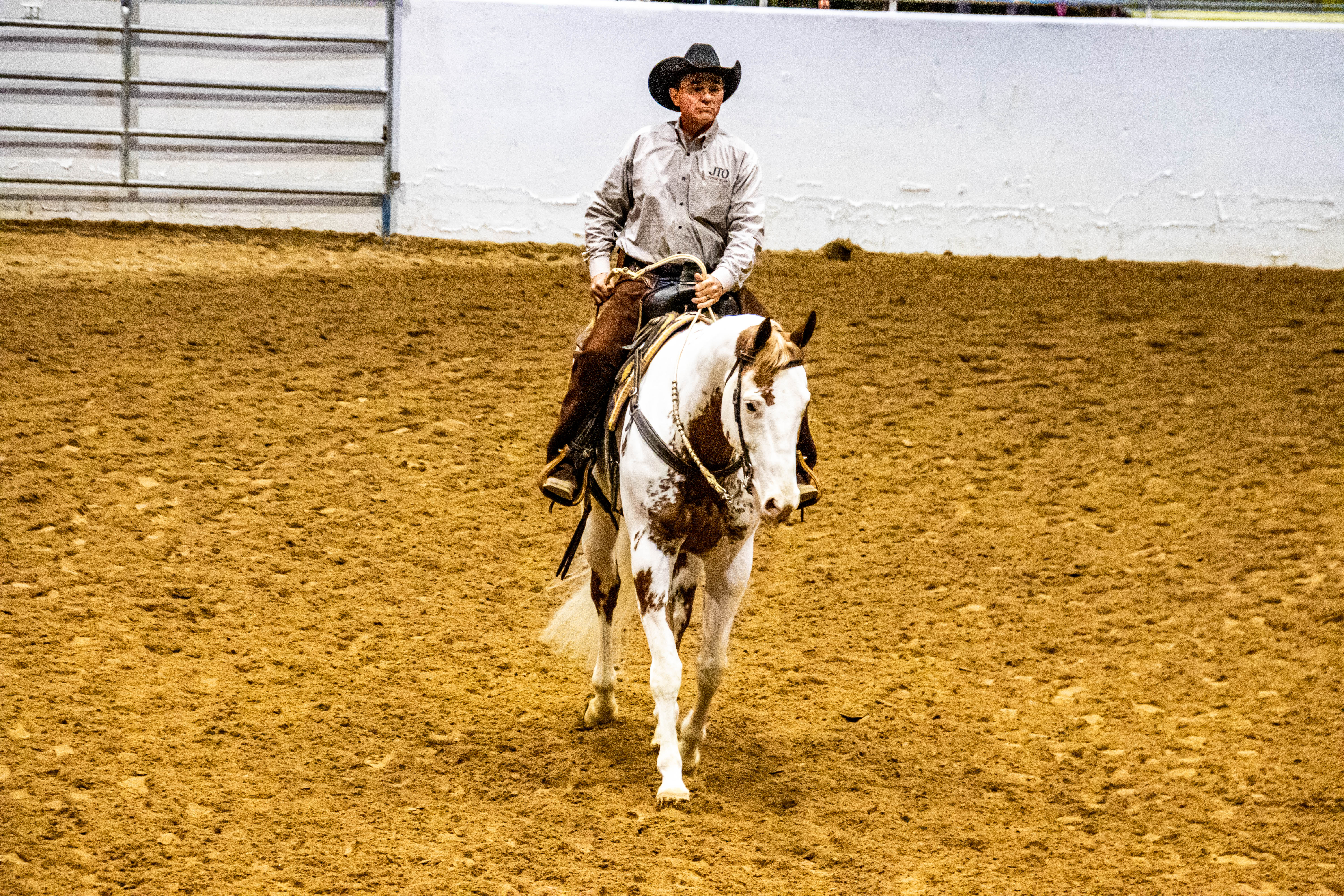
Hip No. 50, Heza Triple Peponita, during the trail competition. He was the sale high-seller at $77,000.

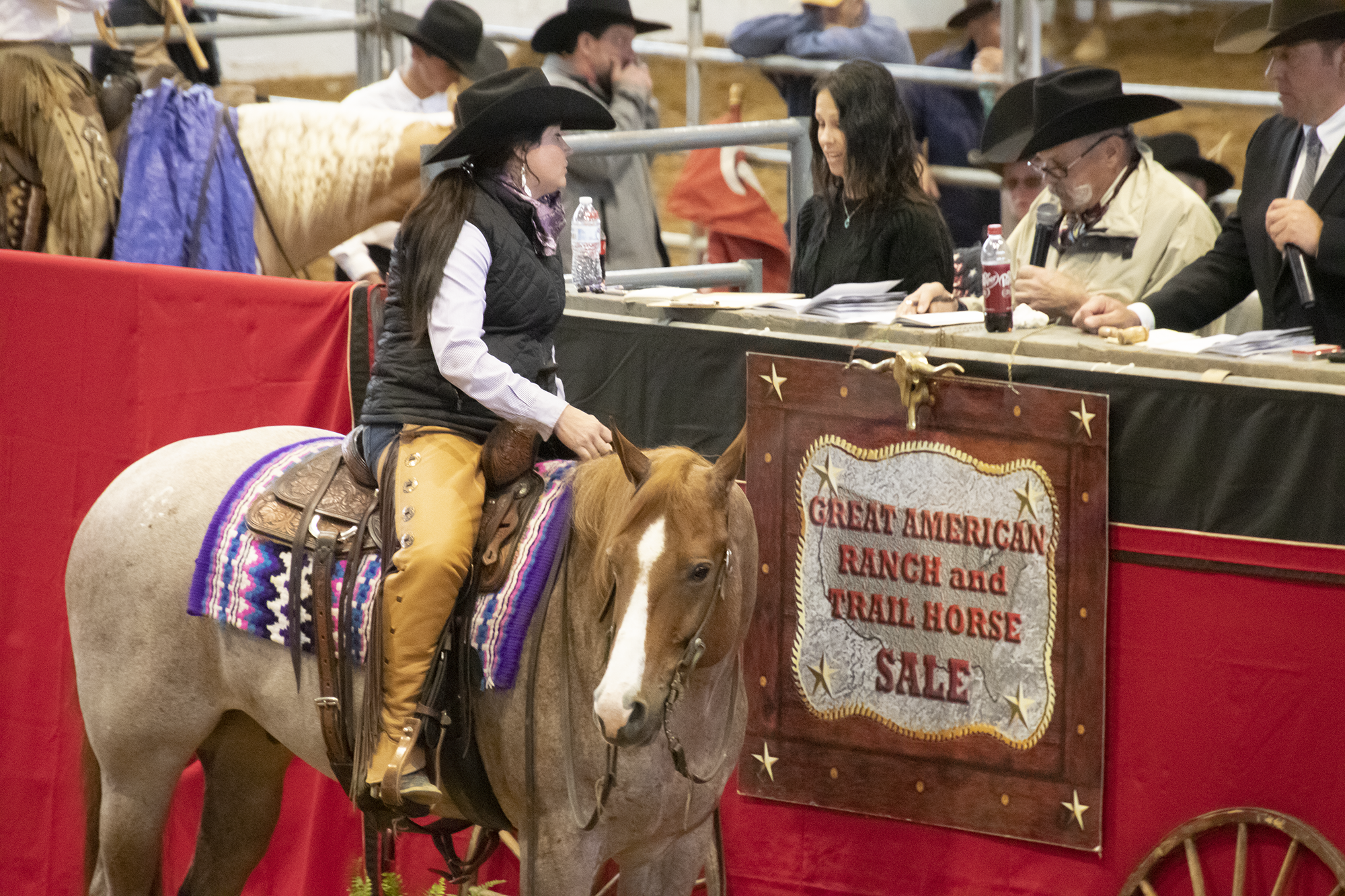
The Great American Ranch & Trail Horse Sale is unique. It gives sellers a chance to show off their horses (or potentially broadcast any shortcomings in the horse’s training). Sale horses compete for cash and prizes. But potential buyers are winners, too, as they get the chance to watch the horses face unfamiliar obstacles in an unfamiliar, noisy environment.

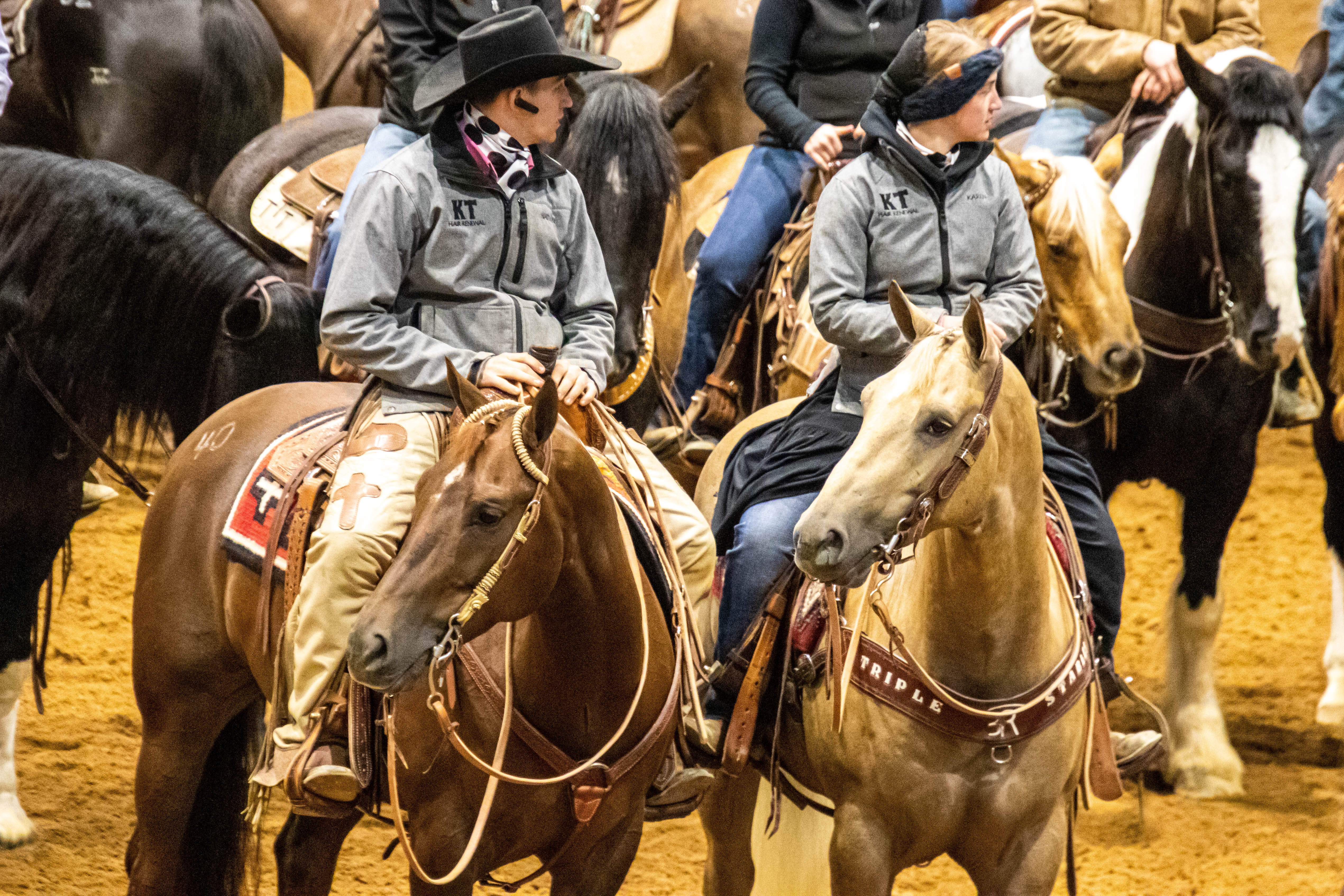
At this year’s sale, many of the sale horses competed in either the trail horse competition, the ranch horse competition, or both — betting their horse’s training will shine through even in the difficult environment of an indoor coliseum.

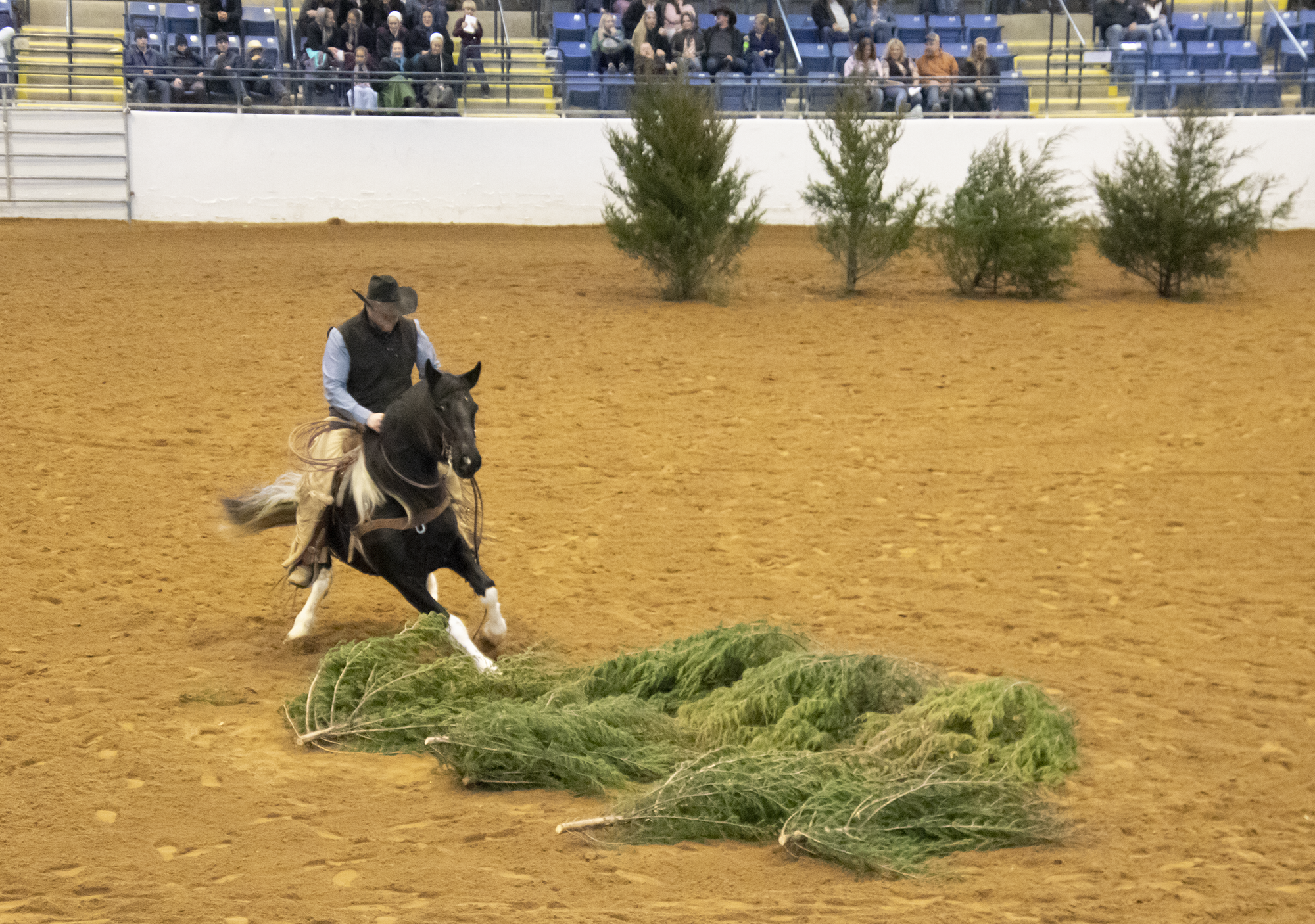
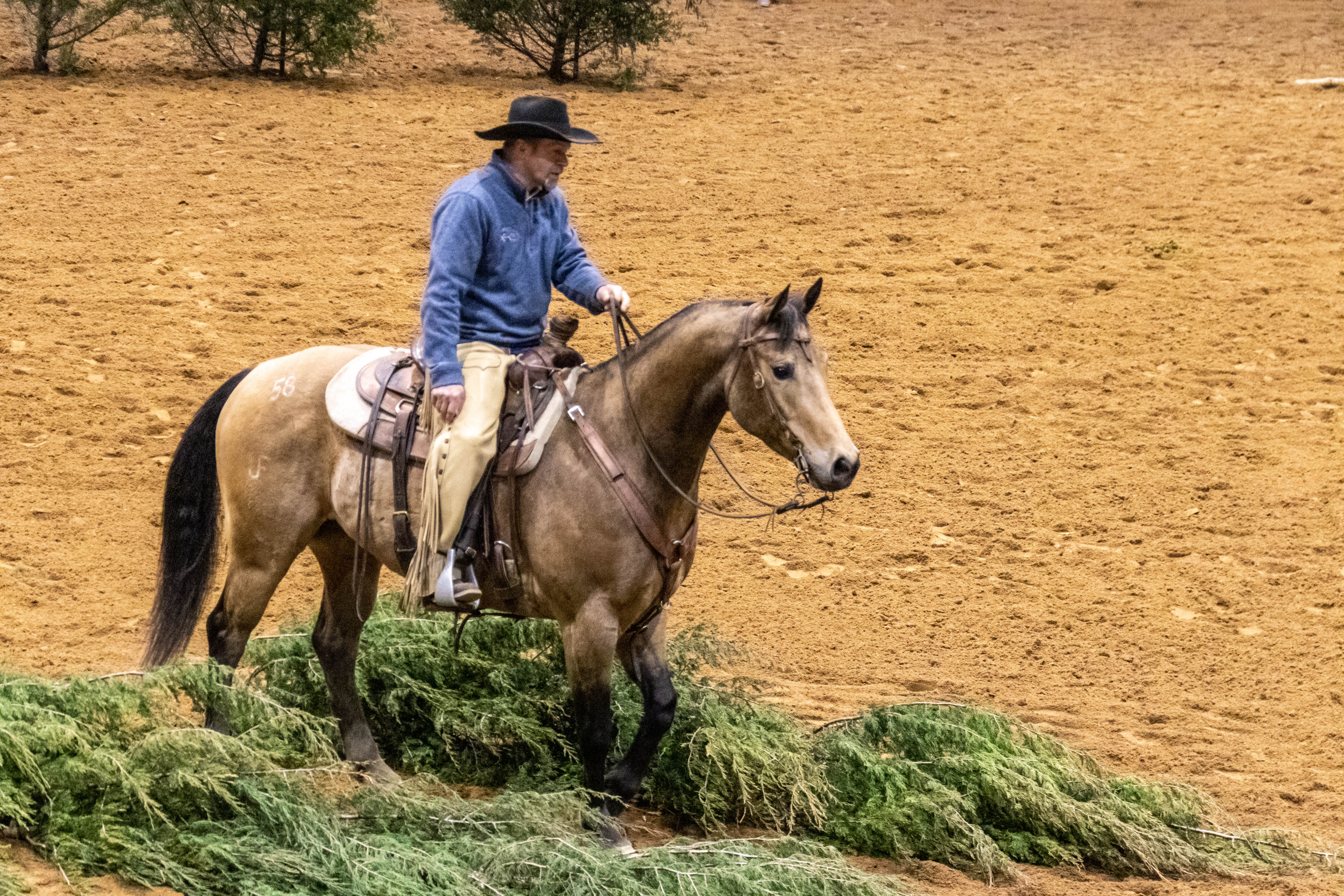
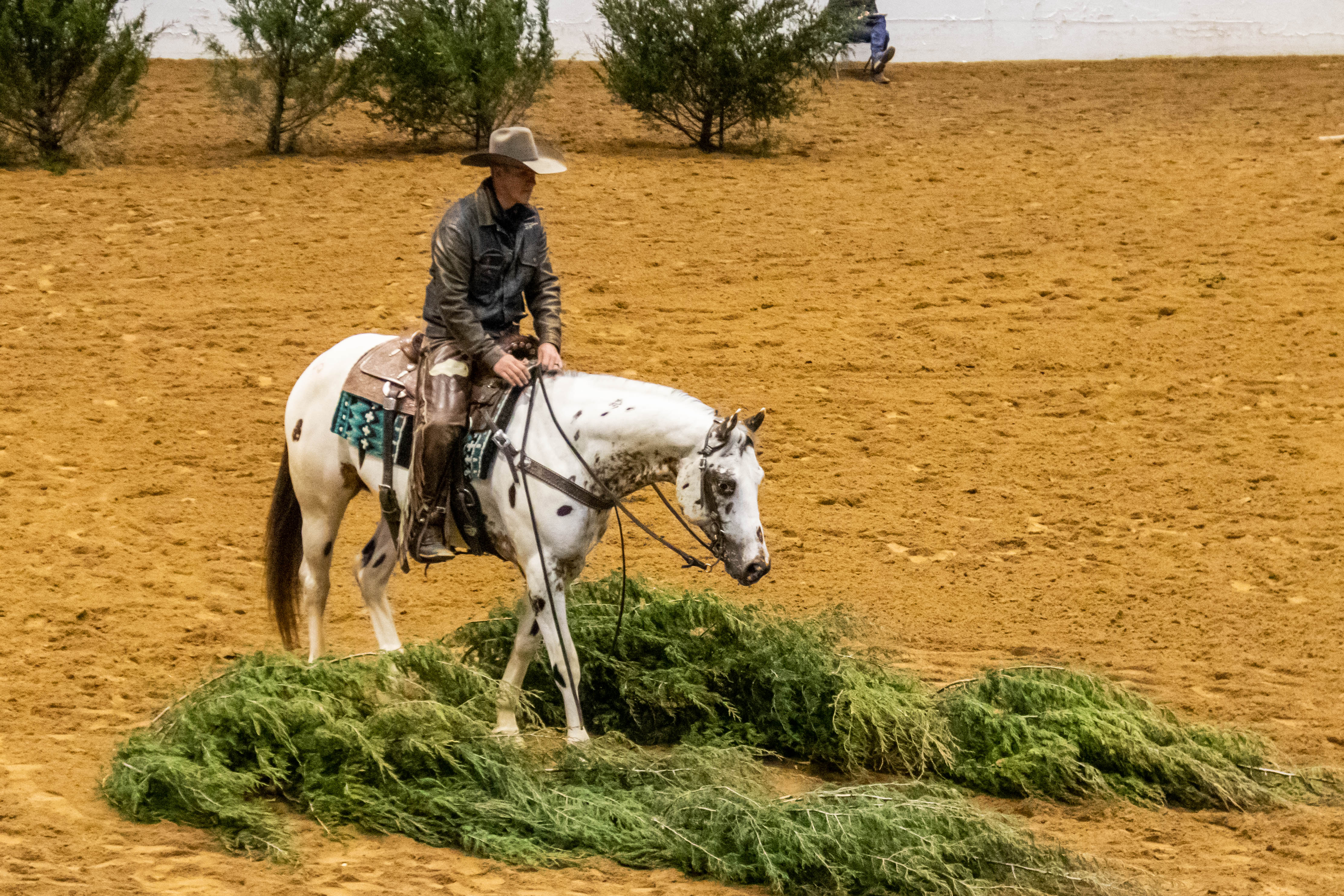
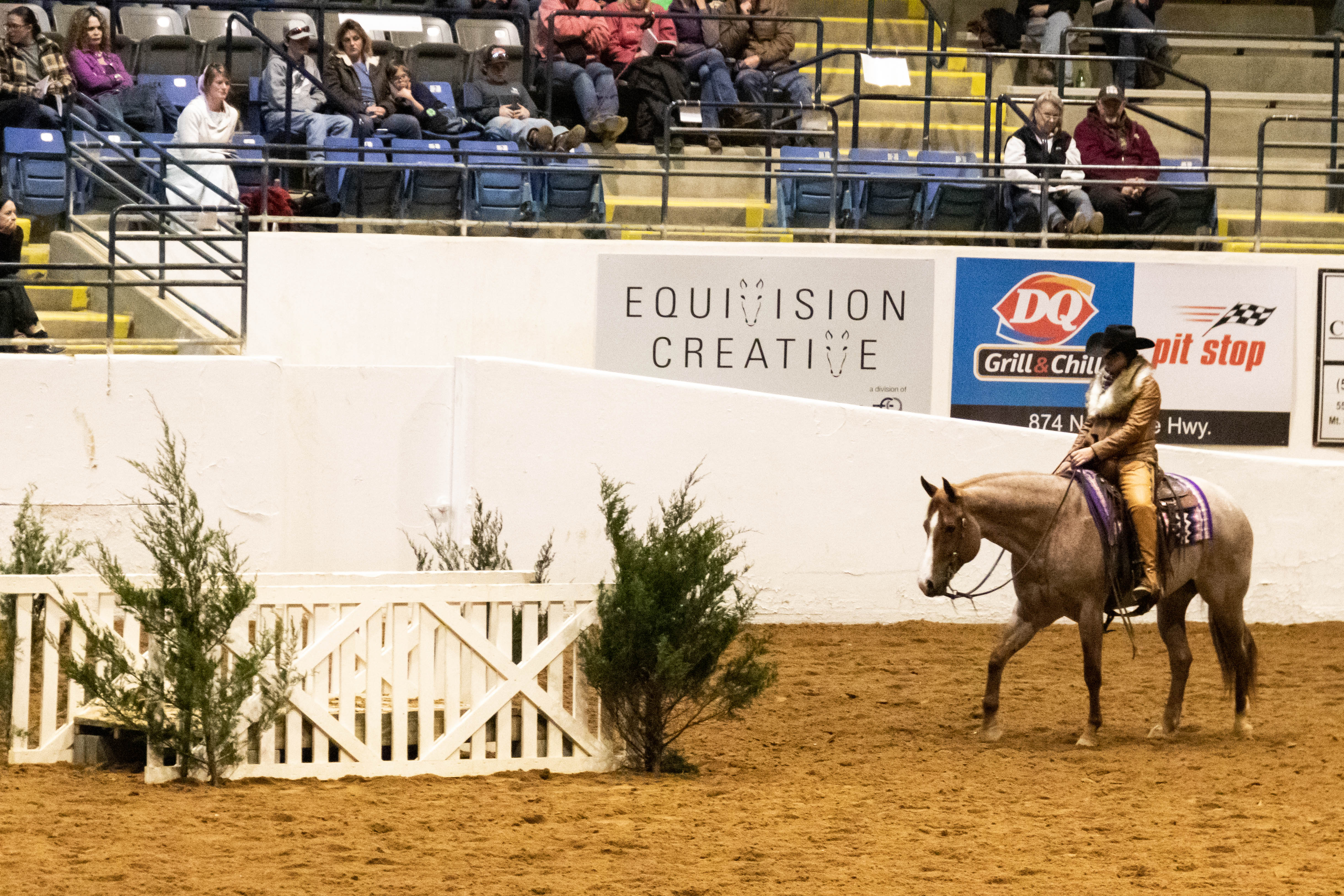
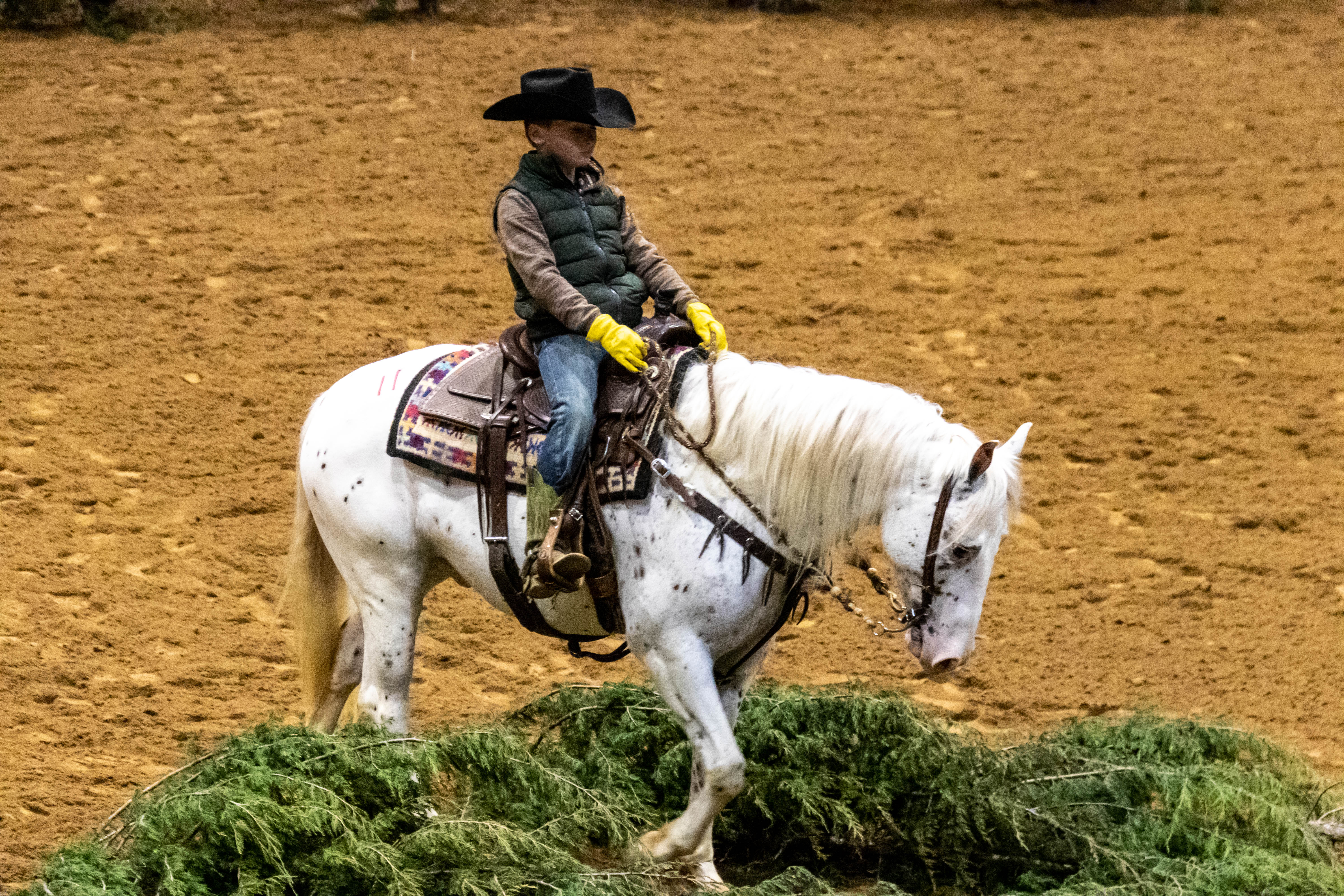
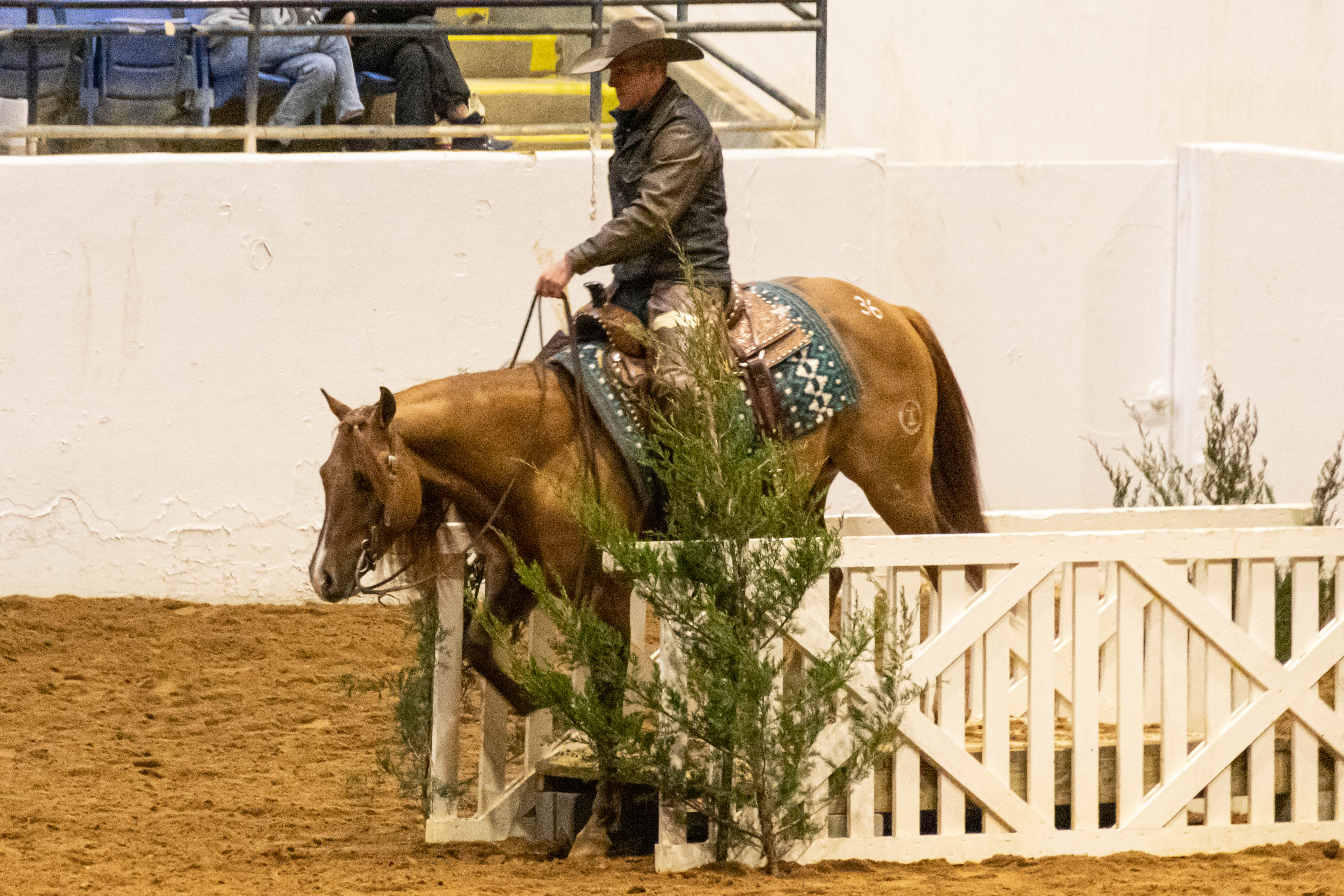
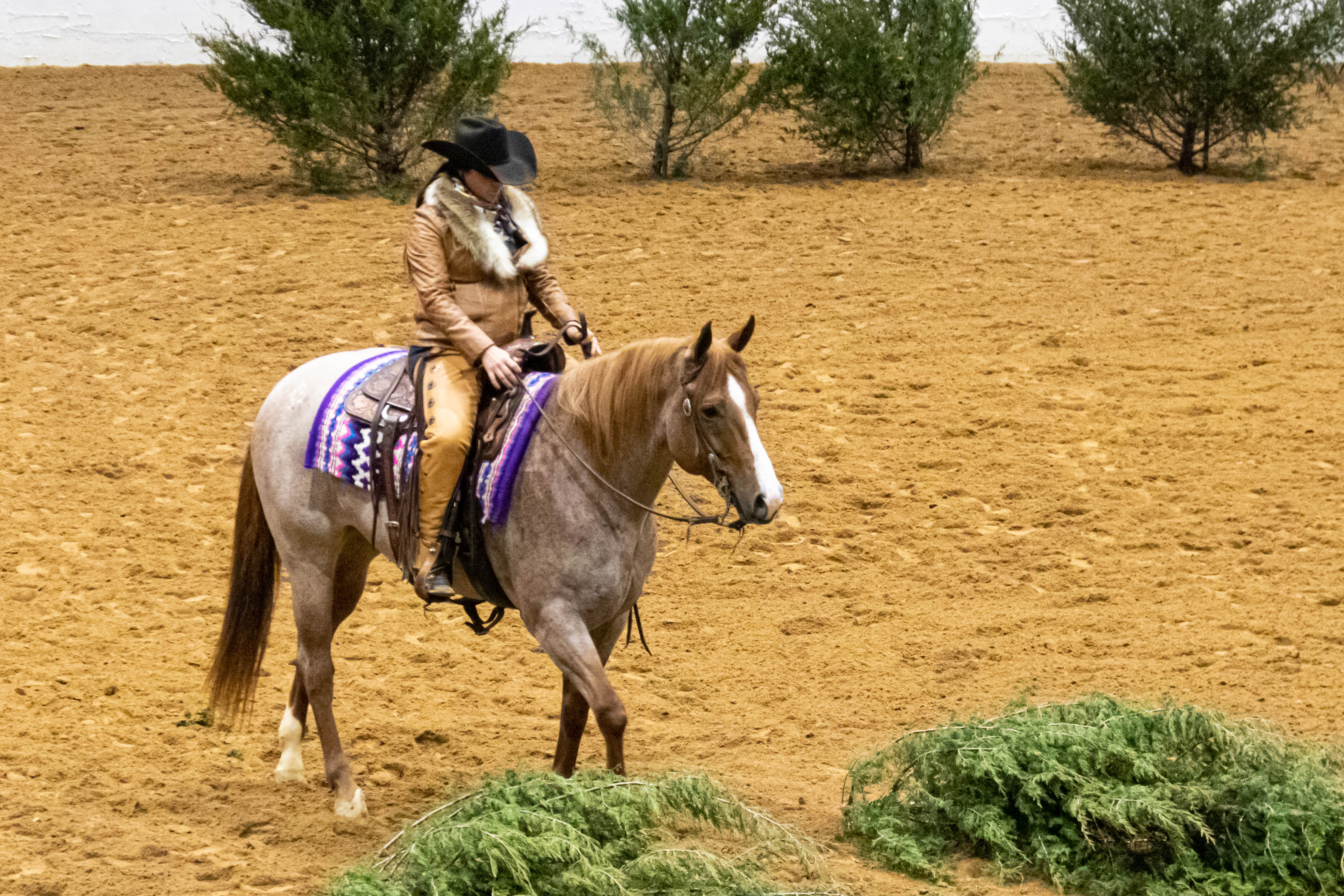
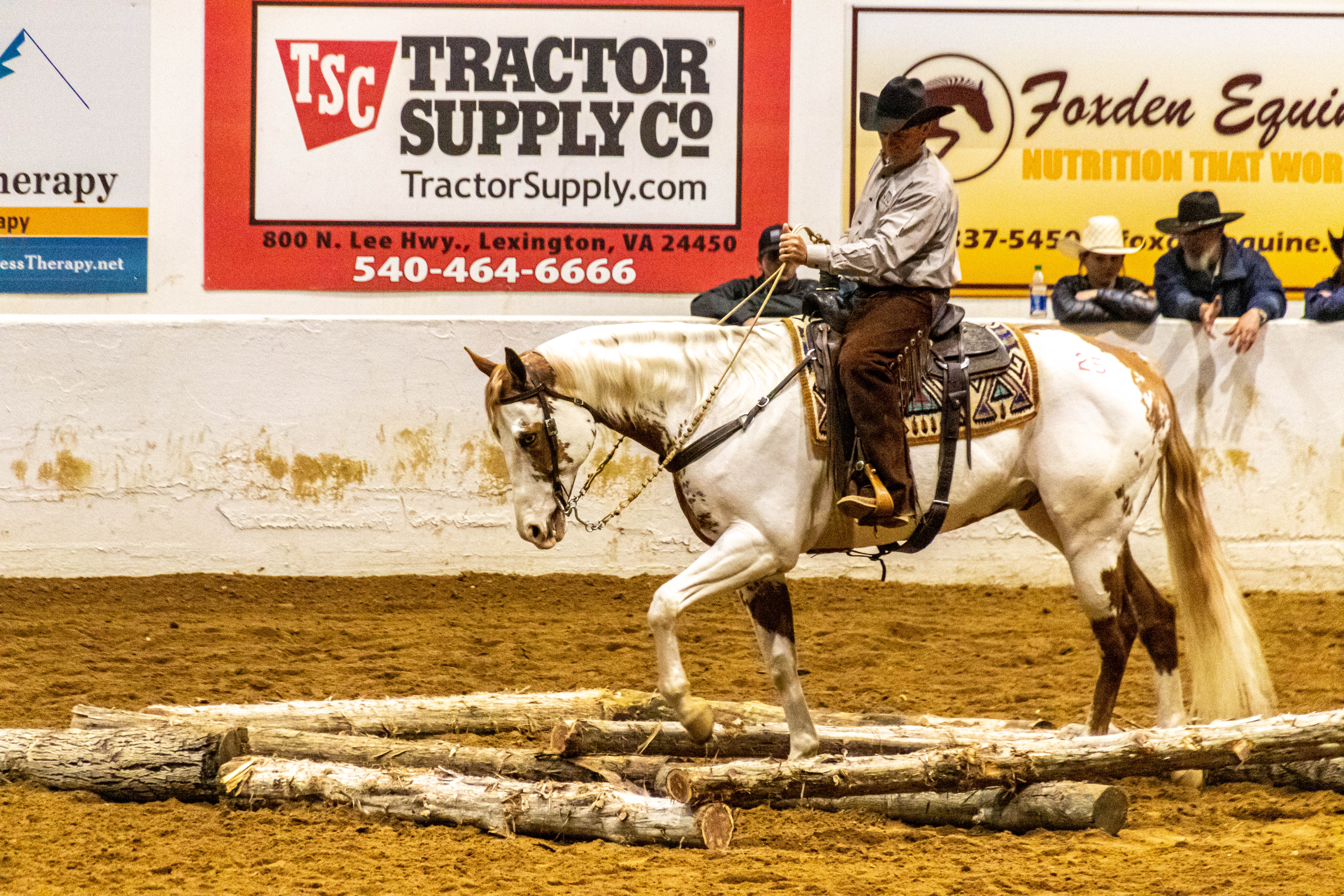
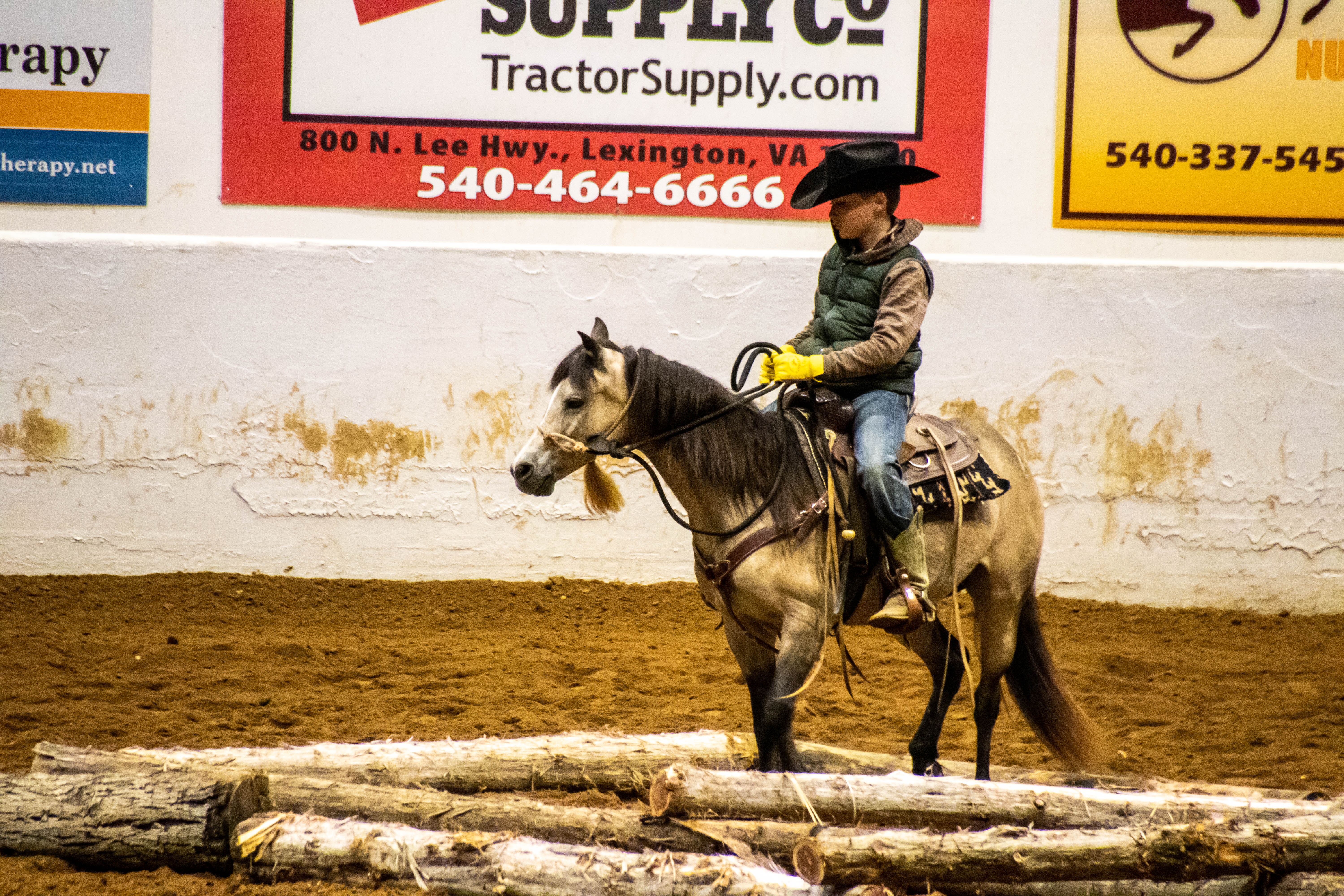
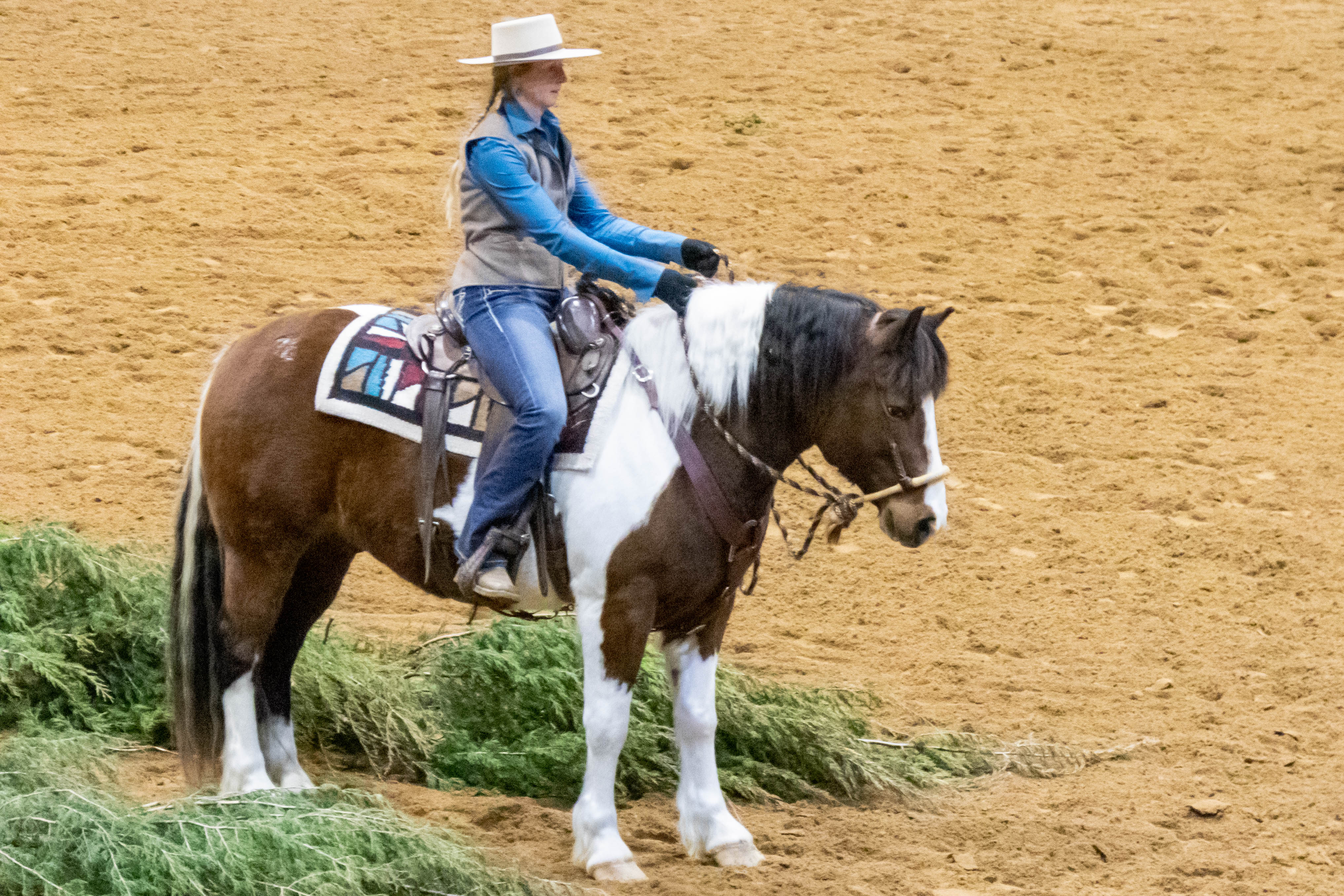
Trail course obstacles include stepping over logs, crossing a bridge, weaving through tree branches, passing a campfire, ground tying while their rider disappears into an outhouse, and loading onto a trailer.

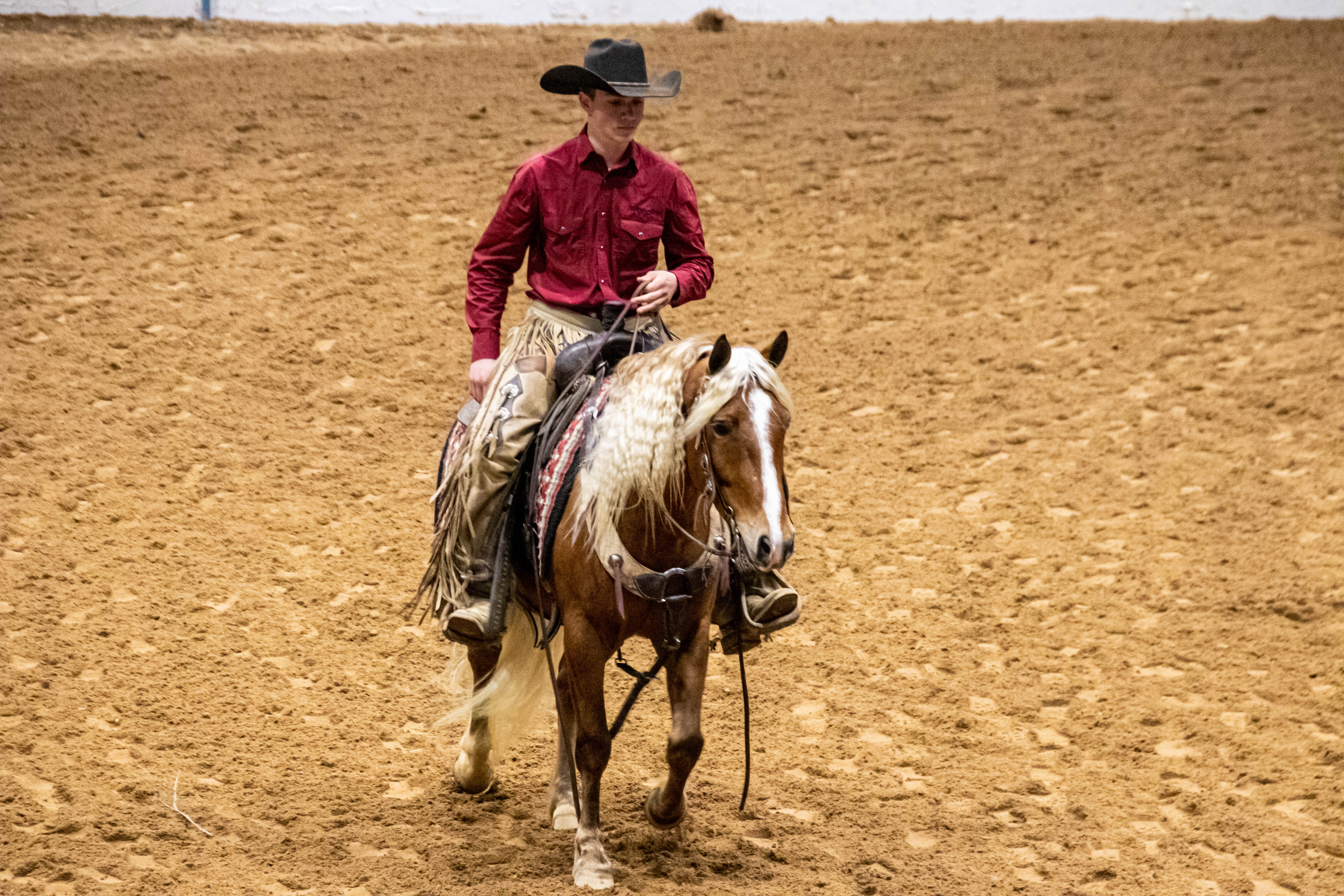
Ten finalists then return the next morning for a harder version of the course and perform a freestyle routine that shows off the horse’s unique abilities.

While the top-seller placed seventh, it was a North American Spotted Haflinger, Tigers Sweet Gentry, who quietly plodded through the course and with guns blazing in the finals came away with the championship. He later sold for $40,000. Reserve champion was Hip No. 25, TRS Loud Sensation, who sold for $25,000.

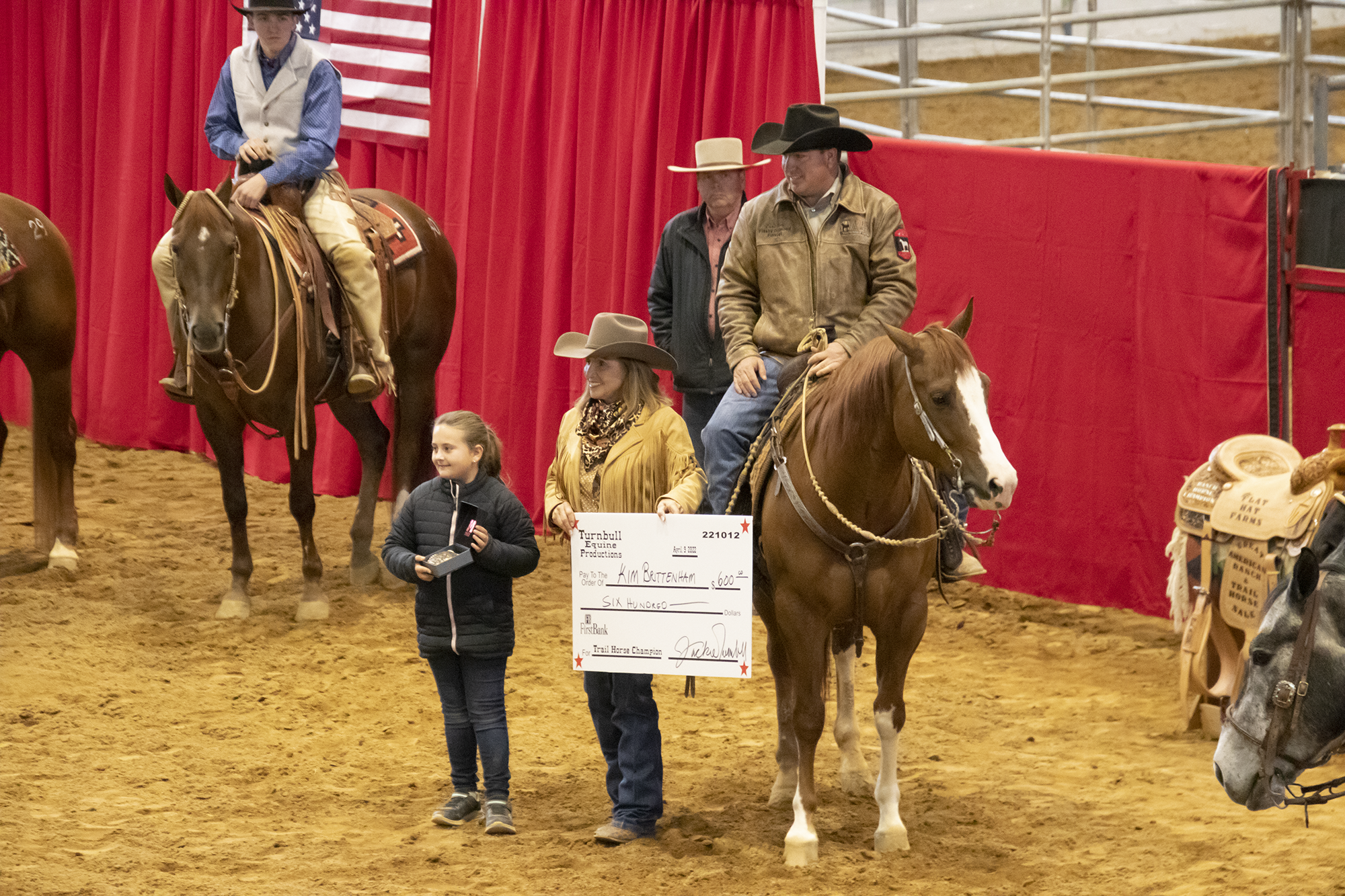
Tigers Sweet Gentry won the $2,000 Trail Horse Competition.

The ranch horse competition is held on Friday afternoon and includes completing a ranch horse pattern with stops, spins, and lead changes as well as boxing and penning a calf, before attempting to rope the calf.

This year, a flashy sorrel named Play Berry took home top honors. He later sold for $30,000.

Play Berry receives his prizes for the Ranch Horse competition win.

Trail Horse Top 5

  1. Hip No. 76, Tigers Sweet Gentry, 2017 North American Spotted Haflinger, sold for $40,000
  2. Hip No. 25, TRS Loud Sensation, 2010 APHA gelding, sold for $25,000
  3. Hip No. 33, Southern Living, 2017 AQHA gelding, sold for $32,500
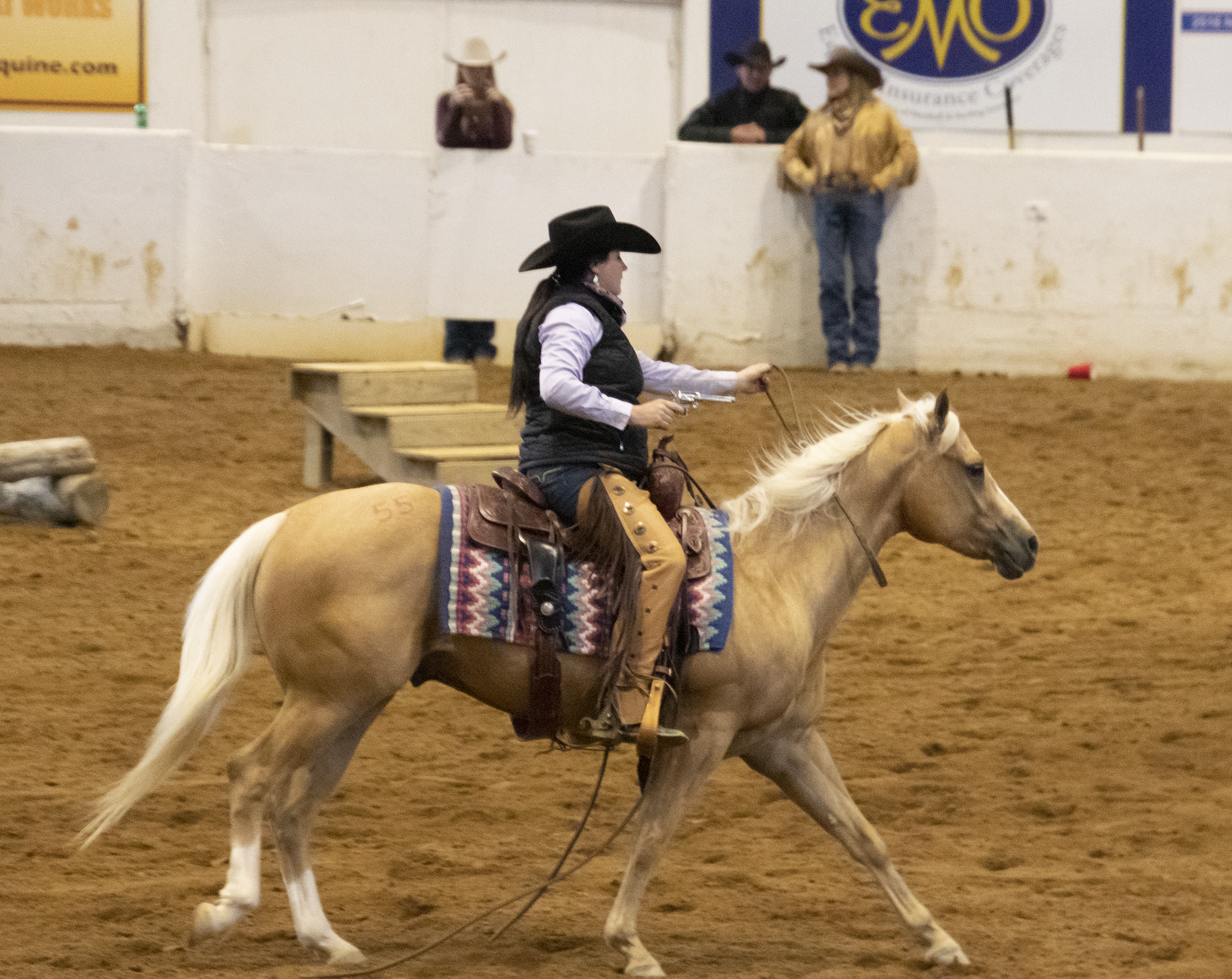
  4. Hip No. 55, Ima Yella Skippa Kid, 2018 AQHA gelding, sold for $17,000
  5. Hip No. 40, Wranglin in Rio, 2016 AQHA gelding, (no sale)

Sale high-sellers

  1. Heza Triple Peponita, #50, (AQHA) $77,000
  2. RW Shotgun Blue, #23, (AQHA) $45,000
  3. (tie) Ollie, #35, (grade) $40,000
  4. (tie) Rio Angelical 77, #36 (AQHA), $40,000
  5. (tie) Tigers Sweet Gentry, #76, (Spotted Haflinger), $40,000
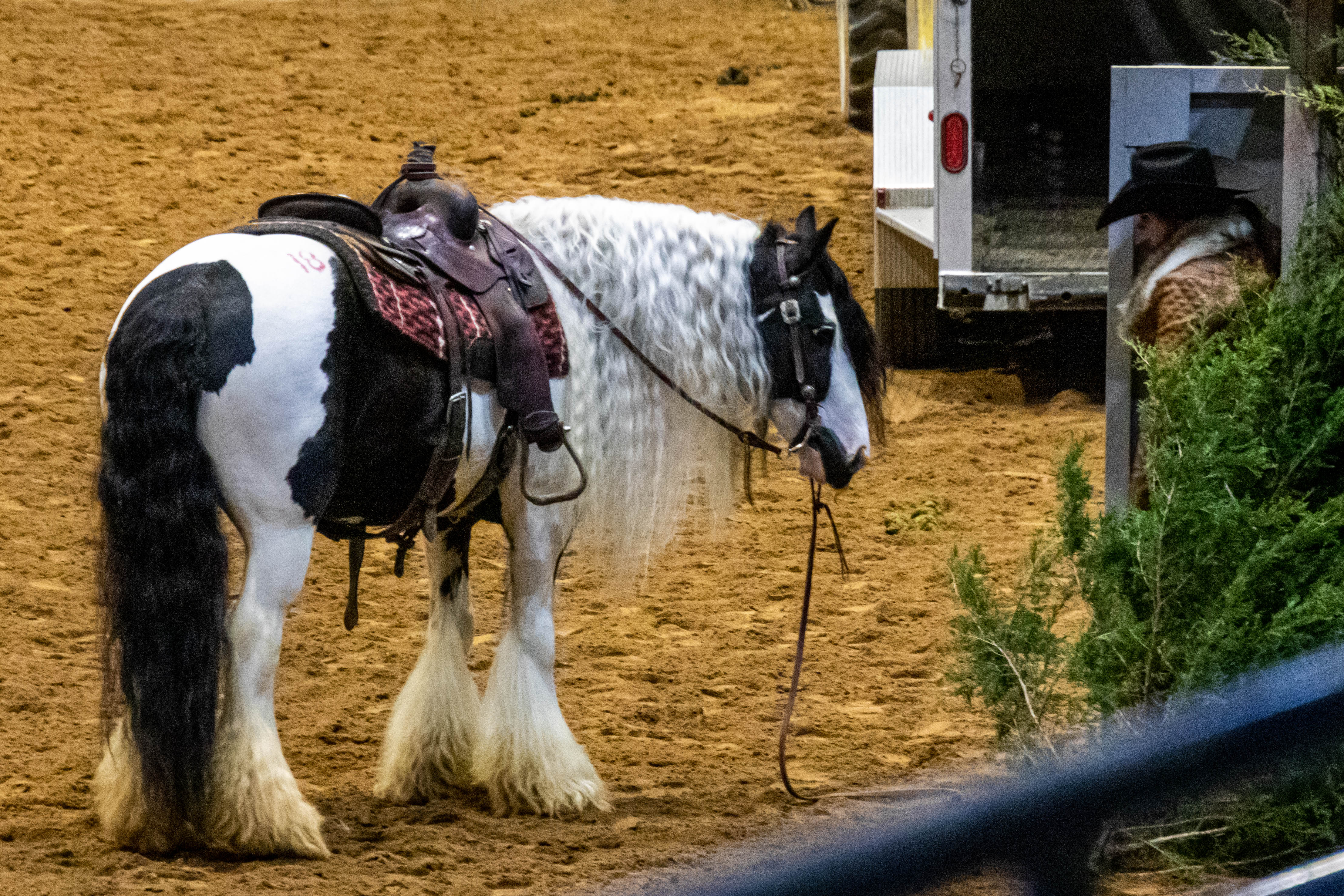
  6. St James of Glen Grace, #18, (Gypsy Vanner), $38,000
  7. Buckeyes Joe, #27, (Gypsy Vanner), $37,000
  8. EQHR Blue Fire Boots, #58, (AQHA) $34,000
  9. Southern Living, #33, (AQHA), $32,500
  10. Tyson, #3, (grade pony), $30,000

Budweiser Clydesdales to appear in Roanoke’s St. Patrick’s Day Parade

The Budweiser Clydesdales

Update: The Budweiser Clydesdales may not appear in Saturday’s parade because of inclement weather. While the parade is set to be held rain or shine, the iconic eight-horse hitch does not appear in snow or rain. Both are in Saturday’s forecast. Parade officials remain hopeful that the weather will remain clear enough to allow the horses to participate.

“Eight tons of champions,” the world-famous Budweiser Clydesdales, will be featured March 12 at Roanoke’s St. Patrick’s Day Parade.

The famous bay draft horses were scheduled to appear in 2020, however the parade was canceled because of the pandemic. Now, they will make good on that promised appearance. The eight-horse hitch will pull their bright red beer wagon, complete with Dalmation, through downtown Roanoke’s streets starting at 11 a.m. Saturday.  The parade travels from Jefferson Street to Campbell Avenue, ending at Williamson Road.

The Clydesdale’s appearance in Roanoke is one of hundreds made annually by the traveling teams.

The horses are stabled at Hollins University but are not available for public viewing before or after the parade.

One of the Clydesdales, Ivan, was on hand for a meet and greet at Healing Strides of Virginia in Boones Mill on March 7.

Clydesdale Handler Grant Johnson explained the qualifications required for a horse to become a Budweiser “gentle giant” to WDBJ7 in 2020. “One of them is they have to be a gelding. They have to be bay in color, have a black mane and tale, white blaze face, and with Clydesdales there’s always the famous white feathers. They have to have four white feathers,” he said.

They also have to be at least 18 hands. Before greeting the masses, the Clydesdales go through four to five years of training.

“We want horses that are calm, have a good disposition, and can handle noises and crowds,” Johnson said.