It has been widely known in the equine community in recent years that students in veterinary colleges throughout the country are choosing to steer away from equine veterinary medicine.
In 2021, the American Association of Equine Practitioners highlighted this plight, sharing that only a small percentage of veterinary graduates were entering the equine profession. Even more disturbing is the fact that 50 percent of these graduates will leave the equine profession within five years.
This issue has caused some serious outside-the-box thinking at the Virginia-Maryland College of Veterinary Medicine as well as other veterinary colleges and private equine practices throughout the country that wish to sustain emergency and elective services that they currently offer to clients.
Michael Erskine ’84, DVM ’88, the Jean Ellen Shehan Professor and director of the Marion duPont Scott Equine Medical Center (EMC), is acting co-chair on a subcommittee of the American Association of Equine Practitioners’ Commission on Equine Veterinary Sustainability, which focuses on the demands of emergency coverage. At the recent 2022 association convention in San Antonio, Texas, Erskine moderated a roundtable and presented a lecture on this topic.
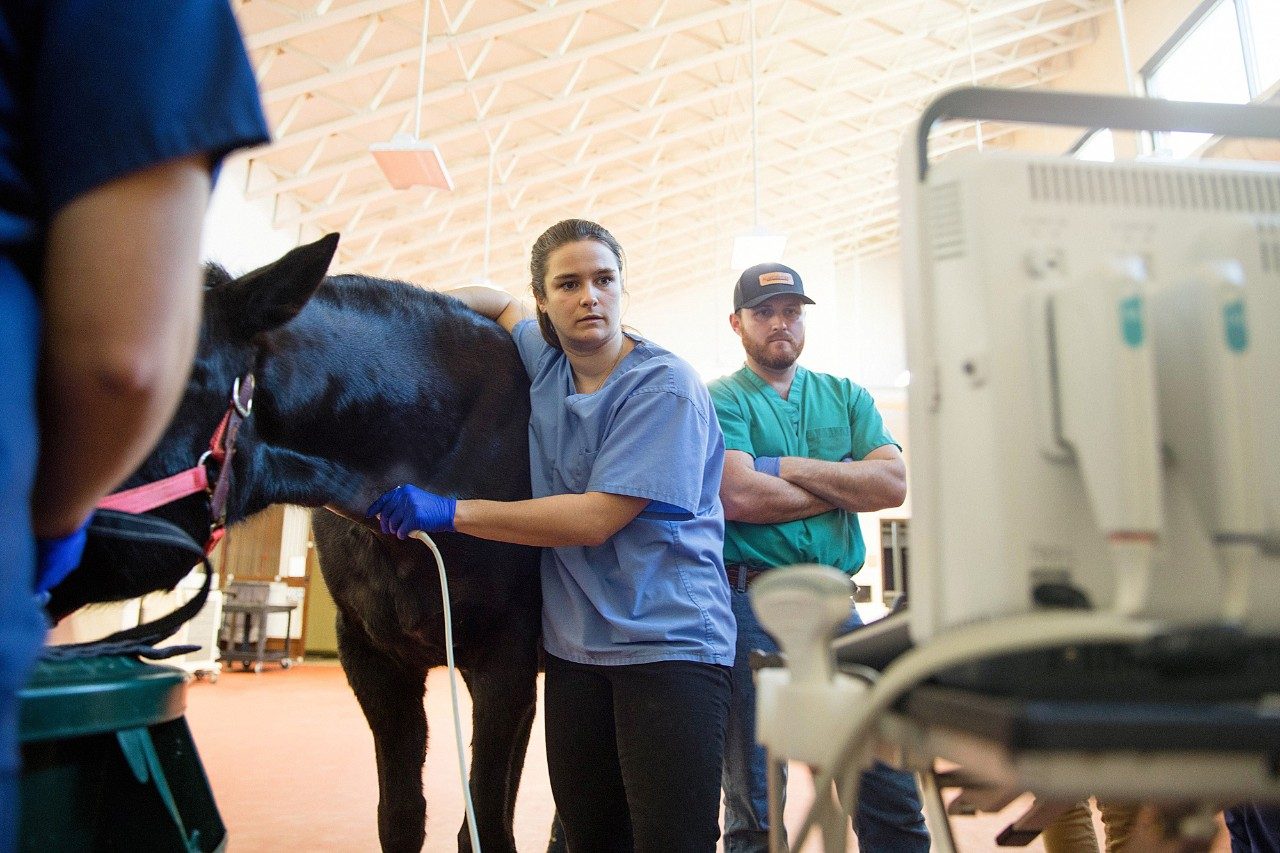
Since the equine medical center opened its doors in 1984, its clinicians have been expected to offer outpatient and elective treatments and cover 24/7 emergency and critical care services. This expectation causes clinicians and clinical support staff enormous stress and fatigue, affecting not only their work-life balance, but also their ability to cover daytime scheduled appointments in a timely, efficient way. Due to the continuing increase in the emergency and critical care caseload, this is not a sustainable situation.
The equine medical center has seen a substantial increase in emergency and critical care cases in recent years. In fiscal year 2022, emergency cases increased by 21.5 percent over the previous year, amounting to 739 emergency cases treated during the 12 months. There has been much discussion as to how to continue offering the current high level of emergency while being supportive of the expectations levied on clinical staff.
“To sustain emergency services at the EMC, we are planning to create a dedicated emergency and critical care team,” Erskine said. “This team will be focused around specially trained equine clinicians who have completed advanced training in both emergency medicine and surgery.”

 Roanoke Equestrian