Virginia Tech targets sarcoids with new clinical trial

There is no “one-fix-for-all” solution for sarcoids, said Sophie Bogers, an assistant professor of large animal surgery at Virginia Tech. Many of them require chemotherapy or invasive surgery. But she wants a better solution.

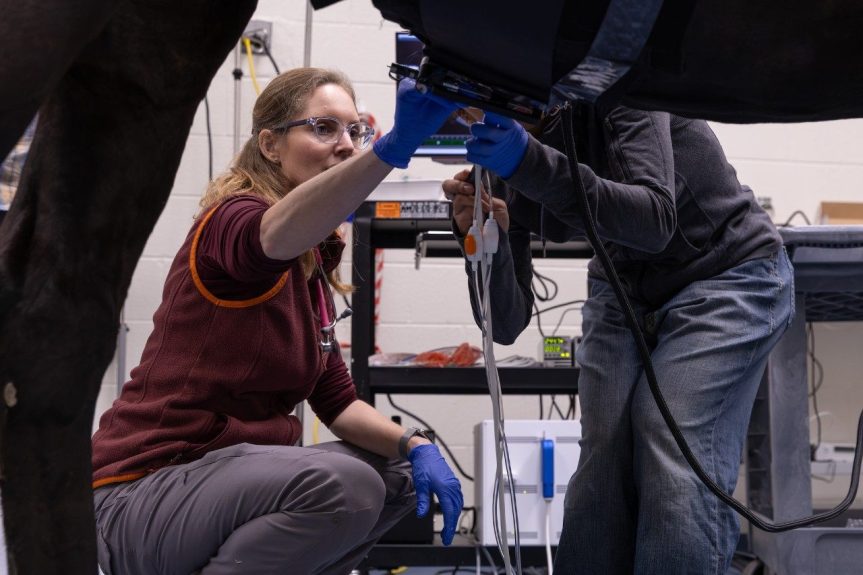
Elsewhere on the Virginia Tech campus, in biomedical engineer Eli Vlaisavljevich’s lab, a colleague has what may be that better solution: A technology called histotripsy that uses focused ultrasound to produce a bubble cloud that can break down tumor tissue.

A team of engineers and veterinarians are working together to develop a wearable device that would allow histotripsy to be performed safely on horses.  This spring, their system got its first real test on a horse named Pea, a 9-year-old Hanoverian mare who had a tumor on her belly.  

Read more….

Want to enroll a horse in the trial?

Horses may qualify if their sarcoid:

  • Is a fibroblastic or nodular-type sarcoid (not occult/ flat); and 
  • Hasn’t been treated in the past six months, or has recurred following treatment.

Compensation can include the consult, surgical fees, and up to $1,500 in hospital costs. Horses that don’t qualify for the live-treatment option may still be eligible for an ex vivo option, where a local veterinarian or the Veterinary Teaching Hospital removes the tumor for lab analysis instead.

Contact the Large Animal Services at the Veterinary Teaching Hospital: 540-231-4621. Please be ready to email photographs of the sarcoid from a distance (to show location on body) and up close from two angles. 
New indoor arena at Virginia Tech’s Leesburg equine center will help diagnose lameness in sport horses

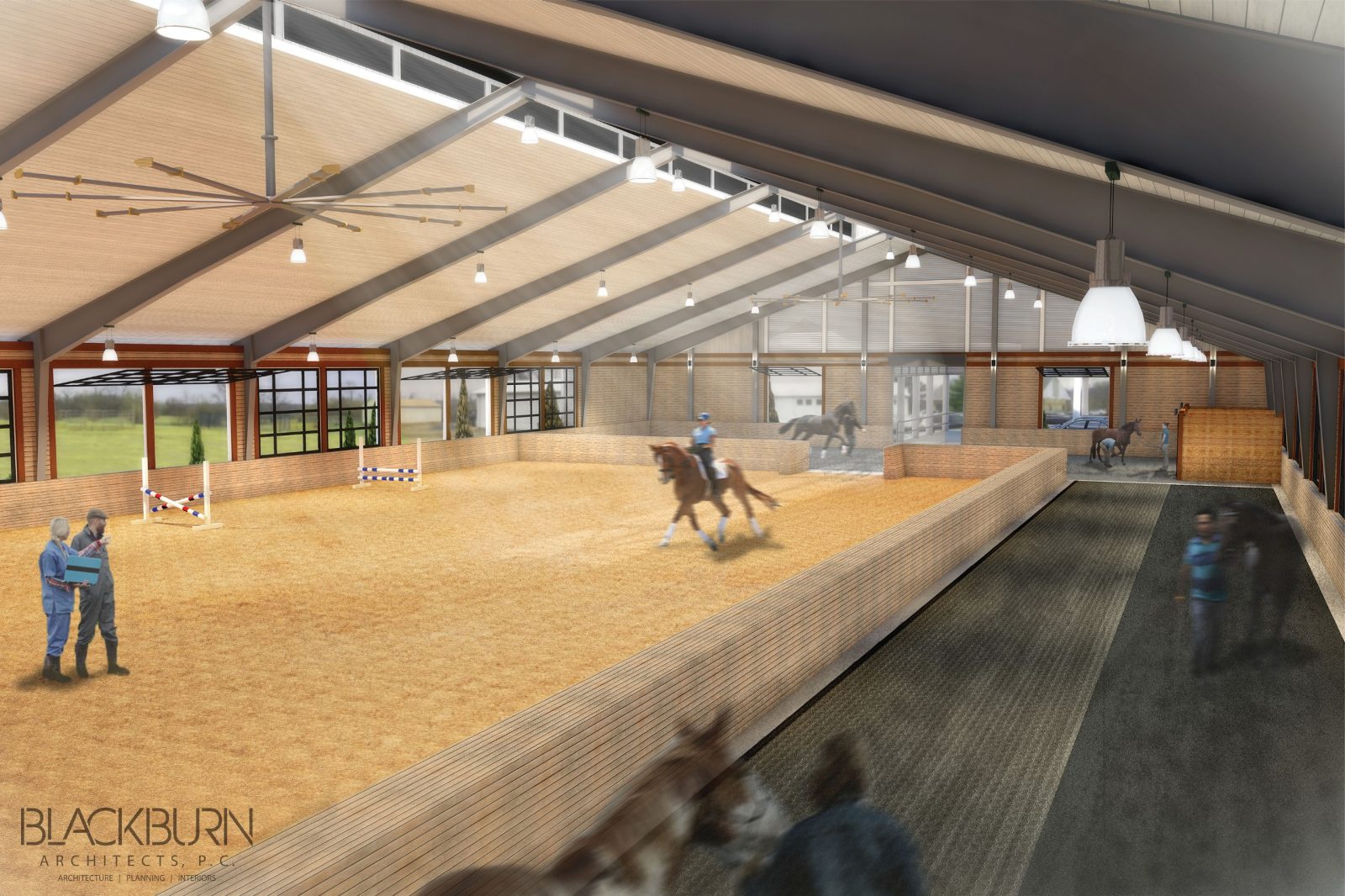
indoor rendering
Architectural rendering of the interior of the Steven and Jane Hale Indoor Arena, furnished by Blackburn Architects P.C.

“Well, Doc, he sometimes takes an off-step when the ground is too hard.”

 “He trips and stumbles when the footing is deep.”

“She seems off. Maybe.”

Equestrians of all disciplines dread that sinking feeling when they know something just isn’t right with their horse’s performance. Lameness can be notoriously hard to diagnose. But now, veterinarians in Virginia are getting a new tool to help evaluate sport horses. Virginia Tech’s Marion duPont Scott Equine Medical Center in Leesburg, Virginia, recently broke ground on a new indoor arena designed to help evaluate lameness.

The arena will have three types of surfaces under one roof where equine athletes can be evaluated by a variety of specialists to diagnose possible physical problems affecting the horse’s performance.

The arena will be connected by a breezeway to the recently renovated Youngkin Equine Soundness Clinic, which also offers advanced imaging, therapeutic podiatry, and acupuncture among its services. The clinic also uses a wireless motion-analysis system to locate lameness.

In it’s 35th year, the equine medical center is working to become the premier equine medical center on the East Coast. It offers advanced specialty care, 24-hour emergency treatment, and diagnostic services for all ages and breeds of horses.

To schedule an appointment, refer a patient, or inquire about the center’s sports medicine or other clinical services, please call 703-771-6800 or email emcinfo@vt.edu.

outdoor view rendering
Architectural rendering of the exterior of the Steven and Jane Hale Indoor Arena; furnished by Blackburn Architects, P.C.