There’s something inspiring about the Virginia State 4-H Championship Horse Show that’s held every September at the Virginia Horse Center.
Not every truck and trailer you see parked in the lot is brand new, although many are. Not every saddle is covered in silver or every show shirt perfectly tailored and covered in sparkling jewels, although many are. But the atmosphere is every bit as electric as the biggest shows, maybe even more so.
Parents stand on the rail more nervous than if they were showing, muttering instructions and tips even though their children are at the other end of the arena and couldn’t possibly hear. Horses are lovingly prepared to enter what for many will be the biggest show of the year, if not their careers, to make memories that may last the rest of the exhibitors’ lives.
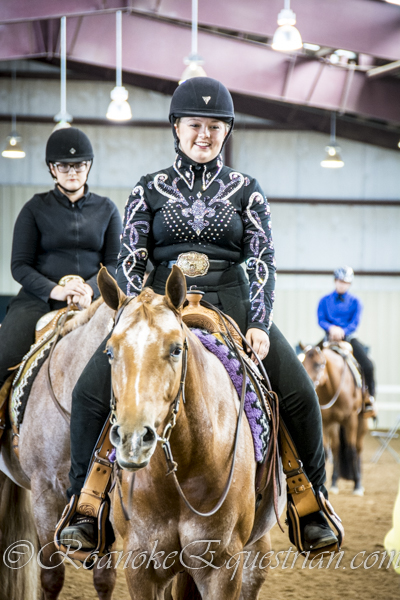
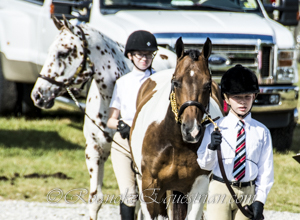
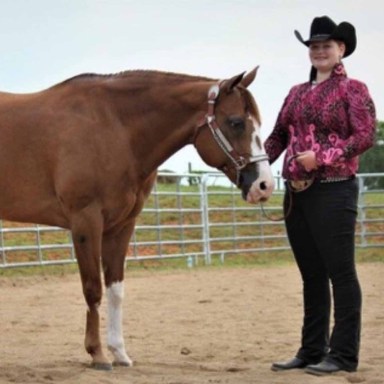
Morgan Strickler and Ima Glowin CocoChip placed first and second under the two judges in Horsemanship, taking home the overall championship.
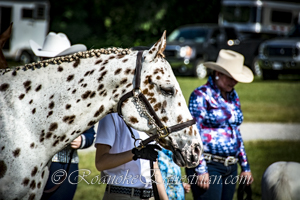
Morgan Strickler of Frederick County is one such exhibitor who is bound to always have great memories of her rides at the 4-H State Championship Show. She was returning to the championship show after winning the Western Pleasure Classic last year on her Appaloosa Ima Glowin CocoChip. Sunday morning, the defending champion made it two in a row. First Morgan won the Horsemanship title in a split judge’s decision (Gillian Davis riding VS Red Solo was first under the second judge), and then she took the Western Pleasure Horse Classic in a unanimous decision. Julia Marie Haney of Prince William County and The Kyrmsun Cowboy were Reserve in the Western Pleasure Horse Classic.
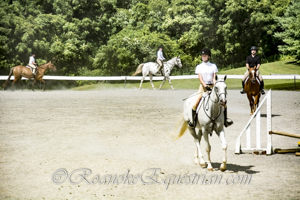
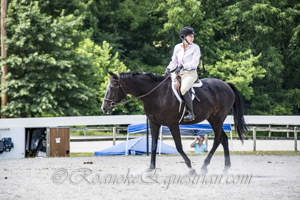
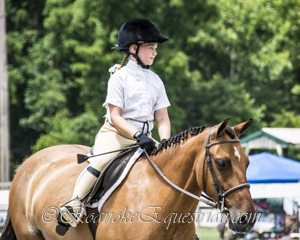
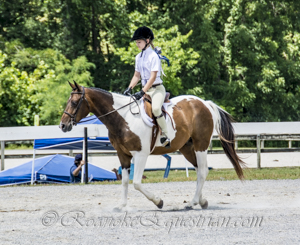
Photos from the Virginia 4-H Championship Horse Show available for purchase are being uploaded now at www.roanokeequestrian.smugmug.com.
Digital copies and print versions are available.
The Classics, which require a qualifying ride in a previous class during the show, are simply a cap to what is a busy weekend at the horse center. The show begins on Thursday and runs through Sunday. The winners of the various class divisions then come back at the end of the show for the “Classic” classes… the best of the best enter the ring to vie for the class title. This year, the Hunter Pleasure, Western Pleasure, Hunt Seat Equitation and Horsemanship Classics were held in the East Complex on Sunday morning. But other Classics are held also on both Saturday and Sunday.
Emily Michelle Strom of Henrico County and her gray Arabian KK Dream Catcher
Emily Michelle Strom of Henrico County and her gray Arabian KK Dream Catcher won the Western Pleasure Pony Classic.
In the Hunt Seat Equitation Classic, Holly Kate Longest of James City rode Playing Hooky to victory. Holly was part of a four-horse work-off the required the exhibitors to show at a walk, rising trot, sitting trot and canter without their irons. Reserve went to Marissa Jones of Loudoun on Above the Clouds.
There’s a balance here between everyone getting a shot and the top riders achieving the giant trophy. And the trophies really are enormous — one Classic trophy required two people to carry it into the arena. Disciplines offered are as varied as the ponies. Western, Saddle Seat, Hunt Seat, Dressage, Speed, Reining and even Side Saddle are represented.
What the 4-H State Show has that many other shows seem to lack is a fabulous sense of community. Counties band together, decorate their stalls to a common theme and everyone seems to have their own cheering section when the results came in after each class. There’s a lot that professionals could learn from the youth in that arena.
The attending veterinarians reported the case in a Appaloosa-cross gelding who began showing clinical signs on August 22, including nasal discharge, swelling of the lymph nodes and fever. The gelding was initially isolated on the farm but has since been transported off the farm.
The gelding tested positive for strangles on culture by nasal swab, lymph node aspirate, and serum.
A Tennessee Walking Horse gelding and a Quarter Horse mare were also exposed as they were purchased from the same source and were hauled together prior to the onset of clinical signs. The walking horse gelding and quarter horse mare have been isolated.
Strangles is an infectious, contagious disease characterized by abscesses in the lymphoid tissue of the upper respiratory tract. The incubation period of strangles is 3–14 days, and the first sign of infection is fever (103°–106°F). Within 24–48 hours of the initial fever spike, the horse will exhibit signs typical of strangles, including nasal discharge, depression, and and swelling. Some horses have difficulty swallowing, and make noise when breathing. Older animals with residual immunity may develop an atypical or catarrhal form of the disease with mucoid nasal discharge, cough, and mild fever.
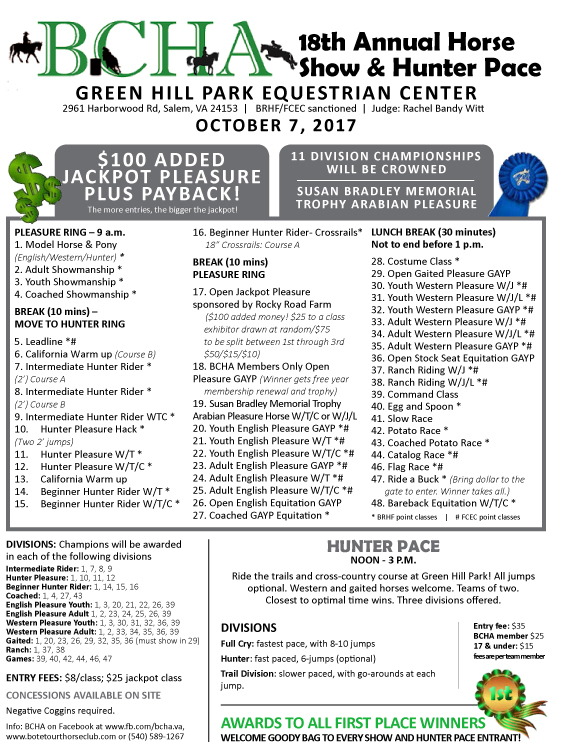
The Botetourt County Horseman’s Association will hold its 18th Annual Horse Show on Oct. 7 at Green Hill Park in Salem. The open horse show will include three over-fences divisions, model, showmanship, coached, pleasure, ranch riding, gaited and games classes. Rachel Bandy Witt will judge.
The horse show will also include a $100-added money Jackpot Pleasure class. Money from entries will be contributed to the pot for each of the top 3 placings and a rider drawn at random. The more who enter, the bigger the payout. Entry fees for that class will be $25. All other classes will be $8.
The show also includes a special classes of Arabian exhibitors. The Susan Bradley Memorial Trophy Open Arabian Pleasure class returns to the BCHA show this year. And BCHA members may ride in the BCHA Members Only pleasure class.
Eleven division champions will be crowned, with special prizes to each of those winners. Class winners will also receive prizes beyond the blue ribbon.
New this year, a hunter pace will accompany the horse show. Starting at noon, teams of two may tackle the course. The team closest to the optimal time wins. All jumps are optional and three divisions will be offered, including a trail division for those who just want to ride at a leisurely pace. All disciplines welcome. The cost to ride in the hunter pace is $35/rider for non-members, $25/rider for BCHA members. The hunter pace will run through 3 p.m.
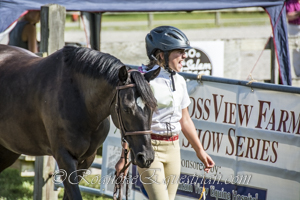
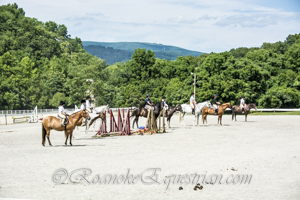
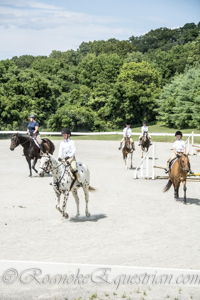
The Cross View Horse Show series continued last weekend at Green Hill Park Equestrian Center with a two-day horse show. Saturday featured hunters/jumpers and Sunday featured an all-breed open horse show with a special division of gaited horses.
The Cross View series is a great show for all levels of riders looking for a well-run show with a low-pressure, community atmosphere. Along with the competition, vendors also camped out in the grassy section between the two arenas.
Green Hill Equestrian Center offers three arenas with dirt footing. There is a large field across from the arenas for easy trailer parking, even for the largest of rigs. There also limited stalls available. The Green Hill venue does get hot in the summer with limited shade, so bring your pop up canopies or consider arriving early to secure a spot near the woods.
The show moves along fairly quickly. On Sunday, the gaited horses and model/showmanship started the show in separate arenas. The gaited portion was completed by 11 a.m and featured Rocky Mountain Horses, Tennessee Walking Horses, Saddlebreds and Peruvian Pasos among the horses shown.
Turnout was good considering the heat in July. Youth classes were particularly well attended with 10-15 in the youth pleasure classes. However the adult classes on Sunday weren’t as well attended and the English pleasure division had just one adult showing this time. Classes run $9/class.
Cross View would hold the last show in its 2017 series on Sept. 23-24 at Green Hill Equestrian Center, where it will crown the high point winners for the entire series.
Below are a sample of photos from the weekend. These photos and many others are available for purchase at roanokeequestrian.smugmug.com.
Tracy Nininger with her dad, Charles Young, at Ardmore Equestrian Center
Tracy Nininger recently moved to Fincastle’s Ardmore Equestrian Center from Georgia. In Georgia, she was the owner and operator of Jump On Over Hunter/Jumper facility, and her riders competed on the local and A-rated circuit (Zone4) with the Georgia Hunter/Jumper Association. A graduate of Virginia Intermont in Bristol, Virginia, Tracy majored in Horsemanship/Stable Management with a minor in Business.
Tell me about your stable/business. What kind of services do you offer?
Ardmore Equestrian Center is a full care hunter/jumper equestrian center. We offer a lesson program for the recreational rider as well as the serious competitive rider. Our facility has a indoor arena that is 100 X 200 so lessons are never canceled due to bad weather or if it is too hot!
We have over 24 stalls that have matted floors, sliding doors and that are 12 X 12 in size. We offer pasture turnout or paddock turnout. We do not offer pasture boarding. Both of our arenas are lighted and we will offer clinics, schooling shows, summer camps, overnight camps and trail riding. Our farm supports the community’s Botetourt Food Shelter. We currently have two instructors who both have degrees and are certified.
When did you get started in horses? What is your riding background?
I began riding when I was 7 years old, and it is my passion. You can read my Bio for my background. I have experience in Dressage, Western and Saddleseat.
What makes your stable/business different than others in the area? What’s your specialty? What do you take the most pride in?
Our facility is different from the other area facilities because of our state of the art facility and care given to the horses and riders. Everyone at Ardmore is qualified to teach and train. Our employees have the degrees and certifications to do the job they were hired for. All the employees at Ardmore have the knowledge and experience to provide a professional, safe atmosphere. We meet the needs of each one of our boarders, lesson students and we strive on excellent quality care. Friendly customer service is demanded from each employee for our customers. I feel strongly that these are the reasons for our success.
I have been blessed to have participated in clinics and ridden under top Olympic riders. I have deliberately followed top professionals so that I have the knowledge to do correct training techniques and be a positive role model for others. (See BIO)
Can you describe your training/teaching philosophy?
I teach and follow the training techniques of George Morris. I have followed top equitation coaches because I feel position is everything when it comes to communicating to your horse while riding. You can not get the full potential of your riding if you do not understand how your position effects the horse’s movement. You should be as one with your horse and not just a passenger, but understand the mental and physical attributes of the horse so you ride at your full potential and be a partner with your horse.
What are your favorite breeds/bloodlines? What do you look for when choosing a prospect?
My favorite breed of a horse is a thoroughbred/quarter horse cross. However, I really enjoy all breeds as I feel each one is unique and brings different challenges with each breed as they all are different. What I mostly look for when choosing a mount for a rider is the attitude of the horse. Different riders require different attitudes so you really have to match up a rider’s personality with the horse’s personality.
A horse enjoys turnout at Ardmore Equestrian Center in Fincastle, Virignia.
Who are your riding mentors? How have they influenced your riding?
My mentor was FEI Grand Prix rider Miss Barry Lane of Full Cry Farm in Locust Grove, Georgia. Barry reflected hard-work and to never give up. Always work with a positive attitude and to keep things into perspective. I never heard her ever say an unkind word or do an unkind act.
She was always professional and surrounded herself with top professional people. She built confidence in riders and brought out the best in people. I miss her tremendously!!
My other mentor was Katie Monahan Prudent. Even though I never had the opportunity to ride with her I admired her riding techniques. She had perfect equitation in the jumper ring. She is so graceful to watch in the jumper ring and she made it look so easy and smooth. She is very consistent in her riding and she has great hands. She is like a ballerina in the jumper ring, it is just lovely to watch her.
My biggest mentor however, is my big sister. Melody Light. She is a lovely rider and growing up she would work so she could pay for my riding lessons and spent hours teaching me about horses. She is my mentor at heart!
What is the best piece of riding advice you were ever given?
The best piece of advice that has ever been given to me is to remember that each horse is different and so are people and when you match them up they need to be partners. Don’t just buy any horse for any person.
Do you have a favorite horse movie or book?
My favorite horse movie is “Secretariat”! I really don’t have a favorite book.
What one piece of advice would you give new/young riders?
Don’t try to train yourself all by yourself; that’s what trainers are for. Do you learn to play soccer without a soccer coach, a ballerina without an instructor ?
If you could try any other riding discipline, what would it be?
I am interested in three-gaited natural-tail Saddlebreds.
What is the best thing about riding/training in the Roanoke area?
Roanoke is my hometown; I grew up here and I love having the mountains to ride in. I like the trail rides and the hills. You don’t have this in Florida.
If you could change one thing about the horse industry, what would it be?
For trainers to respect each other better. Learn from each other. Work with each other better.
What is your favorite characteristic in a client/student?
I will take a student that may not be very talented but is the hard worker over the talented rider that is lazy.
What horse industry/riding trend do you wish would go away and never return?
Backyard owners that don’t have any business caring for a horse.
What was the biggest surprise about riding as a profession?
I really don’t have any big surprises about the horse industry. The industry itself educates many people, and following top professionals creates success. It’s the people that mess it up.
What is your favorite local horse show or event? Why?
The Roanoke Valley Horse Show. It was my first A-Show, I think I was 12 years old. I loved the Salem Colesium and the all-breed show classes held at night.
Tell us about the best horse you’ve ever ridden.
A Thoroughbred mare I rode in the jumpers. Her show name was Clearly Magic, and she was a horse no one wanted and she was given to me. She was fast, could turn and jump and loved it. So much fun to ride!
If you could ride any famous horse from history, who would you ride?
A horse called Snowman. He started the jumpers! Look him up!
If you could spend the day riding with any horseman, living or dead, who would it be? Why?
There are so many great horseman but I think I would like to spend the day with Rodney Jenkins. He definitely could ride, but as a little girl following him around the Roanoke Valley Horse Show, I loved his laid-back demeanor. He could spot a really good horse, too!!!
Tell us about your first horse.
My first horse was a little black small pony named Star. He was my best friend. I spent many hours trail riding him, and literally riding him all over the Poages Mill area of Roanoke, Virginia.
Madison Martin, 15, of Evington, Virginia, is the definition of a well-rounded individual, excelling in academics, the community and the horse show industry.
“I was not expecting to win [the Youth Member of the Year] and was very surprised,” Madison said. “I know a lot of great people applied for it, so it’s an honor to be member of the year. I actually got the call I had won it on my birthday, which was a great present.”
Youth Member of the Year is presented annually at the Youth World Show to an AjPHA member who exemplifies commitment to service and their community, scholastic achievement and leadership. The award is not given based on show-ring merits, but rather to a person who embodies the spirit of AjPHA and has a deep love for and involvement with Paint Horses. Winners receive a $1,000 scholarship and a custom Gist Silversmiths trophy buckle.
“I got into horses because my neighbor let me ride her horse, which is now mine,” Madison said. “I have been involved with horses for quite a while now, and I absolutely love it and love Paints.”
Beyond her involvement with the Paint Horse industry, she is also a leader in her local 4-H and Pony Club where she has been actively involved for five years.
Outside of equine activities, Madison is a member of French Club, Fellowship of Christian Athletes and plays basketball. Going into her junior year of high school, she will begin to take dual-enrollment courses and earn college credits. She aspires to attend law school and is on the fast-track to that goal by taking an Introduction to U.S. Law class this summer at the College of William & Mary Law School.
Volunteer work is very important to Madison. In 2016, she served as Senate Page for the Commonwealth of Virginia and volunteers in Sen. Steve Newton’s office. She gives back to her community by participating in trash pick-up days and is a volunteer for her children’s ministry at her local church.
Tad Coffin of Tad Coffin Performance Saddles will visit Virginia Tech at 1 p.m. on July 19 to demonstrate the neurological benefits of his new saddle tree technology, SmartRide Rx. The technology has demonstrated consistent ability to reduce back pain, stress and anxiety in many horses.
Participants with horses will be able to watch Tad use his saddle technology on their own horses and/or have an opportunity to try it themselves.
Ceil Wheeler and Callaway’s Brioni. Photo courtesy of Shiflet PhotographyThe Roanoke Shenandoah Valley Horse Show returned to the Virginia Horse Center on June 21-25. And while high-steppin’ horses took to the Coliseum to compete for top honors, there were no high jumps in a chase for a title.
While technically this is a continuation of the show once run by the Roanoke Valley Horseman’s Association at the Salem Civic Center and hosted by the Virginia Horse Center in 2016, the show is now under new management, R.H. Bennett, of Shelbyville, Kentucky.
The 2017 show was a very different affair than what fans will remember from 1972-2014. The hunter/jumper classes that were at the heart of the multi-breed Salem show are no more. Nor are the barrels or Western classes that were traditionally held on Monday. And fans would not find a Grand Prix of Roanoke to cap the event on Saturday night. This year’s show showcased only American Saddlebreds.
The show, begun in 1972, has been granted United States Equestrian Federation designation as a USEF Heritage Competition. The designation is only given to those competitions that have made substantial contributions toward the development of the sport, promote and practice equestrian ideals of sportsmanship, and have been established for a long period of time.
For 2017, there were 103 classes. Horses come from far and wide with 23 states represented. Spectators were admitted at no charge. The Salem show sold tickets to its evening classes.
During this year’s competition, Ceil Wheeler and her own Callaway’s Brioni took home the championship in the ASB Ladies Five Gaited Championship. The reserve champion was presented to Phyllis Brookshire aboard Man on the Move.
Suzanne Wright and Fort Chiswell’s Wild Kiss earned the ASB Five Gaited Show Pleasure Adult championship, with the reserve championship going to Jennie Garlington riding Kalarama’s New Moon.
In the Hackney Pony Pleasure Adult Championship, it was Toni Nastali aboard Sandra Surber’s Heartland Resplendent that received the tricolor. The reserve champion in the Hackney division went Patty Hylton riding her own, Crystal Creek’s Legacy.
The win in the ASB Fine Harness Jackpot went to Larry Hodge aboard Trust My Imagination, owned by Hillcroft Farm. Hodge also took home the win in the ASB Five Gaited Jackpot, this time aboard Two Sweet to Kiss.
The ASB Five Gaited Jackpot was dedicated to Matt Shiflet’s grandfather, Claude Shiflet, a trainer whose family has been coming to the Roanoke Valley Horse Show from the beginning. The Shiflet family was honored before the class.
Maribeth Mills working on improving lateral flexion.
Upping Stone Equine Massage & Bodywork is based in Roanoke, Virginia, and offers non-invasive equine sports massage and integrated bodywork modalities to enhance performance through improved range of motion, suppleness, self-carriage, and comfort. Upping Stone’s owner, Maribeth Mills, is a certified equine massage therapist with advanced training in equine sports massage, Masterson Method Integrated Bodywork, and equine anatomy/biomechanics. Reasonable rates with package deals for additional savings are available. Check us out on the web at www.uppingstone.com or get in touch directly by calling (540) 314-7508 or emailing uppingstone@gmail.com.
Tell me about your business. What kind of services do you offer? Upping Stone offers full-body equine sports massage and integrated bodywork. Equine sports massage is the application of direct pressure, friction, percussion, and compression strokes to the voluntary muscle system to loosen adhesion and restore healthy muscle extension. Integrated bodywork, or more specifically Masterson Method, targets the three key junctions of the body (poll/atlas; c-7/t-1, and lumbar-sacral) through light touch and gentle movement in a relaxed state to release restrictive stress and tension deep within the body.
Determining which of these modalities is best for your horse is often decided during the initial consultation where I get to know you and your horse through a series of questions, soft tissue palpation, and an introduction to the massage process. A maintenance plan is then developed based on your horse’s needs including areas of focus and frequency of appointments.
If your horse is competitive, I also offer pre- and post- event sessions. These are especially beneficial if you plan on keeping your horse at the showgrounds for a couple of days. These sessions are shorter in duration for a general loosening up. This service is only provided to established clients as the release of tension may alter the horse’s range of motion and way of going. Although this is a good thing, both you and your horse will need time to adapt – the showgrounds are not the ideal place!
What makes your business different than others in the area? What’s your specialty? What do you take the most pride in? The ability to pull from a large ‘tool box’ of techniques is invaluable. Being trained in both sports massage and Masterson Method allows me the flexibility to easily adapt to each horse’s needs. All horses require something a little different – some love the rigors of sports massage while others respond better the lighter approach of Masterson Method. The two modalities also complement each other well. Both blur the lines of western (manual manipulation of soft tissue) and eastern (use of meridians and acupressure points to restore normal energy flow) massage techniques allowing the blending of the two for a customized maintenance plan.
What is the number one benefit of equine massage and bodywork? Performance. Any number of issues can cause your horse to develop compensatory movement patterns resulting in tension and restriction in soft tissue. When any part of the body does not function correctly, performance suffers. Issues such as trouble picking up or maintaining a particular canter lead; sore or rigid back; heavy on the forehand; trouble bending laterally; head tossing; girthiness; poor coordination; bucking or rushing; toe dragging behind; and lack of forward impulsion have all been known to improve with massage and bodywork.
Is there a riding discipline that has more issues that need to be addressed through equine massage? No, the issues are just different. Horses within the same discipline routinely exhibit similar tension patterns, all of which can benefit from regular massage and bodywork.
How often should a horse receive a massage/bodywork? That depends on the horse’s level of work. My general rule of thumb for horses in a consistent training program is every 4 to 6 weeks for maintenance. This can be increased to every 2 to 4 weeks for horses competing regularly. Retired or pleasure horses can benefit from massage or bodywork every 6 to 8 weeks. It’s also important to remember that massage is a process and a series of sessions at close intervals (minimum of 3 days apart) may be required to fully address a particular issue before starting a regular maintenance routine.
What is the one thing you would want a new client to know before an initial consultation? All horses respond differently to massage and bodywork. It isn’t uncommon for horses to seem distracted or even agitated during their first session especially when trouble spots are addressed. Some horses are very comfortable from the beginning showing visible signs of tension release. These can include licking and chewing, yawning, rolling back the second eyelid, passing gas, shaking loose, wobbling behind or snapping a hind leg; and even a running nose and/or tear ducts. Other horses, however, go to great lengths to hide signs of weakness that in the wild would get them picked off by a predator or kicked out of the herd as a weak link. With these horses, you have to look for more subtle releases such as twitching, blinking, changes in breathing, fidgeting, grinding teeth, softening of the eye, or dropping their head. If your horse is of the more stoic variety, don’t despair, the massage is still working! And as they become more comfortable with the process and realize it makes them feel better, you’ll begin to see large responses.
Maribeth Mills and her mare, Lass.
When did you get started in horses? What is your equine background? My parents knew they had a horse crazy kid on their hands early on and reluctantly signed me up for riding lessons at the age of 5 thanks to the encouragement of my aunt, the riding coach for William & Mary’s Equestrian Club at the time. In the years that followed, I took advantage of every opportunity to learn – from training and riding competitively in hunter/jumpers; to working as an exercise rider/driver for hunter/jumpers, foxhunters, and harness racers; and managing the daily operations of boarding/training stables.
After college, I started a career in urban planning and historic preservation and my barn time became relegated to searching for my horse in a dark field after work and on the weekends. A few years ago, I decided to switch gears and get back to the barn full-time. I began taking coursework in equine anatomy and biomechanics coupled with hands-on training in advanced massage and bodywork techniques. I feel incredibly fortunate to have learned from some of the industry’s best including Mary Schreiber, a student of sports massage founder Jack Meagher and equine massage pioneer in her own right whose work has been featured in publications such as Practical Horseman and EQUUS, as well as Masterson Method Certified Practitioner Marie Riley of 16 Hands LLC Integrated Bodywork whose clients include FEI level competitors.
What is the best piece of horse advice you were ever given? I don’t know why this question makes me think of the USEF commercial that says, “Not everyone can win national titles. Very few ever compete beyond the local or regional level. And only the especially fortunate ever make it onto the world stage. But no one who has ever sat in the saddle has lost.” Cue the ugly cry. It’s a reminder of why we all started riding in the first place. Not to win or be the best, but to be our best and spend time with the animals we so dearly love.
Maribeth Mills and Mary Schreiber
If you could try any riding discipline, what would it be? I’ve always wanted to learn how to play polo.
What would be your idea of a dream vacation? My best friend and I used to pour over the equestrian vacations listed in the back of my Practical Horseman magazine. One that always caught my attention was a “Posse Week” at a dude ranch in New Mexico. You and the other guests would be divided up into two teams, outlaws and lawmen, given a horse and supplies, and let loose on hundreds of square miles for a week in the ultimate game of cops and robbers. How awesome is that!
Do you have a favorite horse movie or book? Professionally, I love the books and DVDs produced by Gillian Higgins, an equine and human sports remedial therapist based in the U.K. She combines her knowledge of equine biomechanics and artistic ability to create three-dimensional anatomical art directly on the horse. It is both beautiful and incredibly informative.
Personally, I wouldn’t know where to begin! The Horse in the Gray Flannel Suit, National Velvet, The Man from Snowy River, Black Stallion, Black Beauty…and the list goes on! My children are now at an age where I can start introducing them to the classics. We’ve gone through all of the Billy and Blaze series by C.W. Anderson and are starting on Marguerite Henry’s novels. I love to see the joy in their faces as they discover the movies and literature that fueled my love of horses.
What is the best thing about working in the Roanoke area? I love Roanoke’s size. Its large enough to have a good amount of diversity among riding disciplines and events but small enough that you feel like you’re a part of a tight-knit community.
If you could change one thing about the horse industry, what would it be? Starting horses too young. So many chronic problems both physically and mentally can occur from asking too much of a young horse.
If you weren’t in the horse business, what would you be doing right now? Working to preserve historic buildings. Aside from a horse, nothing gets me more excited than seeing a beautiful old building infused with new life.
What is your favorite local horse show or event? Why? House Mountain. I have so many great memories as a kid (and an adult) of riding in these shows. I think this is their 28th year which is pretty incredible — a testament to their management and the positive learning environment they provide to riders and horses.
If you could ride any famous horse from history, who would you ride? King Charles, the horse who played ‘The Pie’ in the 1944 film National Velvet. He sparked my love of chestnut Thoroughbreds and the belief that if you work hard enough big dreams can come true. And he just looked like a lot of fun to ride!
What was your proudest horse-related moment? Watching my oldest child take his first riding lesson. The pride and sense of accomplishment I saw on his face is something I will never forget…and I took a ton of photos to make sure I never do!
18. If you could spend the day with any horseman, living or dead, who would it be? Why? I would love to follow Jim Masterson, the creator of the Masterson Method, around for a day especially at an event such as the Winter Equestrian Festival where he works on upwards of 60 horses a week. His ability to read what a horse’s body and mind needs is nothing short of amazing. I’ve had countless hours of training in the Masterson Method but to watch him work on actual clients and see the immediate results in the show ring would be incredible
Maribeth Mills and her first horse, Joey
Tell us about your first horse. Joey, a small American Paint horse that I full leased throughout high school. We traveled all over the state competing in jumper shows with a good deal of success. His only speed was fast and he lived to jump. He had the biggest heart and the best personality too. You could look in his eyes and see his intelligence. We had to put a lock at the bottom of his dutch stall door because he would often let himself out when he thought no one was looking and try to get in the feed room. He also let out the biggest whinny every time we passed through a toll booth on our way to shows – I’m pretty sure he was saying hi to the attendants. When I left for college, he was leased out to another girl but was eventually sold and I lost track of him. I think of him often and his picture is still lovingly displayed with the other animals who have my heart.
Why Upping Stone? An upping stone is a low platform that was set near the entrance to a building or along the street up until the early 1900s to facilitate mounting a horse –- basically the historic version of today’s mounting block. As a business name, it pays homage to my past career in historic preservation as well as symbolizing the preserving nature of equine massage and bodywork – just as today’s mounting block preserves the muscular and structural integrity of a horse’s back.
Anne Lloyd, a native of England, is the new instructor at Healing Strides of Virginia.
Healing Strides of Virginia, the only PATH International Premier Accredited Center
for Therapeutic Horsemanship in the Roanoke Valley, recently welcomed advanced instructor Anne Lloyd to their staff. Lloyd, a native of England, started her horsemanship career as a certified instructor through the Association of British Riding Schools.
She was active with her own daughters in the British Pony Club, and looks forward to sharing her knowledge with Healing Strides’ Pony Clubbers at HSVA.
With 25 years of teaching and showing experience in dressage and hunter/jumper, Anne helps riding students of all levels excel and meet their personal goals. Anne has a limited number of opportunities for students to join her training schedule. Call 540-334-5825 or email Healing Strides to get to know Anne and tour the facility.
Lloyd is also offering a Summer Series, which will offer six Dressage and six Jumping opportunities. Participants may take advantage of one lesson — or join for the entire series!
ANNE LLOYD SUMMER SERIES
DRESSAGE:
Each 90 minute Dressage lesson will take place on Friday evenings at 5:30 p.m. and is open to riders who can already walk, trot, and canter. The focus will be on improving the flexion of their horse with the goal of better lateral movement. Cost: $75/lesson OR $375 for the entire series (Discount of the cost of ONE LESSON!) Dates: 6/16, 6/23, 6/30, 7/7, 7/14, 7/21 at 5:30 p.m.
JUMPING:
Each 90 minute Jumping lesson will take place on Saturday afternoon at 2:30 p.m. and is open to riders already comfortable over small fences. The focus will be on rhythm and track using a variety of grid and pole exercises. Cost: $75/Lesson OR $375 for the entire series (Discount of the cost of ONE LESSON!) Dates: 6/17, 6/24, 7/1, 7/8, 7/15, 7/22 at 2:30 p.m.
For those riders interested in participating in both Dressage and Jumping throughout the series, HSVA will offer all 12 lessons for $600!! For more information or to sign-up for the series, please call (540) 334-5825 or email annehsva@gmail.com!
Q: Tell me about your stable/business. What kind of services do you offer?
A: Healing Strides of VA (HSVA) is a non-profit 501(c)3 therapeutic horsemanship center with a herd of more than 20 horses. We have a large enclosed arena and an outdoor arena. We are currently building a new mental health barn that will include another covered arena. HSVA is the only Premier Accredited Center (PAC) with the Professional Association of Therapeutic Riding International (PATH) in the Roanoke Valley. We are an Equine Assisted Activities and Therapy Program (EAAT) which includes Therapeutic Riding, Equine Assisted Learning (EAL), Equine Assisted Psychotherapy EAP, Hippotherapy and several other programs related to equine therapies. We also provide able-bodied instruction in English and Western disciplines, and are proud to host the Ferrum College Equestrian Team. HSVA is also a U.S. Pony Club Center — the 2nd in the U.S. with an integrated program.
Q: When did you get started in horses? What is your riding background?
A: I had my first riding lesson when I was 5 years old and was immediately hooked. I finally had my own pony when I was a teenager and had fun doing pony club. Once I left school, I had hoped to get a job as a working student, but things didn’t work out. I did other jobs and eventually ended up living in Germany for a few years. When I returned, I got back into horses and owned another fun horse. At this stage, I decided to get serious about getting into the profession. I was lucky enough to get into a local college and attain a National Certificate in the Management of Horses, and while there gain all the other certifications required to take my teaching exams. Through all that I discovered that teaching is my passion, and I have been doing it ever since. Before leaving England, I taught at a small riding school and then I worked a lot with the British pony club, as well has having private students. I moved to Colorado in 2001 and found a wonderful barn called Cottonwood Riding Club, where I was able to teach all ages and abilities in dressage and jumping. I moved to Roanoke this year.
Q: What makes your stable/business different than others in the area? What’s your specialty? What do you take the most pride in?
A: I am so proud of Healing Strides’ commitment to unlocking our participants’ full potential, regardless of their skill levels or abilities. We have recently earned the USEF’s designation as an International Para-Equestrian Dressage Center of Excellence. Only 5 centers in the country have this designation. USEF is choosing the best of the best to build a network of centers to coach the nation’s future Paralympic athletes. Michel Assouline, former head coach for the British para-equestrian dressage program, has just been appointed as Head of Para-Equestrian Coach Development and High Performance Consultant for the U.S. team. Under his guidance, this designation will give our instructors the opportunity and training to potentially coach at the international level. For our local riders, Healing Strides of VA can be their launching pad to one day represent the U.S. on the international stage.
Q: Can you describe your training/teaching philosophy?
A: I think my teaching philosophy is really about helping the rider feel a partnership with their horse in whatever discipline they have chosen. Whether it is the recreational rider who just wants to feel safe on a trail ride, or a teenager with dreams to event, I work on the correctness of their equitation and the understanding of how the way we ride affects the way the horse moves. So many horses struggle to understand what is being asked of them. By keeping things simple and taking the time to let the horse figure it out with good riding and a comprehension of how the horses moves, it becomes possible to really make the connection we are all looking for when we ride these amazing animals.
Q: Who are your riding mentors? How have they influenced your riding?
A: I have been lucky enough to ride with and watch many different trainers over the years. Whether learning from Debbie McDonald in the dressage world, or Bernie Traurig in the jumper world, or a local hunter/jumper trainer, I have always come away some little pearl of wisdom that I can apply to my teaching.
Q: What is the best piece of riding advice you were ever given?
A: To not feel pressured and enjoy your ride. So often we see other riders doing great things, and we start to wonder if we should be trying to attain that level of riding. But if your goal is to comfortably canter a course of cross rails, then just embrace that goal and be happy!
Q: Do you have a favorite horse movie or book?
A: My favorite horse book is “Black Beauty.”
Anne Lloyd with a student in Colorado.
Q: You’re headed to a horse show. What one item would you never leave home without?
A: As I am always the trainer at the show and not the rider, in the summer my straw hat and in the winter really warm socks!
Q: What one piece of advice would you give new/young riders?
A: Patience! Good riding takes time, lots of time, years!
Q: If you could try any other riding discipline, what would it be?
A: I would love to learn how to drive.
Q: What would be your idea of a dream vacation?
A: I would love to do one of those cattle ranch vacations. I have no idea how to ride western, but I think it would be such a fun experience.
Q: If you could change one thing about the horse industry, what would it be?
A: That all riding instructors were certified to teach.
Q: What is your favorite characteristic in a client/student?
A: A good sense of humor! There are so many ups and downs when learning to ride or compete that sometimes you just need to be able to laugh at yourself and your horse!
Q: What horse industry/riding trend do you wish would go away and never return?
A: Anything that causes discomfort to the horse or just plain cruelty. Sadly, this can show up in most disciplines.
Q: If you weren’t in the horse business, what would you be doing right now?
A: I’ve always thought I’d love to be a REALTOR. I’m completely addicted to HGTV!!
Q: What was the biggest surprise about making riding your full-time job?
A: I don’t think I fully realized when I first started teaching that clients (hopefully) stay with you for a long time. So being able to see the progression over the years, as well as being able to connect with and enjoy so many people is wonderful.
Q: Tell us about the best horse you’ve ever ridden.
I’ve been lucky enough to have ridden some lovely horses, but the one I truly connected with was a little thoroughbred back in Colorado. We did a little bit of everything together and had a lot of fun. We understood each other. Sadly, he died last year.
Q: If you could ride any famous horse from history, who would you ride?
A: A little horse called Stroller. He was actually a 14.2hh pony that back in the 70’s took his rider all the way to the Olympics on the show jumping team. I would love to have felt his personality.
Q: If you could spend the day riding with any horseman, living or dead, who would it be? Why?
A: I’ve audited a few clinics with Bernie Traurig in the past and have always enjoyed his style of teaching. I always come away feeling inspired.
Q: Tell us about your first horse.
A bay pony named Star. The most stubborn pony ever, but also completely bomb proof. He gave me my first experience at fox hunting and also many fun days at Pony Club, as well as just allowing me to ride the country lanes around my home bareback on a loose rein daydreaming.

 The
The 
















 Roanoke Equestrian