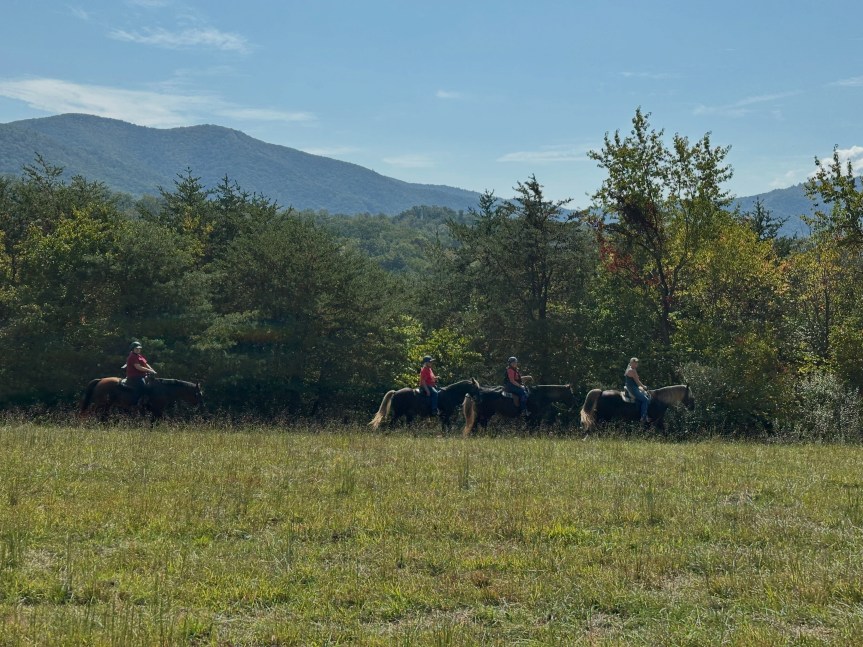
Last weekend, I rode in my very first Equine Trail Sports (ETS) obstacle trail competition at Green Hill Park Equestrian Center in Salem, Virginia — and wow, what an experience! I showed up not knowing exactly what to expect, but I left with new friends, new skills to work on, and a lot of respect for this sport.
If you’ve ever thought about trying ETS, here are five things I learned that might help you get started:
1. The community is incredibly welcoming.
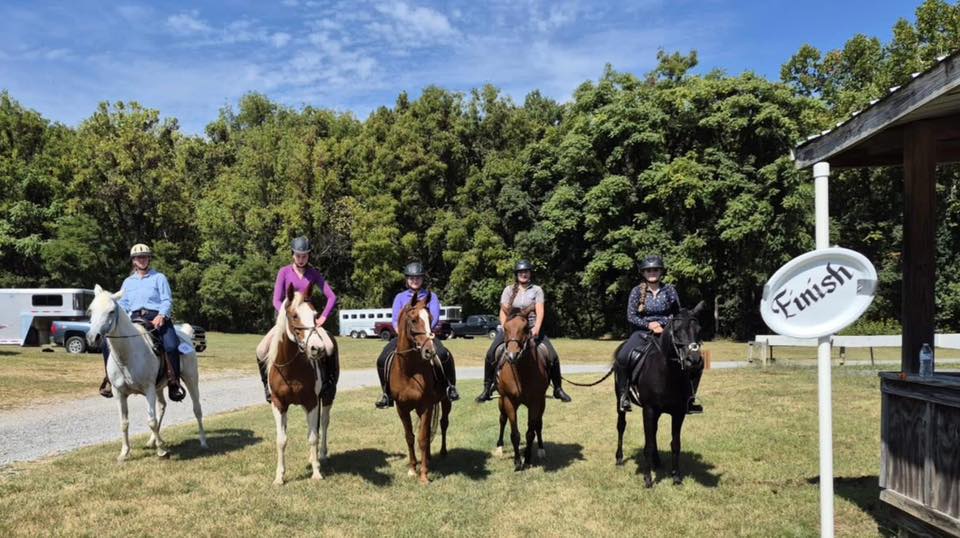
The organization touts it’s a friendly group, and they weren’t kidding. From the organizers to the competitors, everyone I met was friendly and encouraging. I didn’t come with any riding buddies, but that wasn’t a problem — they found me a group, and by the end of the day I had a whole new circle of horse friends. All along the trail and back in camp, everyone was quick to say hello and chat, and offer support.
The event begins and ends with a riders meeting where riders enthusiastically applaud their fellow competitors and their accomplishments as well as the judges who give their time to make the event possible. Obstacle shout outs from each judge even give some recognition to riders who really impressed the judge, not because of their score, but because of their horsemanship.
2. You choose your own challenge level at each obstacle.
One of the best things about ETS is that you decide what level to ride — right there, at each obstacle. Maybe your horse is relaxed and focused, so you tackle an Advanced challenge. Or maybe nerves are creeping in, and you dial it back to Level 1. Nobody judges you for your choice. It’s all about building confidence for you and your horse.
I started my day tackling a “Water the Flowers” obstacle as a Level 1 (Novice). That called for leading your horse up to a barrel with flowers sitting on top, picking up a watering can, and “watering” the flowers before setting the watering can back down and standing for 3 seconds before walking away. Pretty elementary, right? But the next level up called for ground tying your horse and walking away. I knew my horse, particularly at the very first obstacle, was going to try to follow me. I loved that I wasn’t forced to have her do something I knew she was about to fail at.
However, later along the trail, an obstacle came up that was similar to a horsemanship pattern you might see in a horse show. Having some experience in that, we rode as a Level 3.
That flexibility was priceless along the trail to set yourself up for success each and every time and building confidence in your horse along the way.
3. Core skills come up again and again.
At this competition, the big three were:
- Yielding the hind quarters or pivoting on the forehand.
- Sidepassing.
- Steering
For example, one obstacle required us to ride to a cone, yield the hindquarters 90 degrees and sidepass 5 steps. Another required the rider to place the horse’s front feet at the center of 3 poles arranged in a pinwheel pattern, then yield the hindquarters either to the first pole, or all the way around.
Several obstacles also required very tight turns, sometimes stepping over poles and sometimes going around cones in a figure-eight pattern.
4. Expect lots of poles — and tight setups.
You’ll ride over poles forward and sideways, sometimes in quick succession. The obstacles are designed so that maneuvers are close together. Your horse needs to be sharp and responsive to your aids. One “slingshot” obstacle tested that perfectly: you had to back your horse five steps, then immediately pick up a rising trot for exactly the same distance, before stopping again at the cone — and repeating the sequence.
5. Your memory and coordination will be tested, too.
This isn’t just about your horse’s skills — you’ll be challenged, too! At one obstacle, riders had to jog their horse in-hand while swinging a pool noodle over their head. (Level 3) I sure hope that no one got any video of that particular maneuver as I am positive it was not graceful on my part!
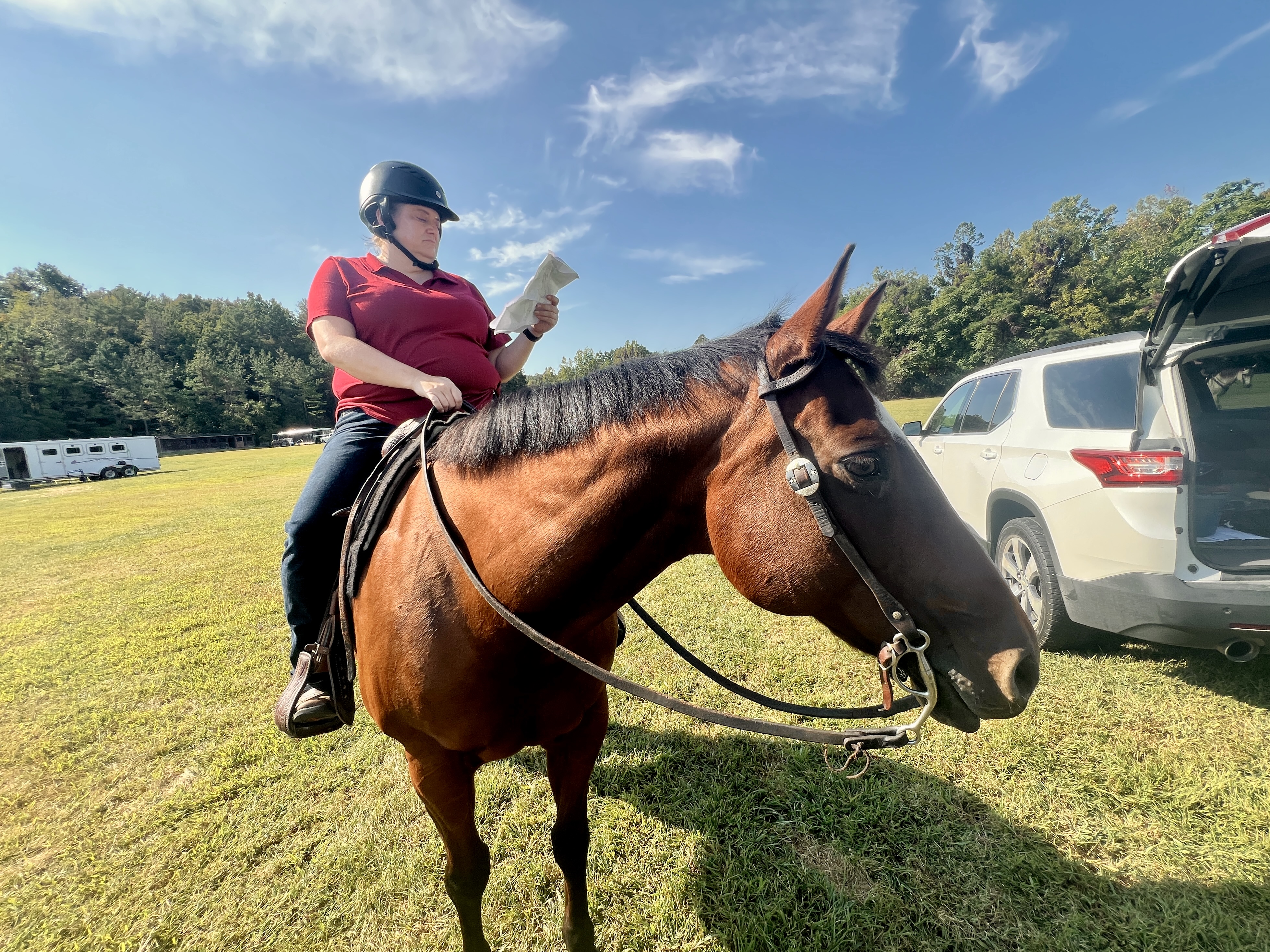
Riders get a printout with instructions for each obstacle, but the patterns sometimes are hard to comprehend until you see the obstacle in person. Thankfully, the judge also explains everything before you start each obstacle, which really helps.
For my horse and me, the hardest obstacle was the pedestal in which the horse was required to put their front feet up on about a 3’x3′ wooden box, which I’d guess was about 18 inches high (Level 1), placed in the arena. Level 2 required the rider to go over the box completely. And Level 3 required the rider to stop with the hind feet still on the box.
My favorite obstacle was a circle of six cones that required the rider to ride in a figure-eight pattern. I loved it because it gave my horse a little extended time to focus and get in a rhythm and show off her training for more than a step or two.
Interested? Another Equine Trail Sports event will be held Oct. 4 at Twin J in Bedford to complete the 2025 Blue Ridge Buckle Series.

 Roanoke Equestrian