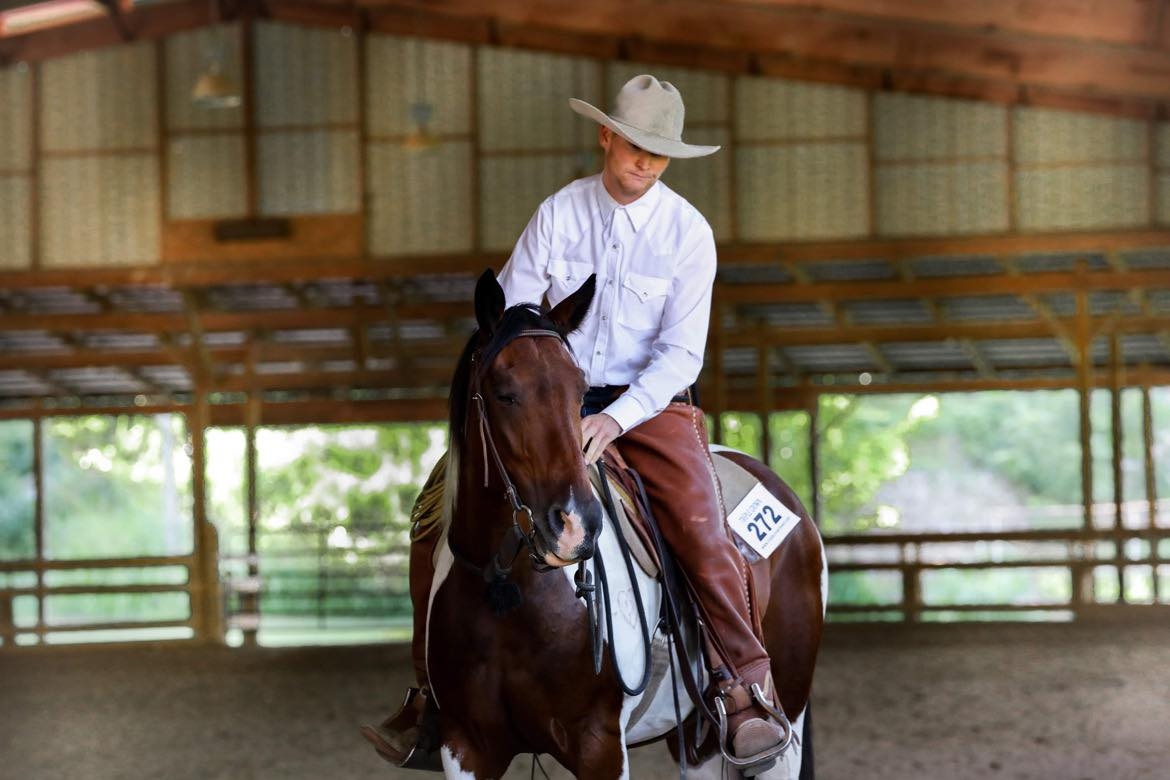
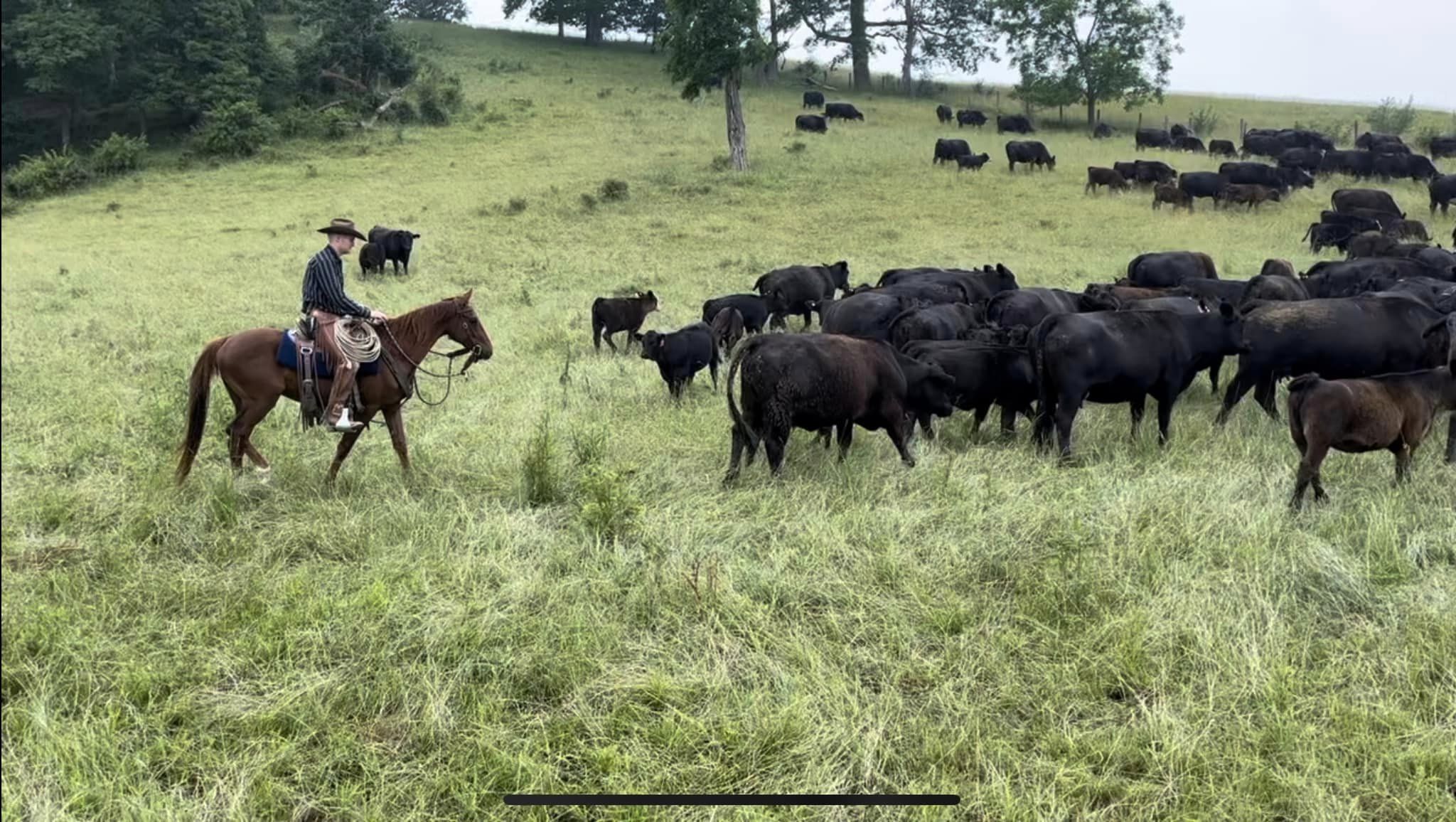
Joe McDonald grew up in Blacksburg on his family’s farm where they raised Angus, Simmental and Sim-Angus cattle. While his dad managed the farm, his mom worked in the equine industry in a variety of roles including steeplechase jockey, dressage trainer and collegiate coach.
“I grew up doing a wide range of activities with horses such as ranch work, eventing, polo, polocrosse, trail riding, etc. Today I run McDonald Equine from my family farm,” McDonald said.
Outside of work, he says, his passion with horses is to train a Californio-style bridle horse.
Tell me about your business. What kind of services do you offer?
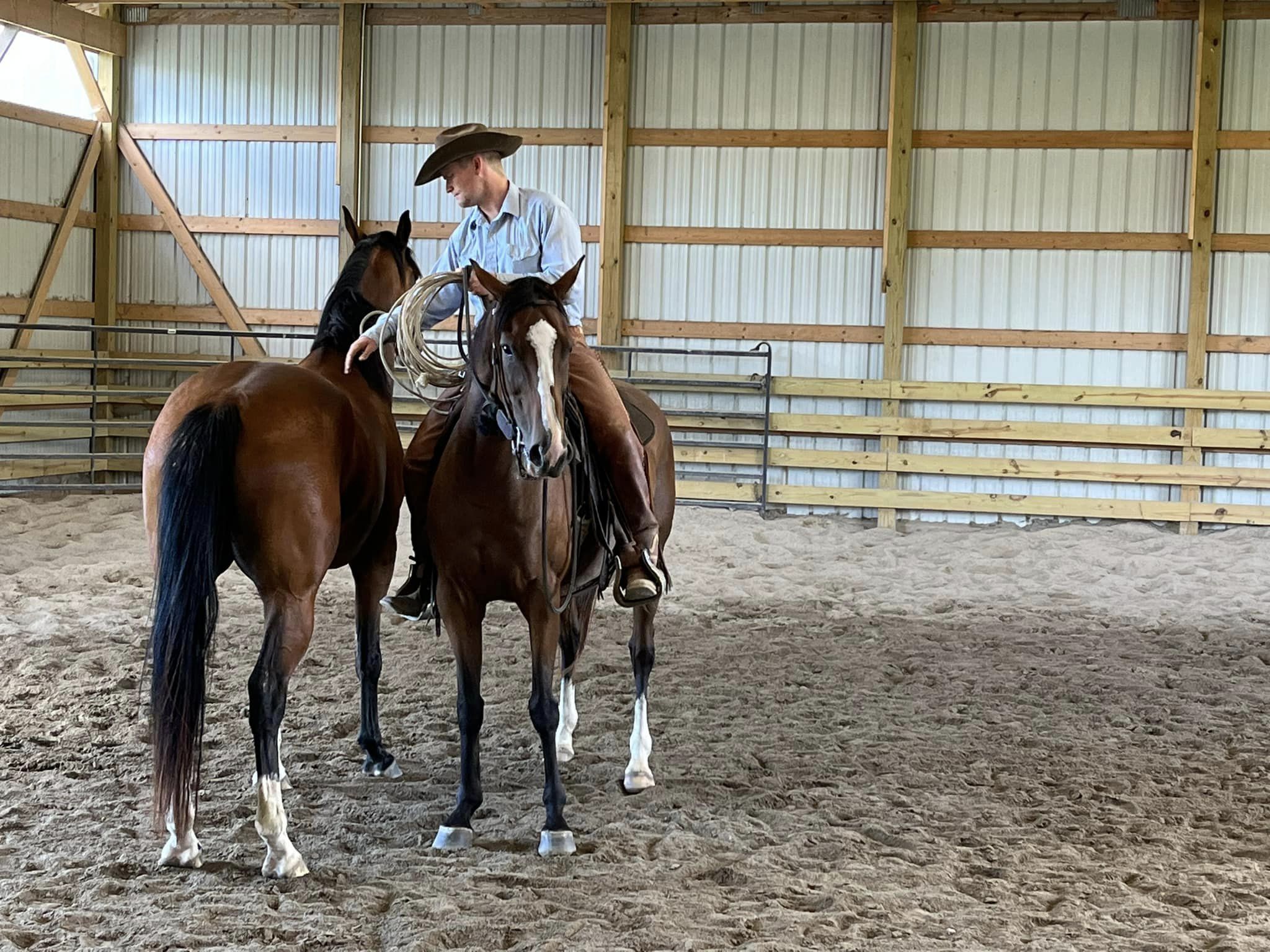
McDonald Equine operates off of my family’s working ranch. We take in outside horses for riding. We do halter breaking. We start colts. We work with problem horses as well as refine more educated horses and offer lessons for groundwork and riding.
When did you get started in horses?
I was pretty much born into horses. Both my parents were horse people so I’ve been around horses my entire life. I do think my parents did a good job never forcing the horse thing on me, they let me have a lot of autonomy that way. I was always riding around the ranch finding something to get into. I was a part of Pony Club and 4-H, but never took it that seriously. Once I got into college, I started playing polo and showing more. The real game changer for me was when I met Buck Brannaman my first summer after college. That was the first time I realized how much someone could get done with a horse and the first time I felt like I really needed to pursue something.
What’s your specialty? What do you take the most pride in?
I think we really stand out in our handling of young horses. Folks don’t always realize how important the early years are for a horse and how easy life can be if a horse is halter broke and started properly. I also take pride in being able to empower people. I want a client to feel like they know more and can get a lot more done with their horse after they work with me. I think there are a lot of trainers that keep their clients semi-helpless in an effort to keep them around longer. I don’t want that.
Can you describe your training/teaching philosophy?
The person who has by far had the biggest impact on my philosophy is Buck Brannaman. He was heavily influenced by Ray Hunt and Tom Dorrance, so that’s sort of the school of thought I try to follow. You have to understand where a horse is coming from and present things in an appealing way. That doesn’t mean you might not have to be firm at the right time, it just means that your timing has to be set up in a way that your communication is clear. It’s not all Kumbaya and drum circles, but it’s not all conflict
either. It’s just living in the moment. I’ve been very blessed to have a lot of good teachers and I’m always trying to learn more from them.
What do you look for when choosing a young prospect? Do you have favorite breeds or
bloodlines?
I don’t necessarily have a specific breed I like. Every breed has their super stars and every breed has some duds. My ideal horse would be between 15.3hh and 16.1hh, have a large hoof (like a number 2 shoe), good bone underneath of him and it would be good if he was slightly uphill. There’s more details from a conformation standpoint that I look for, but if you don’t have good feet and solid legs, the rest doesn’t really matter.
Who are your riding mentors? How have they influenced your riding?
As I mentioned before, my biggest influence is Buck Brannaman. When I saw him ride, I knew he was the real deal and it’s what I wanted to be like. Through the horsemanship community, I’ve been fortunate enough to run into several other folks that I know and trust. Bill Barnes from Forsythe, Georgia, has had a huge impact on my life. From the very beginning he really took me under his wing and it’s rare that people have such a knowledgeable mentor that cares that much. He’s really been a blessing. Another
person is Alicia Landman from Tennessee. She has a wealth of experience in the horse industry and has an incredible amount of feel when working with a horse. She’s helped me quite a bit. Lastly, I’d have to say my friend Joel Connor from Ellensburg, Washington. Not only is he an excellent horseman, but he’s probably one of the most tenacious people I know in terms of work ethic. His council has helped me get through some tough times riding for the public and he’s helped me understand the discipline and attention to detail you need if you’re going to work with horses. All four of these people have sort of shaped me into the rider I am today and I know without them I wouldn’t have gotten very far at all.
If you could spend the day riding with any horseman, living or dead, who would it be?
Tom Dorrance, easy answer. I was too young to ever really be around Tom, but pretty much everyone I learn from today can track their line of thinking back to him. He had a photographic memory, which allowed him to learn so much and have so much feel that he could do things no one else could do with a horse. Now he’s pretty much a legend, but it would be fun to spend a day with him to see all this stuff I’ve heard stories about.
What is the best piece of riding advice you were ever given?
“Get to the feet.” I’ve heard Buck say this a bunch, and it really is true. If you can get to a horse’s feet, you have a chance of getting them to make a change. If you don’t have the feet, you don’t have much going on.
What is your proudest horse-related moment?
Any time I can watch my fiance, Kayleigh, ride a horse that I have worked with or we have worked with. It makes me proud. I love watching the horses succeed and I love watching her succeed.
Do you have a favorite horse movie or book?
Probably “Hidalgo.” For one, I love Viggo Mortensen. Also I think it’s just a good movie, period. A lot of horse movies can be a little cringy, but that’s a movie you could show to non-horse folks and they’d likely enjoy it. “The Man From Snowy River” would be a very close second.
You’re headed to a horse show. What’s one item would you never leave home without?
Probably a rope halter. If something goes out of whack with your horse, having a rope halter is a good place to start. Of course, then you have to know how to use it.
What one piece of advice would you give new/young riders?
Try to get around someone who is far more knowledgeable than you. If you’re new or you don’t know much, it can be hard to tell who is knowledgeable and who is blowing smoke. Here’s how I like to separate the two: First, listen to what they say, if you like what they say, then good. Then, watch how they ride. Just watch, don’t listen to what they are saying as they do it, because this is where the charlatans can fool people. Watch how they are getting along with their horse. Does the horse seem to be understanding? Is that what you want to look like when you’re riding? If the answer is yes, then you’re in the right spot.
Tell us about the best horse you’ve ever ridden.
The way things go at the moment, the best horse I’ve ever ridden is the next one I start because I keep getting better at offering the horse a good deal. That being said, I have a Thoroughbred mare named Betty that I ride now and she has a lot of grit and a lot of heart. There is something about a horse that you feel like you could go to war on.
If you could try any other riding discipline, what would it be?
If I lived in the right area I wouldn’t mind getting around some polo or some of the reined cow horse stuff, but I’m pretty happy with where I’m at and what I’m pursuing.
What is your favorite local horse show or event?
I always really enjoyed the Roanoke Valley Horse Show. It was cool back when A shows were more of an event for the town. Like the circus was rolling in or something. It gave the shows a lot of personality. Now they have sort of been condensed into a few big venues because of how the economics have worked out.
What one thing would make the Roanoke region a better place for equestrians?
It might be an obvious one, but investing in Green Hill Park Equestrian Center. Specifically improving the footing and maybe one day covering one of the rings. That facility has so much potential, but it does take a lot to maintain something like that. It’s a rare thing for a community to have, so it needs to be looked after.
What horse industry/riding trend do you wish would go away and never return?
There are a whole slew of people that set green riders up with young, green horses with the idea that the horse and rider can “learn together.” It’s not a fair situation for either party. Don’t get me wrong, if people want to progress with young horses, there comes a time when they need to start working with them. But in the beginning, a person (or more often a kid) needs to start with a solid horse that will give them confidence. Only after the human has some confidence about what they’re doing, can they start to give
confidence to an uneducated horse.
What is your favorite characteristic in a client/student?
Eagerness and humility. You need people that want to learn, but also they need to be humble enough to spend time learning the fundamentals. Horsemanship is like the “wax on, wax off” scene from “The Karate Kid.” You have to be willing to dedicate yourself to mastering the basics.
What was the biggest surprise about making riding your full-time job?
The physical aspect of it. There can be a lot of demand on your body. Not in a bad way, but I have to be aware of how I’m taking care of myself a lot more than if I had a desk job. Being stiff, tired or sore has a direct impact on me being able to do my job well.
If you weren’t in the horse business, what do you think you would be doing right now?
I went to school for engineering, but I’ve always been drawn to the outdoors. I think I’d probably try and do something with cattle or some sort of grazing setup. If I wasn’t in agriculture, I think I’d be interested in making a career in some sort of outdoor recreation like kayaking or backpacking.
 Roanoke Equestrian