5 things I learned at my first Equine Trail Sports competition

Last weekend, I rode in my very first Equine Trail Sports (ETS) obstacle trail competition at Green Hill Park Equestrian Center in Salem, Virginia — and wow, what an experience! I showed up not knowing exactly what to expect, but I left with new friends, new skills to work on, and a lot of respect for this sport.

If you’ve ever thought about trying ETS, here are five things I learned that might help you get started:

1. The community is incredibly welcoming.

The organization touts it’s a friendly group, and they weren’t kidding. From the organizers to the competitors, everyone I met was friendly and encouraging. I didn’t come with any riding buddies, but that wasn’t a problem — they found me a group, and by the end of the day I had a whole new circle of horse friends. All along the trail and back in camp, everyone was quick to say hello and chat, and offer support.

The event begins and ends with a riders meeting where riders enthusiastically applaud their fellow competitors and their accomplishments as well as the judges who give their time to make the event possible. Obstacle shout outs from each judge even give some recognition to riders who really impressed the judge, not because of their score, but because of their horsemanship.

2. You choose your own challenge level at each obstacle.

One of the best things about ETS is that you decide what level to ride — right there, at each obstacle. Maybe your horse is relaxed and focused, so you tackle an Advanced challenge. Or maybe nerves are creeping in, and you dial it back to Level 1. Nobody judges you for your choice. It’s all about building confidence for you and your horse.

I started my day tackling a “Water the Flowers” obstacle as a Level 1 (Novice). That called for leading your horse up to a barrel with flowers sitting on top, picking up a watering can, and “watering” the flowers before setting the watering can back down and standing for 3 seconds before walking away. Pretty elementary, right? But the next level up called for ground tying your horse and walking away. I knew my horse, particularly at the very first obstacle, was going to try to follow me. I loved that I wasn’t forced to have her do something I knew she was about to fail at.

However, later along the trail, an obstacle came up that was similar to a horsemanship pattern you might see in a horse show. Having some experience in that, we rode as a Level 3.

That flexibility was priceless along the trail to set yourself up for success each and every time and building confidence in your horse along the way.
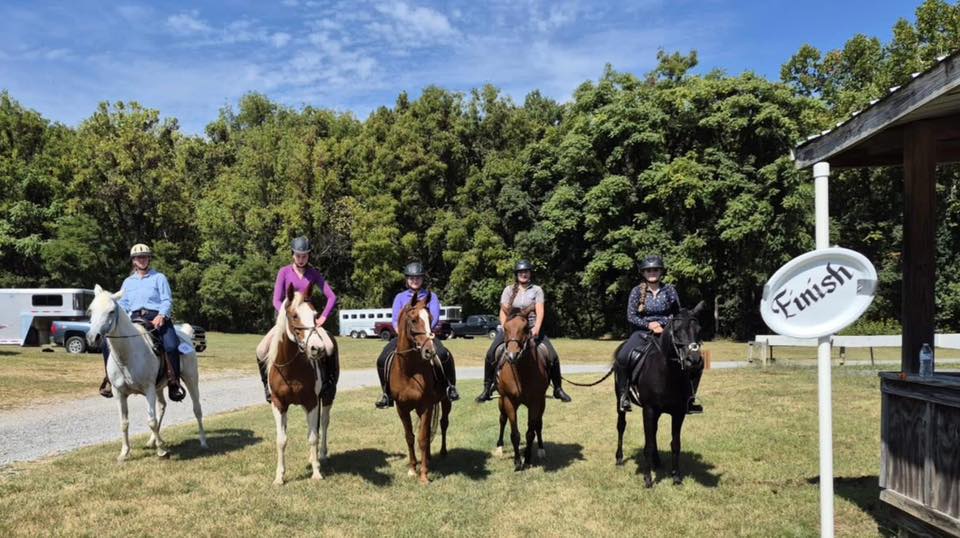
All disciplines and styles of riding our welcome!

3. Core skills come up again and again.

At this competition, the big three were:

  • Yielding the hind quarters or pivoting on the forehand.
  • Sidepassing.
  • Steering

For example, one obstacle required us to ride to a cone, yield the hindquarters 90 degrees and sidepass 5 steps. Another required the rider to place the horse’s front feet at the center of 3 poles arranged in a pinwheel pattern, then yield the hindquarters either to the first pole, or all the way around.

Several obstacles also required very tight turns, sometimes stepping over poles and sometimes going around cones in a figure-eight pattern.

4. Expect lots of poles — and tight setups.

You’ll ride over poles forward and sideways, sometimes in quick succession. The obstacles are designed so that maneuvers are close together. Your horse needs to be sharp and responsive to your aids. One “slingshot” obstacle tested that perfectly: you had to back your horse five steps, then immediately pick up a rising trot for exactly the same distance, before stopping again at the cone — and repeating the sequence.
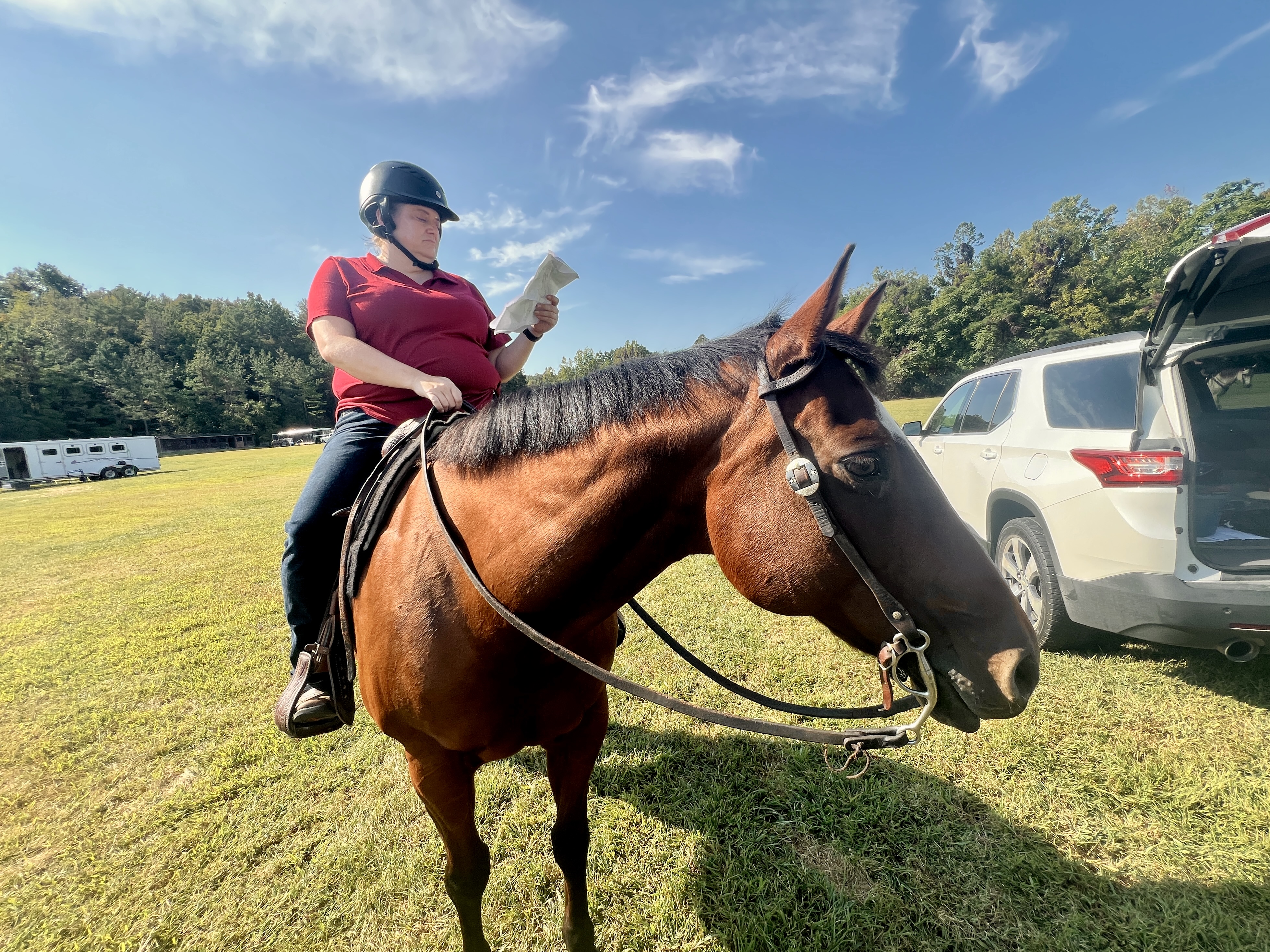
A woman sits on a bay horse in a Western saddle while reading a paper printout.
Reading the list of obstacles before hitting the trail.

5. Your memory and coordination will be tested, too.

This isn’t just about your horse’s skills — you’ll be challenged, too! At one obstacle, riders had to jog their horse in-hand while swinging a pool noodle over their head. (Level 3) I sure hope that no one got any video of that particular maneuver as I am positive it was not graceful on my part!

Riders get a printout with instructions for each obstacle, but the patterns sometimes are hard to comprehend until you see the obstacle in person. Thankfully, the judge also explains everything before you start each obstacle, which really helps.

For my horse and me, the hardest obstacle was the pedestal in which the horse was required to put their front feet up on about a 3’x3′ wooden box, which I’d guess was about 18 inches high (Level 1), placed in the arena. Level 2 required the rider to go over the box completely. And Level 3 required the rider to stop with the hind feet still on the box.

My favorite obstacle was a circle of six cones that required the rider to ride in a figure-eight pattern. I loved it because it gave my horse a little extended time to focus and get in a rhythm and show off her training for more than a step or two.

Interested? Another Equine Trail Sports event will be held Oct. 4 at Twin J in Bedford to complete the 2025 Blue Ridge Buckle Series.

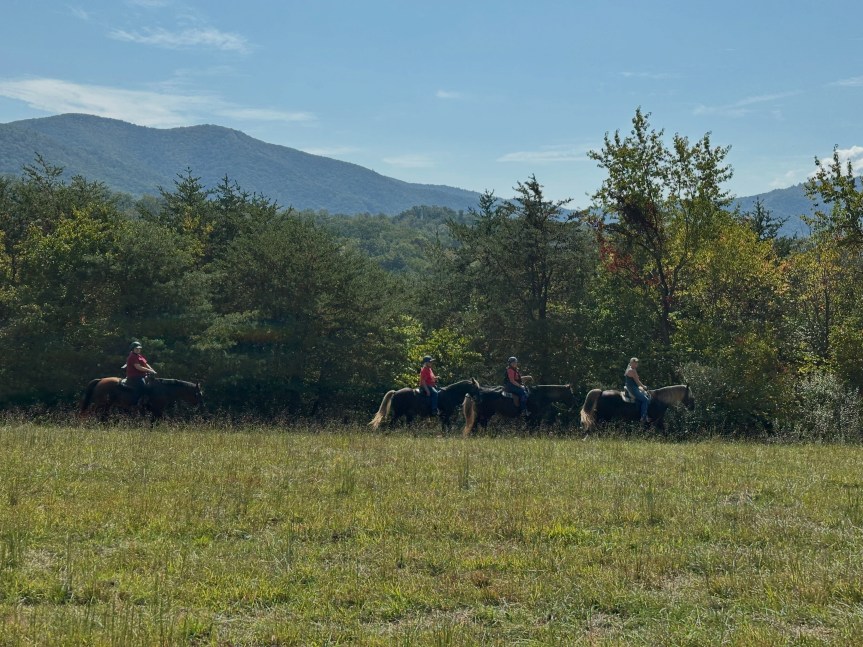
The ride wound through the cross-country course at Green Hill Park in Salem, Virginia. It took about 2 hours to complete the entire course.

Cool weather, warm spirits at the Roanoke Valley Horseman’s Association Community Horse Show

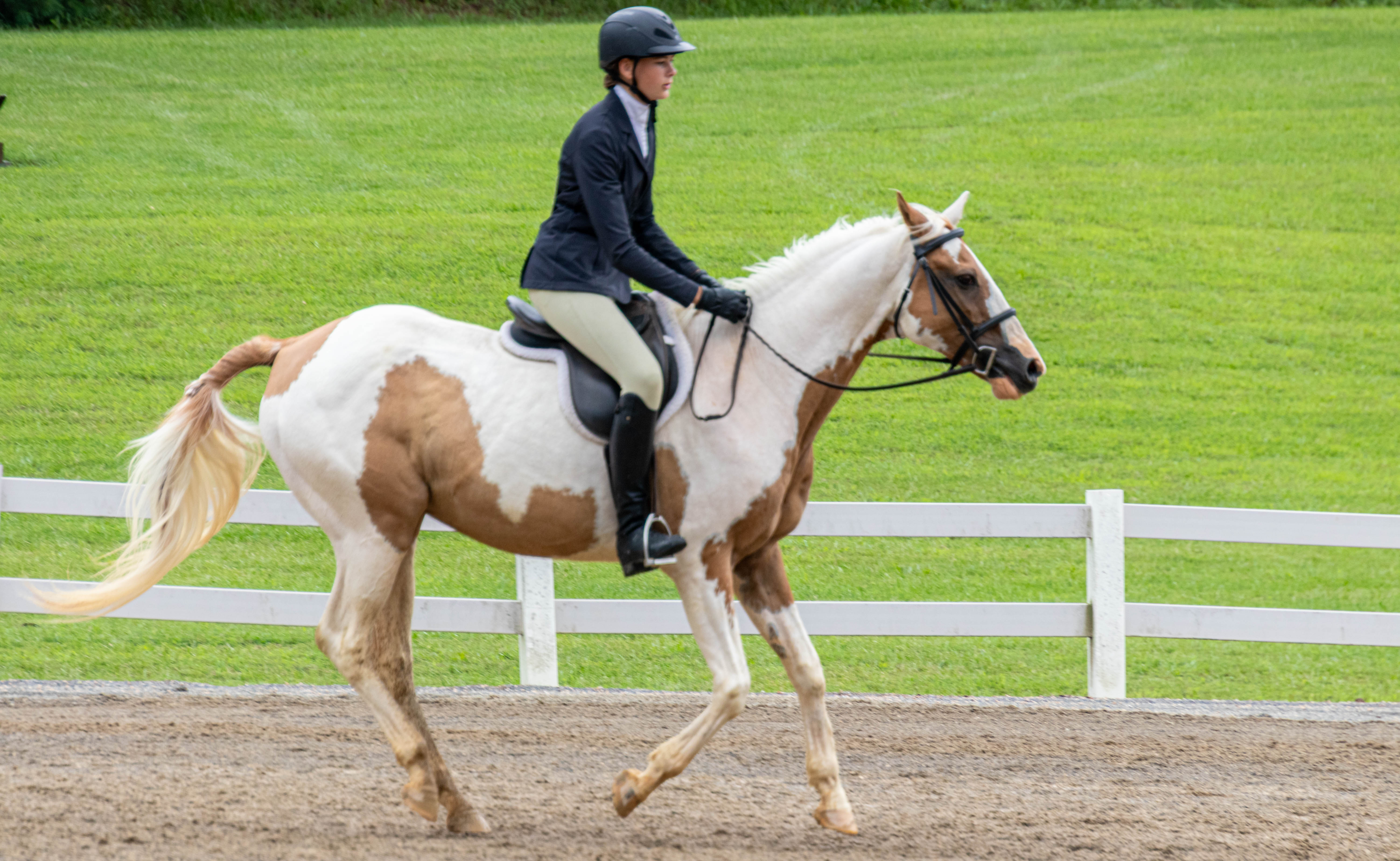
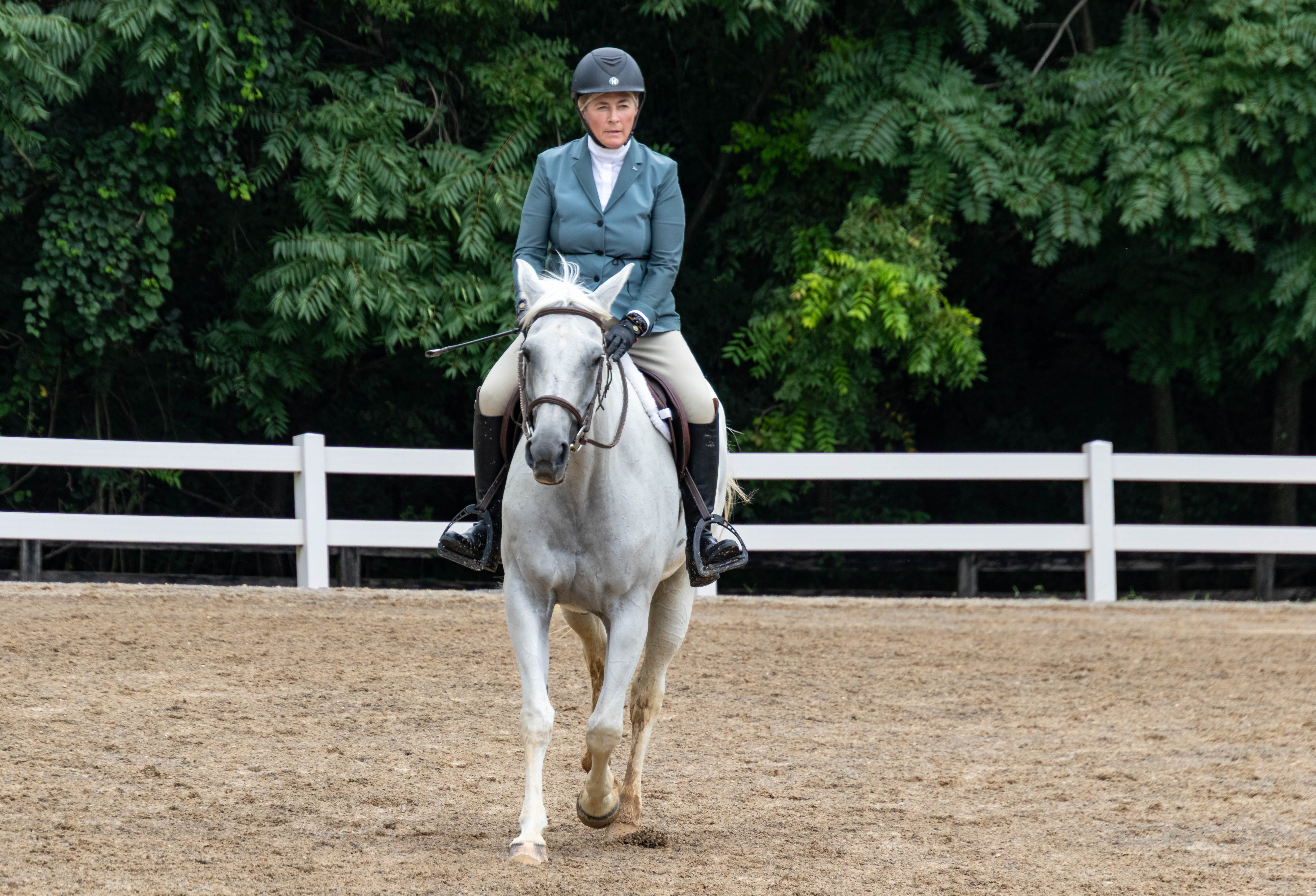
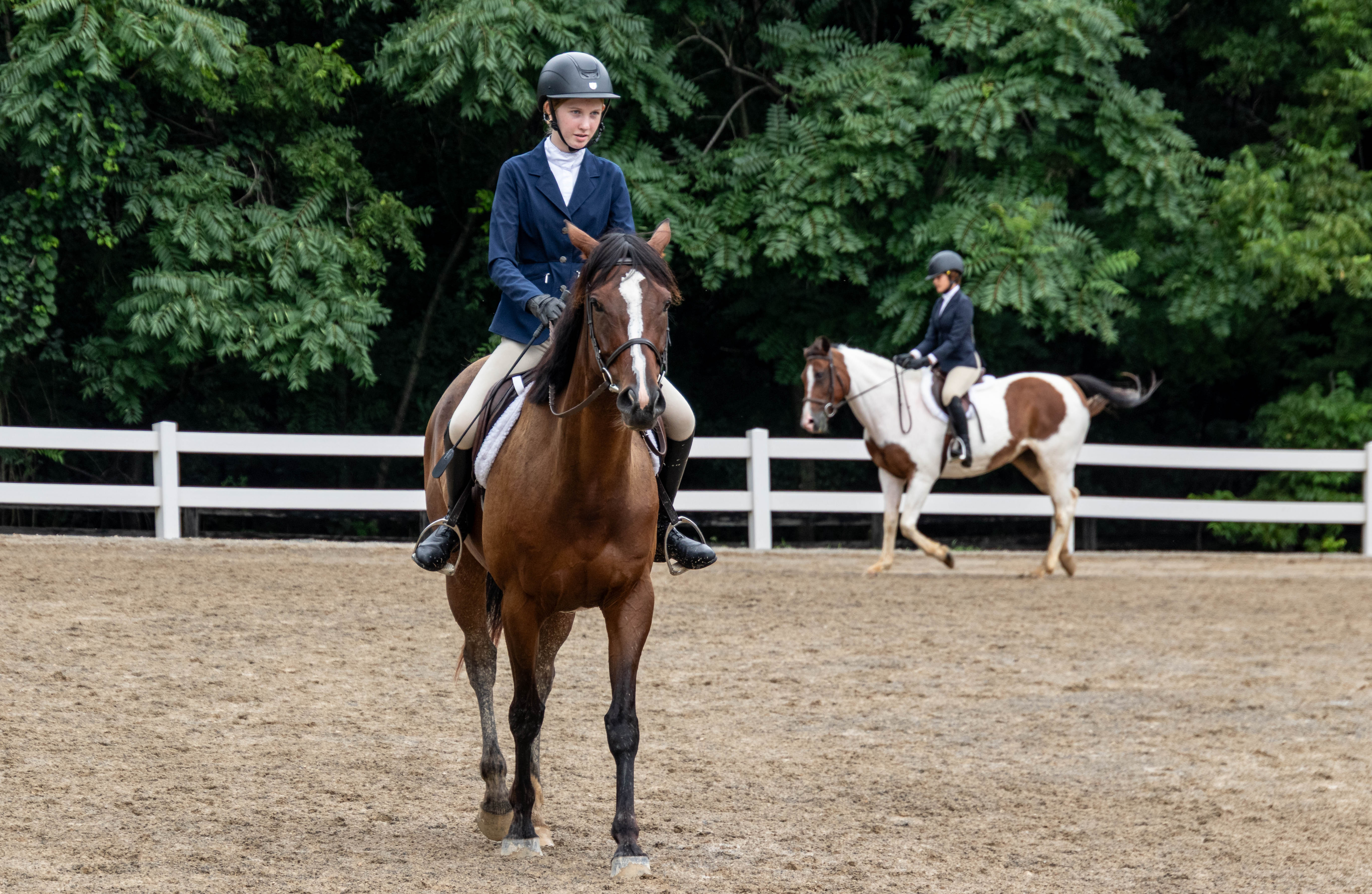
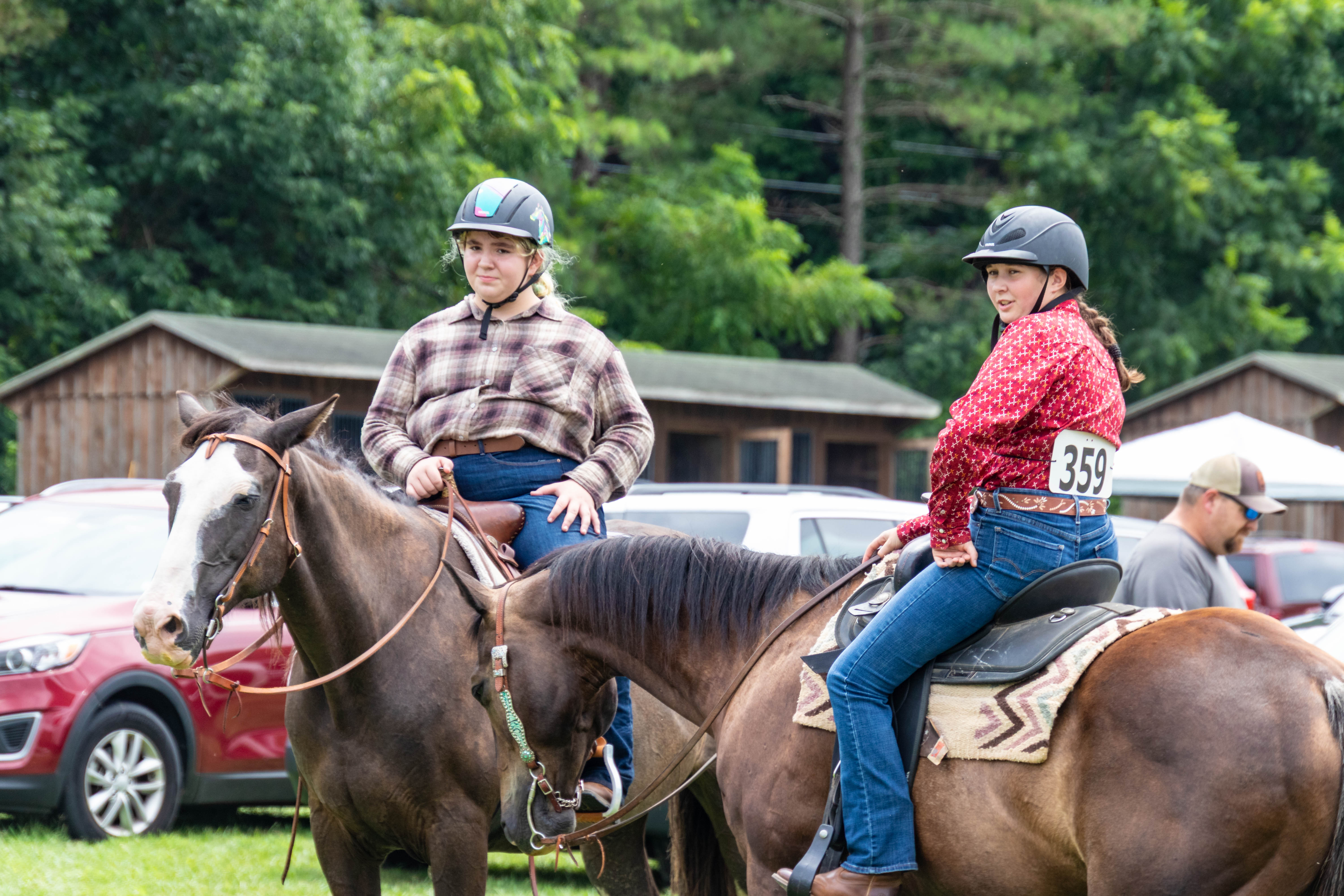
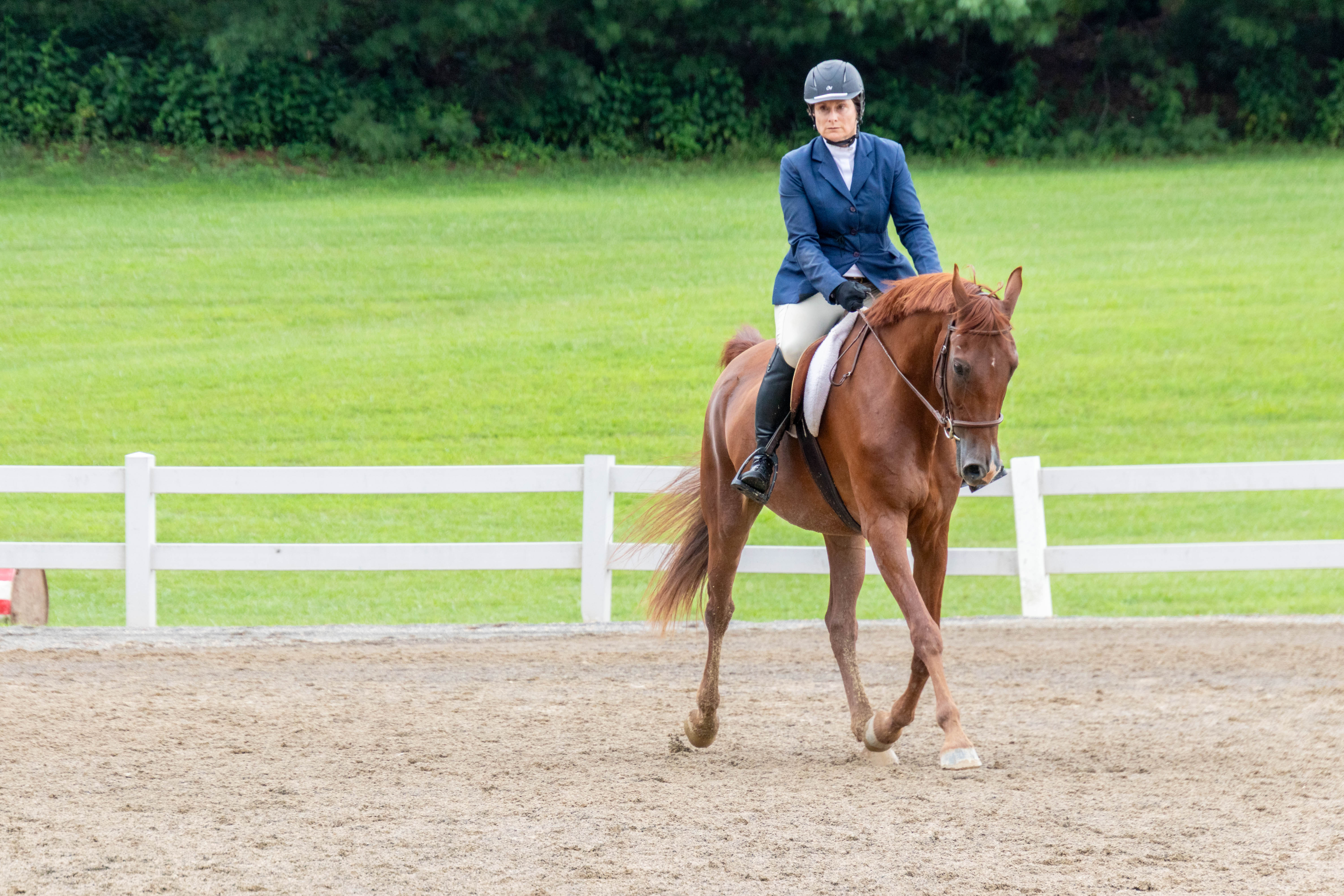
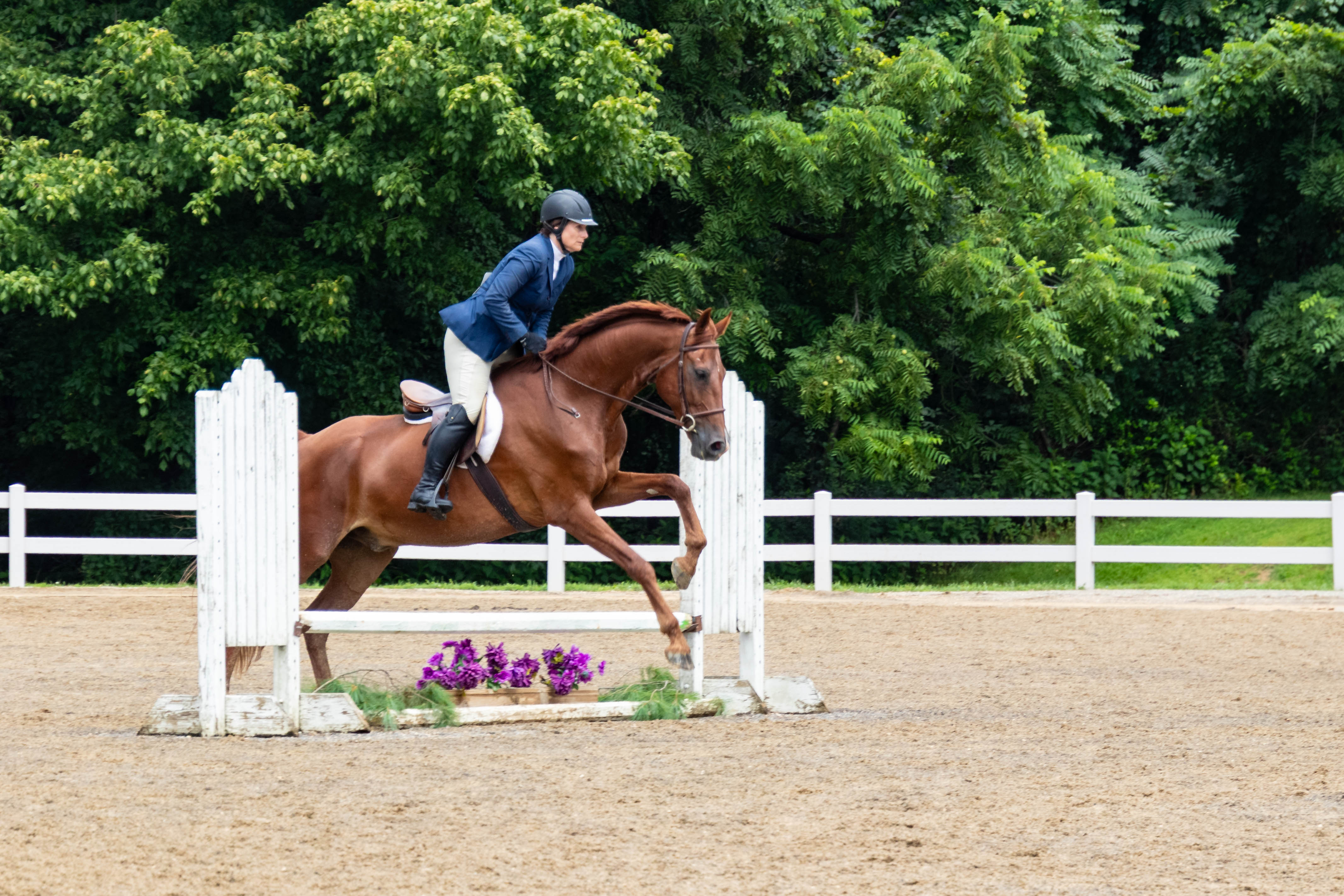
The Roanoke Valley Horseman’s Association held its annual Community Horse Show on Aug. 2, 2025, and despite a few puddles, it was an absolutely lovely day at Green Hill Park Equestrian Center in Salem.

The weather was unseasonably, wonderfully cool for August — sitting comfortably in the 70s — which made for a refreshing change from the usual midsummer swelter. While light rain made a brief appearance, no one seemed to mind dodging a few raindrops in exchange for the mild temperatures.

This year’s show was bustling with activity, featuring a wide variety of classes across disciplines: Ranch, Pleasure, Hunter, Trail, Saddle Seat, Harness, Games, and more. With at least two arenas in use throughout the day, the show moved efficiently and wrapped up by 3 p.m. — a bonus for riders and horses alike.

Several classes boasted double-digit entries, showing strong support from the local equestrian community. First-place winners went home with special prizes, and division champions and reserves were recognized for their standout performances as well.

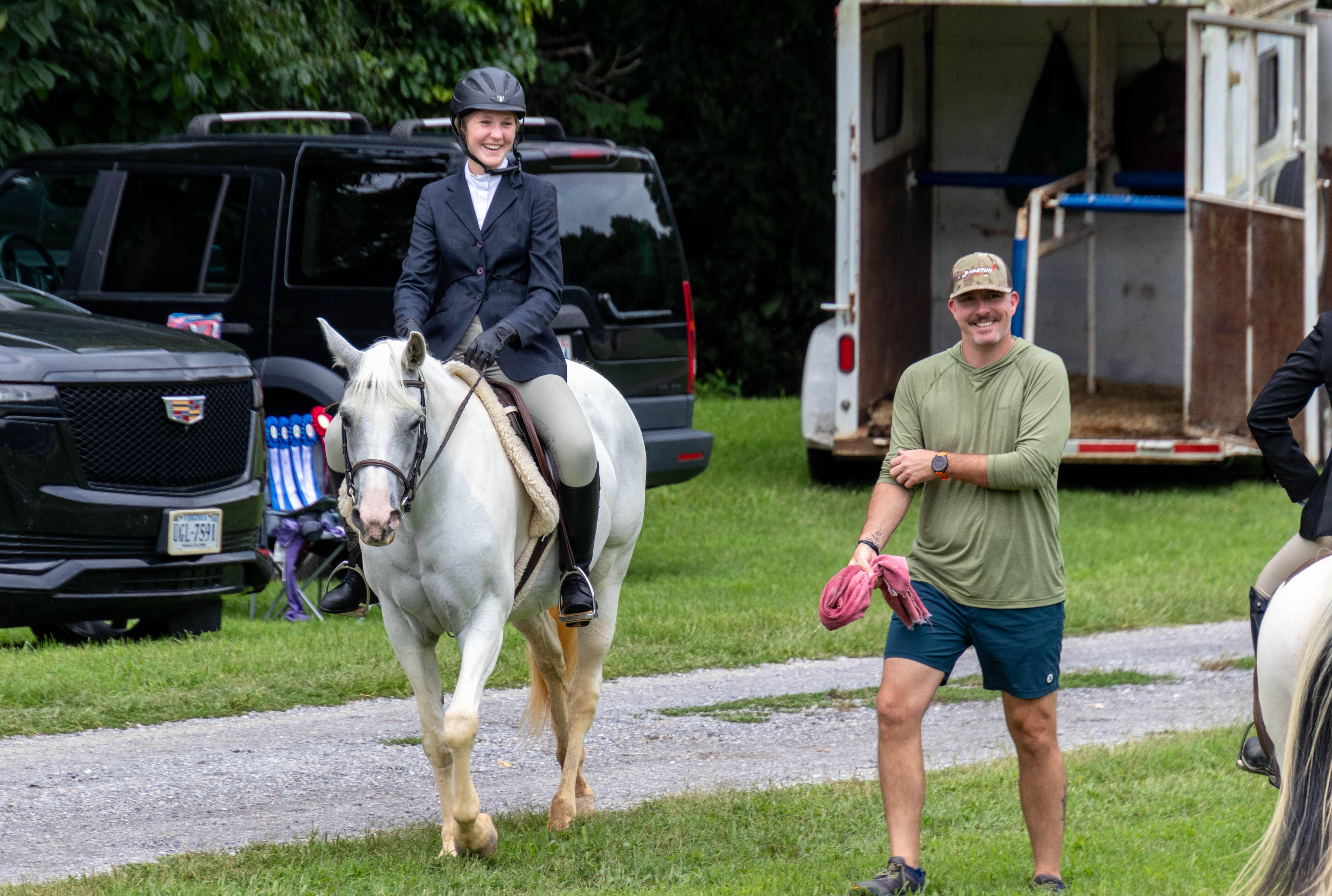
Congratulations to all the competitors, volunteers, and organizers who made the event such a success. Scroll through the photos below to catch a glimpse of the day’s highlights — muddy boots, smiling riders, and all.

Horses and riders come dressed to impress at annual GHPEC Halloween show

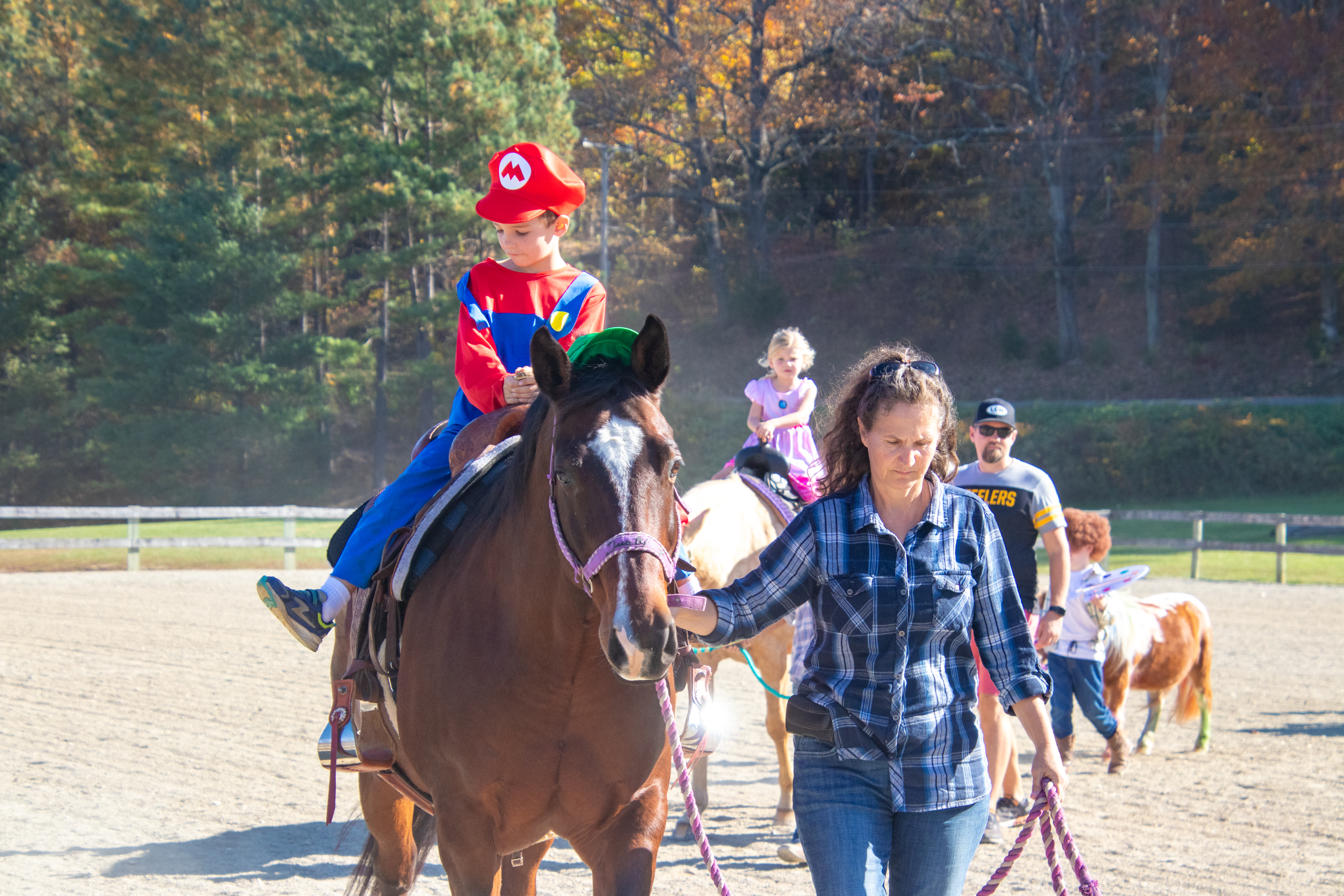
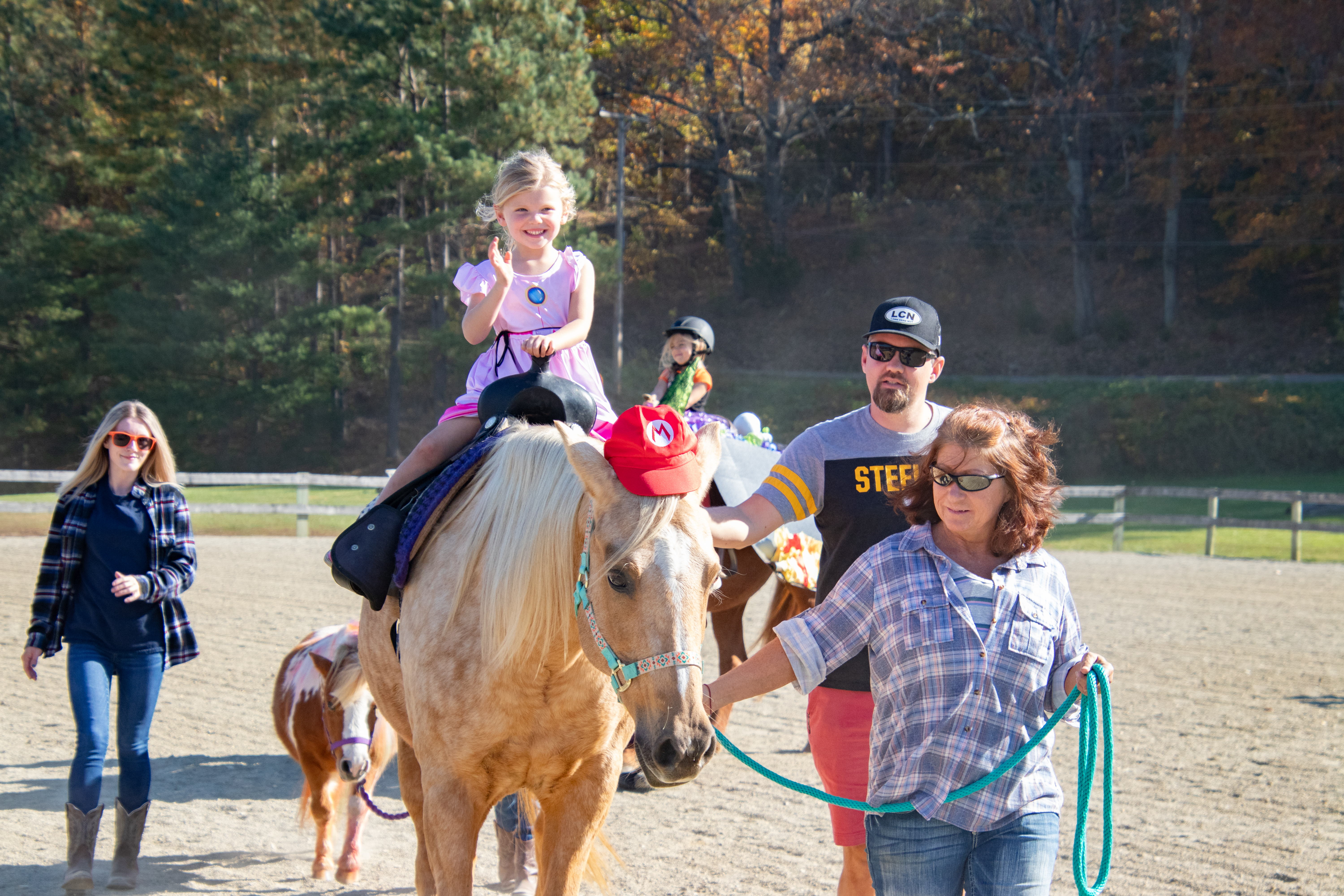
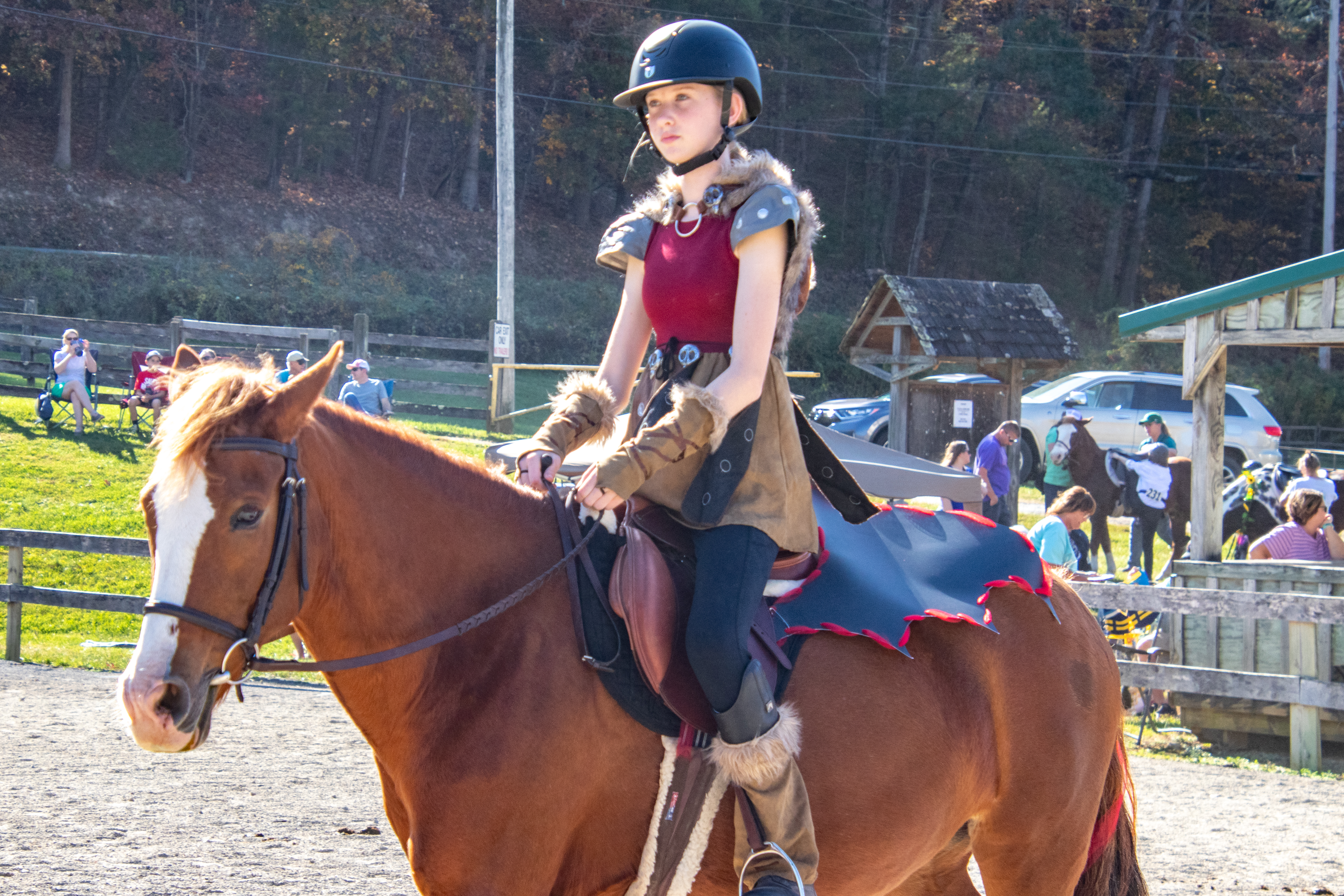
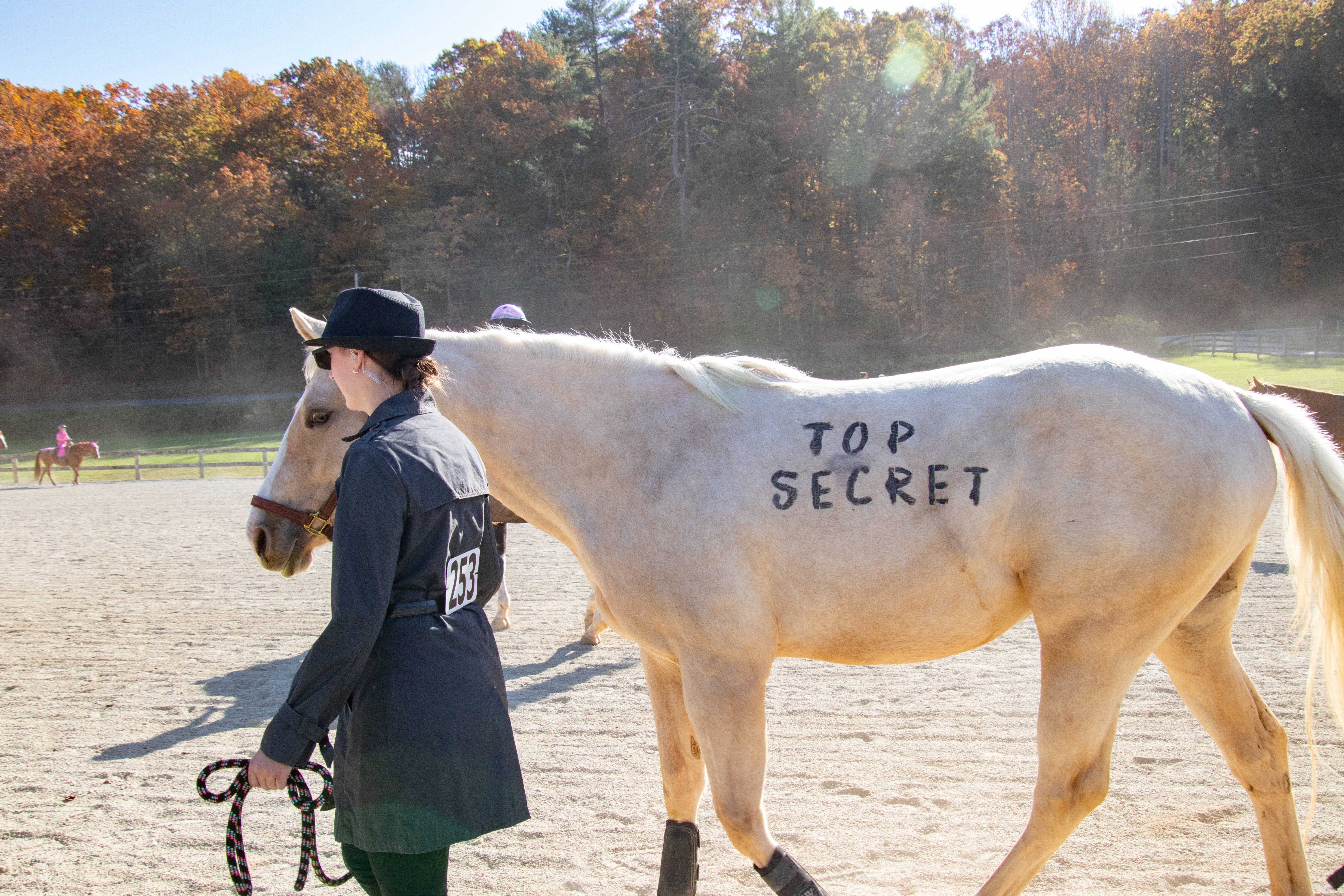
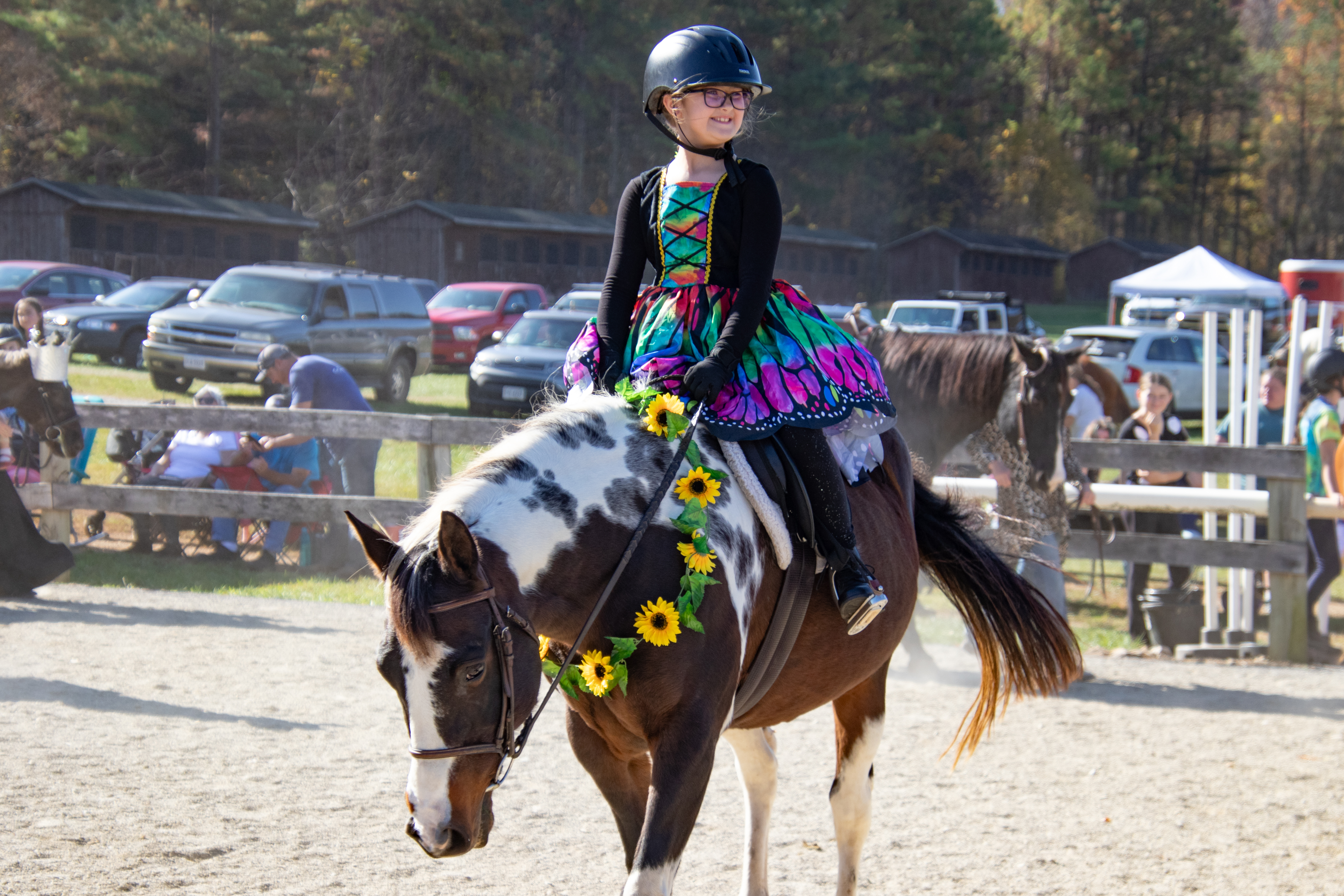
More than 20 exhibitors paraded through the arena Oct. 29 at Green Hill Park Equestrian Center near Salem for the park’s annual Halloween Fun Show.

While the show includes a wide variety of classes, including model, showmanship, leadline, English and Western pleasure, and timed events, it’s the costume class that steals the show.

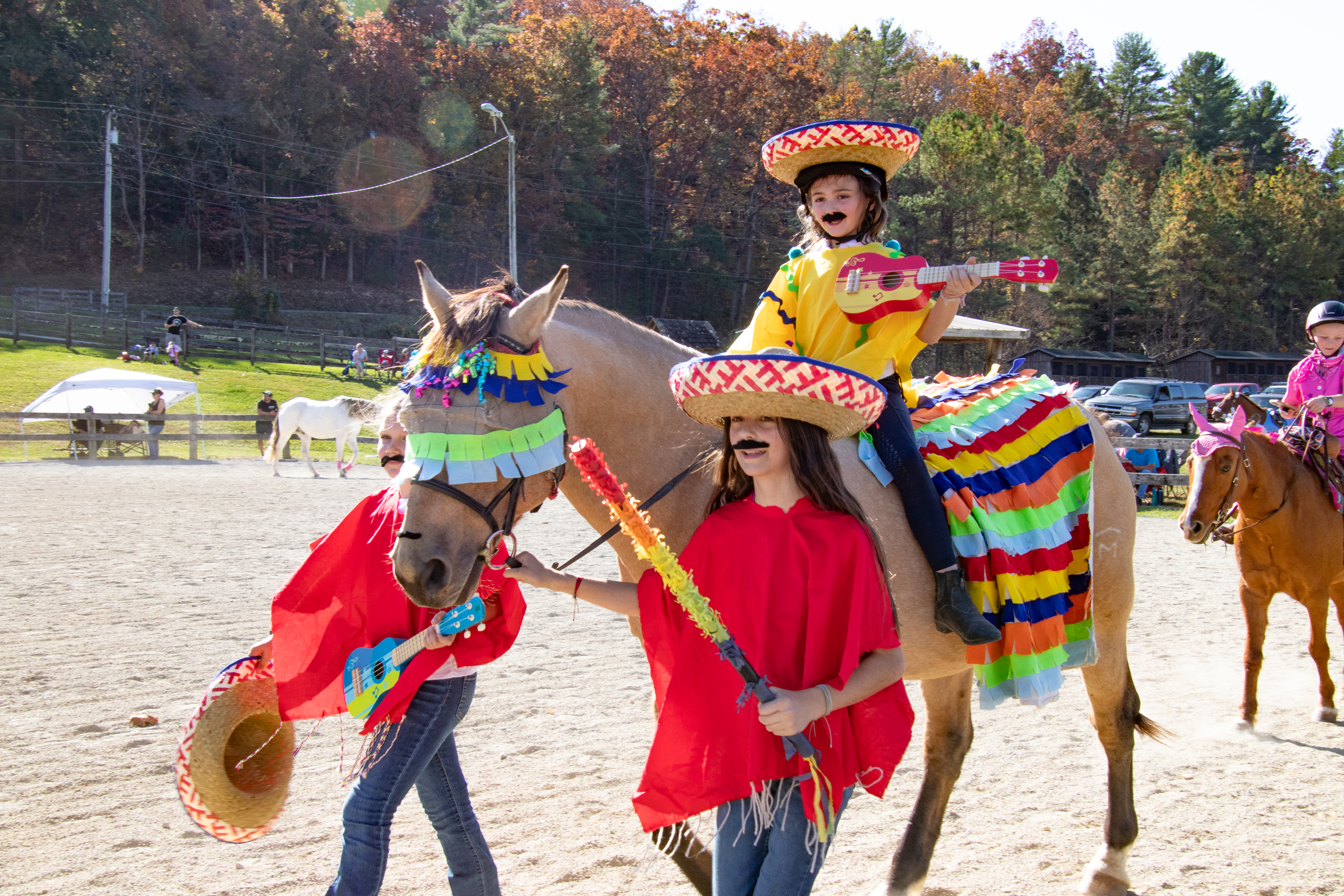
Creativity took over the show grounds as wigs and wings, horns and construction tape, glitter and paint adorned riders and horses alike.

Pick your favorite!

And the winner is….

The Mariachi Band, complete with sombreros and instruments took the top prize, adding a blue ribbon to their already vibrant display of colors. Congratulations!

Southwest Virginia collegiate team takes third at IHSA Nationals

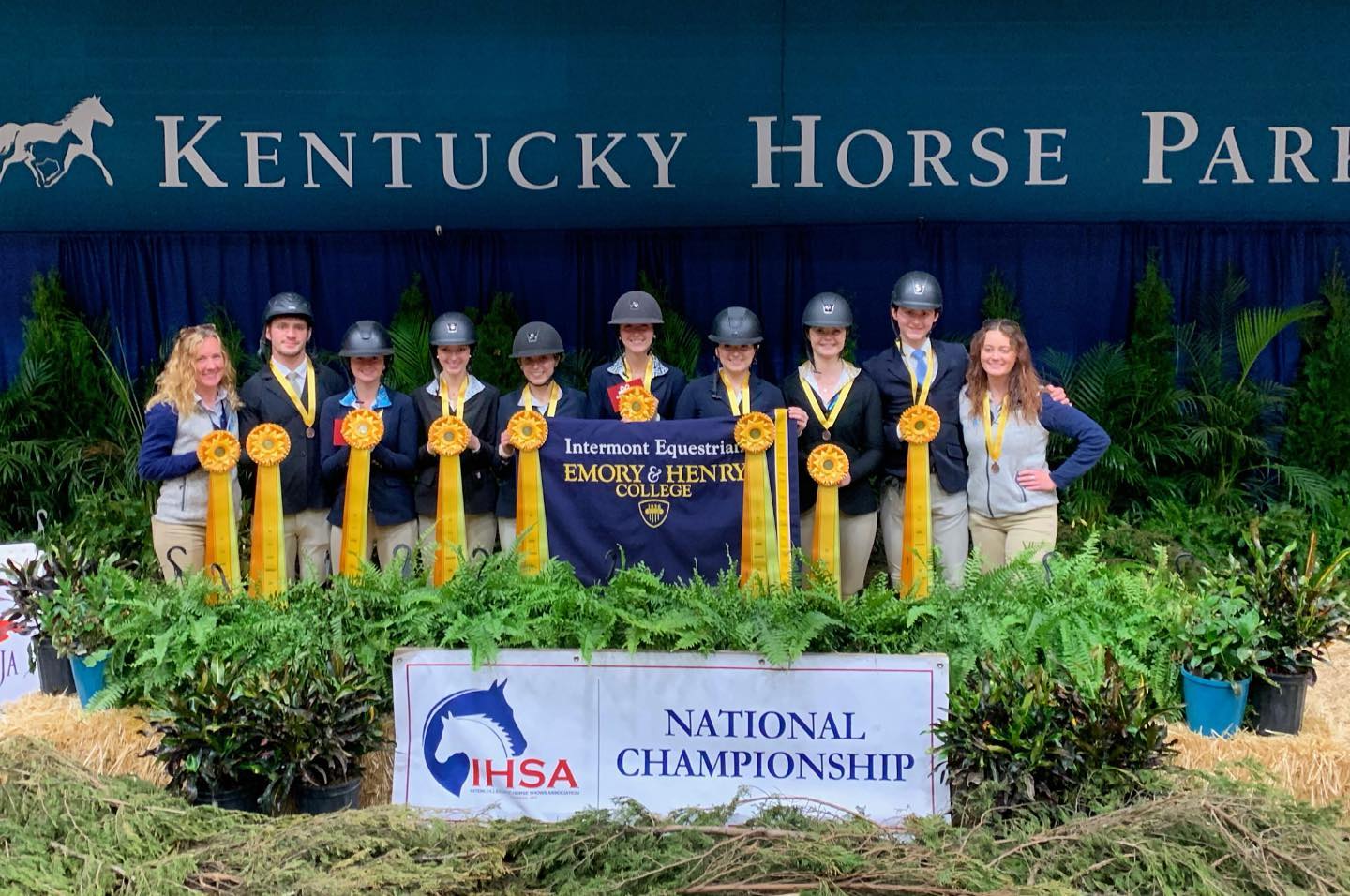
Intermont Equestrian at Emory & Henry College took home the yellow ribbon at the 2023 IHSA National Championships held recently at the Kentucky Horse Park.

The young team was made up of one junior, six sophomores, and one freshman, with only two of the riders having ridden at the Nationals before.

The team’s riders included:

  • Mia Sisson of Warren, Rhode Island, third in Intermediate Flat
  • Kendall Madison of Westtown, New York, champion in Limit Flat
  • Sierra Smith of Olathe, Kansas, third in Limit Over Fences
  • Maddie Whitley of Stuarts Draft, Virginia, in Novice
  • Thomas Carter of Asheville, North Carolina, fourth in Introductory
  • Emma Gurley of Rutherfordton, North Carolina, sixth in Intermediate Over Fences
  • Lindsay Show of Newark, Delaware in Open Flat
  • Derek Holt of Mount Pleasant, South Carolina in Open Over Fences

IHSA offers individual and team competition in hunter seat equitation, western horsemanship, ranch riding and reining at more than 400 member colleges and universities and 10,000 members in 47 states and Canada. The top two teams from each of eight zones compete for the national title.

This year’s teams were:

  • Mount Holyoke College
  • Sacred Heart University
  • Long Island University
  • Skidmore College
  • Centenary University
  • University of Delaware
  • Goucher College
  • Emory & Henry College
  • Savannah College of Art and Design
  • University of South Carolina
  • Otterbein University
  • University of Findlay
  • Purdue University
  • University of Wisconsin-Madison
  • Stanford University
  • University of Southern California

Membership in IHSA means that college students can participate in horse shows regardless of their experience or financial status. Students compete from beginner through advanced with suitable, provided horses, eliminating the expense of horse ownership.

The organization was established in 1967 by Robert “Bob” Cacchione as a sophomore attending Farleigh Dickinson University in Teaneck, New Jersey. Some of the most notable riders in show jumping and Western disciplines competed in IHSA including Olympic gold medalist Beezie Madden.

Intermont Equestrian at Emory & Henry were national champions in 2022 and 2019. Before its closure and the equestrian program’s move to Emory & Henry College, Virginia Intermont College were national champions in 2007, 2005, and 2004.

Individual competition

IHSA Nationals also includes individual competition. Area riders included:

  • Clare O’Brien of Washington and Lee University in Intermediate Equitation Over Fences
  • Mallory Francis of Hollins University, sixth, in Intermediate Equitation Over Fences and fourth in Equitation on the Flat
  • Marran Vansickle of Sweet Briar College eighth in Limit Equitation Over Fences and Limit Equitation on the Flat
  • Elyssa Parker of Hollins University in Novice Equitation
  • Margaret Saunders of Liberty University in Open Equitation on the Flat
  • Charleez Simcik of Virginia Tech in IHSA Hunter Seat High Point Rider Over Fences (Cacchione Cup)
  • Lauren Daniel of William and Mary, seventh in Intermediate Equitation on the Flat. Daniel is from Rocky Mount, Virginia.

Hollins University horses carry riders to top of the IHSA class

At the recent Intercollegiate Horse Shows Association National Horse Show, horses from Hollins University carried their riders to national IHSA titles at the Kentucky Horse Park.

  • Eloquence carried Mea Handy of George Mason University to a first place in the Individual Limit Equitation Over Fences. The bay gelding also served as the mount for Julia Mallia, who dominated Team Novice Equitation for the University of South Carolina.
  • My Way’s rider, Elise Sigety of Skidmore College, took home the win in the team competition.
  • In Team Open Equitation on the Flat, Alexander Alston from SCAD stepped to the top of the podium as champion after riding Allmyso.

Meanwhile, Hollins riders didn’t do so bad themselves. Mallory Francis placed fourth in Limit Flat and sixth in Intermediate Fences. Elyssa Parker finished ninth in Novice.

Hollins University owns 30 horses for all skill levels. Riders compete in ODAC or IHSA shows or may compete in local and national horse show on their own horses or horses owned by the university.

Lee County horse camp wins grant

The Virginia Coalfield Economic Development Authority has awarded a $10,000 Seed Capital Matching Grant to Rock Bottom Horse Camp, LLC in Lee County.

Rock Bottom Horse Camp, LLC offers lodging for horses and their owners who are touring the area. The business is owned by John and Erin Miele and currently has one full-time and one part-time employee.

In addition to the stable facilities for horses, the camp, located in Ewing, also offers five RV sites and three tent sites. Four new 10×14 stalls have been constructed with four more planned. Future plans call for the addition of a bathhouse.

Read more at Cardinal News.

Virginia horse tests positive for Equine Herpesvirus-1, euthanized at Vet Med in Blacksburg

By Virginia Department of Agriculture

A horse admitted to the Virginia Tech’s large animal hospital has tested positive for Equine Herpesvirus-1 (EHV-1), the virus that causes Equine Herpes Myeloencephalopathy.

The horse was admitted to  Virginia-Maryland College of Veterinary Medicine in Blacksburg on Nov. 17 showing neurologic symptoms. The horse’s condition then deteriorated and it was euthanized on Nov. 18. A test came back positive for EHV-1 on Nov. 20.

In conjunction with the State Veterinarian’s Office of the Virginia Department of Agriculture, all exposed horses at the hospital were immediately isolated from the rest of the hospital population with strict biosecurity protocol and placed under quarantine.

All quarantined horses are being monitored twice daily for fever (temperature over 101.5 F) and other clinical signs. The hospital remains open and able to admit patients needing veterinary care.

The farm where the index case resided before going to VMCVM has been placed under quarantine. Horses at this farm are also being monitored for fever and clinical signs. The State Veterinarian’s Office has contacted all other horses that may have been secondarily exposed while at the teaching hospital.

There is no cause for alarm concerning the general horse population in Virginia. EHV-1 is a virus that is present in the environment and found in most horses all over the world. Horses typically are exposed to the virus at a young age with no serious side effects. A large percent of horses carry the virus with no clinical signs for the remainder of their lives.

EHV-1 routinely causes upper respiratory infection in young horses (weaning, yearlings, and 2 year olds) resulting in depression, a snotty nose, loss of appetite and a persistent cough. 

Rarely, exposed horses develop the neurologic form of the disease. Neurological symptoms include incoordination that can progress to the inability to stand, lower leg swelling, the inability to urinate or pass manure, urine dribbling and reduced tail tone. Horse owners with concerns should contact their veterinarian.

Studies have shown that the virus doesn’t live long in the environment, but transmission via coughing or sneezing can occur over a distance of up to 35 feet. Direct contact with infected horses as well as contaminated feed, equipment, clothing, and tack can also spread the disease. 

The Equine Disease Communications Center Biosecurity web pages equinediseasecc.org/biosecurity have more information on best practices for disease prevention in horses and VDACS has more information on EHV-1 at vdacs.virginia.gov/animals-equine-herpes-virus.shtml.

APHA Eastern National Championship entries give hope for growth of series

One of the great things about having the Virginia Horse Center in our backyard is the region gets to play host to some of the best equestrian competitions in the nation. Last weekend promised to be another one of those times with the APHA Eastern National Championship pulling into the facility for four days.

Competition was top-notch with quality horses being shown as one would expect of such a show. But the entries perhaps were a bit lighter than one would have thought of a national championship show.

APHA reports that the show drew 126 horses in 13 divisions. Most classes had fewer than 10 entries. So while it the show was run beautifully and had truly spectacular prizes, it didn’t, in the end, feel like a big show.

The show was aimed at bringing top-notch competition to new areas of the country.

This slideshow requires JavaScript.

“By taking the excitement of a top-level event and bringing it closer to our Eastern Paint Horse exhibitors, we hoped to invite new faces to dream big and compete for these prestigious titles and awards,” Senior Director of APHA Events Holly Slaughter said. “We were thrilled to welcome several exhibitors competing with APHA for the first time, along with strong numbers in many divisions.”

The turnout and enthusiasm at the Eastern event indicate the growth potential for the National Championship series, APHA Executive Director Billy Smith says.

The Western National Championship is set for October 16–19 in Las Vegas.

“The interest shown for both our 2019 National Championships indicates a gap existing within our horse show landscape,” Billy said. “These national shows fulfill a need for regional exhibitors seeking the thrill of a prestigious championship-level event located a little closer to home. We’re optimistic about this series and look forward to growing them further in the future.”

Find class results, results by judge, scribe sheets and complete high-point and all-around placings here.

Solid Paint-bred entries stand out at APHA Eastern National Championship

Tabitha Thompson of Fincastle and her mare Too Tuf To Be Fancy.

Written by APHA News

Solid Paint-bred exhibitors are shining bright at the Eastern National Championships, held March 22–24 at the Virginia Horse Center in Lexington, Virginia. The inaugural National Championship boasted more than 100 per-judge entries across Open, Youth, Amateur and Amateur Walk-Trot Solid Paint-Bred divisions by Saturday afternoon. Preliminary entry reports for the show are more than 800 per judge.

With bountiful opportunities to compete, solid Paint-bred exhibitors like Tabitha Thompson, of Fincastle, Virginia, enjoyed demonstrating their horse’s versatility. Tabitha raised Too Tuf To Be Fancy, a 2012 bay solid mare by The Ultimate Fancy and out of Hosan Forties (QH) since she was a weanling. The duo demonstrated their versatility at the Eastern National Championship Show, competing in Amateur Solid Paint-Bred halter, showmanship, ranch, equitation and showmanship events.

“We’re here to do a little bit of everything,” Tabitha laughed. “I only live 30 minutes away, so coming here was a no-brainer. The show has been great; we’ve gotten a couple of trophies and a few placings. I’m pleased with how we’ve done!”

High interest and a strong regional community of active solid Paint-bred exhibitors led to expanded class offerings, Senior Director of APHA Events Holly Slaughter says.

“We had great enthusiasm and interest from solid Paint-bred owners in the area. After reviewing the large number of class requests and examining participation in the area, we were excited to offer a full slate of solid Paint-bred classes—including Solid Paint-Bred Amateur Walk-Trot,” Holly said. “We’re excited for the turnout, and we hope to continue to grow our solid Paint-bred classes at future National Championships.”

Youth exhibitor Maryann Johnson of Drewryville, Virginia, took to social media to encourage entries; a member of Rock Solid World Tour, a Facebook group dedicated to organizing and encouraging solid Paint-bred exhibitors across the country, Maryann and fellow exhibitors created a spreadsheet of their planned entries to share with others.

“Networking is huge,” she said. “The spreadsheet let others know who was coming and in what events, so that they could better decide if they should make the trip. We communicate heavily on Facebook to see who is coming, and it really works!”

Maryanne brought Zippos Sweet Te, a 2010 dun solid mare by Zippos Goldn Mover and out of Blues Cup Of Te (QH), to the Eastern National Championship Show. Though they’ve seen great success at regional APHA, 4-H and Open shows, Maryann says the cost and distance makes attending the APHA World Championship Shows difficult. The National Championship brought the prestige and excitement of a top-level show to her area, she says.

“This might be as close to a high-level show as we can get—and it’s right in our backyard!” she said. “The turnout has been great, too—it’s fun to compete against other Youth [in the Youth Solid Paint-Bred division]. We like to win, but we also like to have a lot of fun.”

Inaugural APHA Eastern National Championship draws big dreamers to Virginia

Written by , Paint Horse Journal 

Excitement buzzed in the crisp air as the inaugural Eastern National Championship kicked off March 22, at the Virginia Horse Center in Lexington, Virginia. Designed to bring more top-level opportunities to Paint lovers in different areas of the country, the 2019 Eastern National Championship is already seeing strong turnout and entries; Paint lovers from all walks of life are in attendance, dreaming of good rides and the coveted championship trophies.

Cheyenne Davis of Bedford, Virginia, is one such dreamer, and she spent 10 days prior to the National Championship counting down to the big event on Facebook, reflecting on her progress and memories with Stripes Little Swan, a 2003 bay overo gelding by Jedi Stripe and out of One Black Filly (QH).

“I have a tendency to think about backing out of things, so I thought that a countdown would make me really excited—and not nervous—about being here,” she explained. “Because I am excited to be here! It feels like such a blessing to have this kind of opportunity for ‘Levi.’ ”

Cheyenne’s aunt, Brenda Spencer, purchased Levi at an auction for $900 as a yearling. First intended as a pony horse on the racetrack, Levi instead became a stellar trail-riding mount before spending several years out to pasture; he didn’t begin his transformation into a show horse with Cheyenne until his 9-year-old year.

With hard work, determination and a strong support group cheering on their progress, Cheyenne and Levi soon stepped up to APHA competition, where currently compete in Amateur Walk-Trot all-around events.

“We showed our first Paint show in 2016, and we even won a couple of our classes—I was so excited! I’m just this girl from ‘Nowhere, Virginia,’ with a $900 horse,” Cheyenne laughed. “We won a whopping three APHA points at that first show, and I was so proud; I’m still proud of those points.”

When the Eastern National Championship Show was announced, Cheyenne knew it was a can’t-miss opportunity to show off how far they’ve come.

“I wasn’t planning on coming at first but the more I let it stew, the more something was telling me that I just had to come to this national show,” she said. “My plans are to take him to the APHA World Championship Show someday, but I’m not sure if that will happen; the National Show is my chance to give Levi the opportunity he deserves to do something big. I’m really excited; I’m just so happy to be here.”

The 2019 Eastern National Championship continue throughout the weekend; stay up-to-date on show entries and results by downloading the Cinch Horse Show Tracker app, available for Apple and Android smartphones. Find candid photos, updates and more via APHA’s Facebook and event page.